The Hidden Brain Revolution: How Neuroplasticity and Cognitive Load Training Are Redefining Athletic Peak Performance in 2026
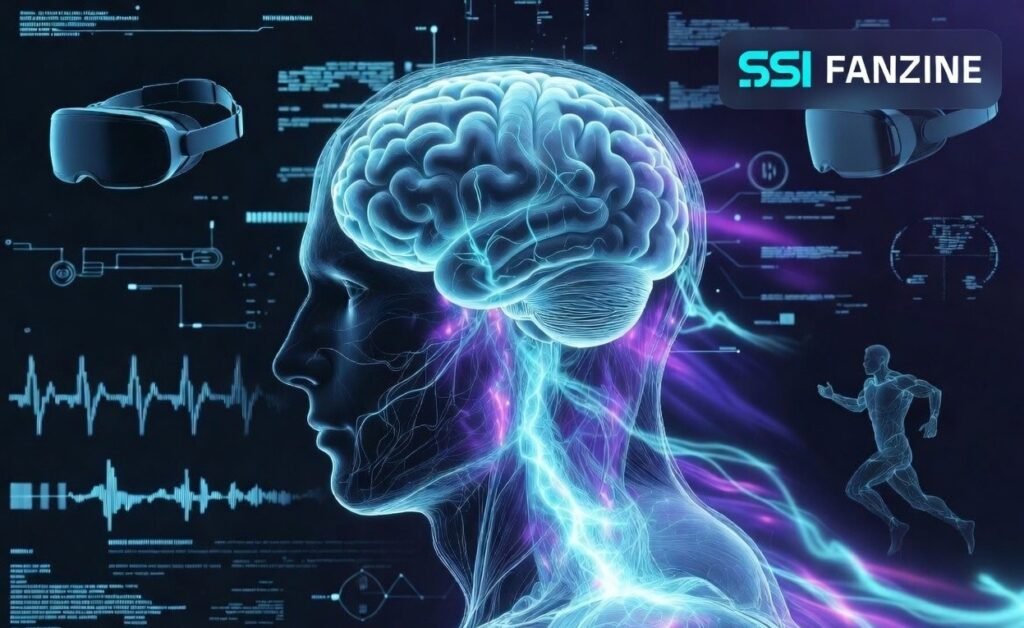
Bhubaneswar: For decades, sports science has obsessed over the body: VO2 max, lactate threshold, muscle fiber composition, and force-velocity curves. But in 2026, a quiet yet powerful shift is happening. Researchers and high-performance teams are turning their attention inward — to the brain. Emerging evidence reveals that neuroplasticity — the brain’s remarkable ability to rewire itself — combined with targeted cognitive load training, is delivering measurable gains in decision-making speed, resilience under pressure, injury prevention, and long-term performance sustainability.
This isn’t about generic “mental toughness” slogans. It’s about applying cutting-edge neuroscience to sport-specific demands. Studies published in late 2025 and early 2026 demonstrate that athletes who systematically train cognitive functions alongside physical conditioning outperform traditionally trained peers in high-stakes environments. The implications stretch from Olympic podiums to amateur leagues, and even to how everyday fitness enthusiasts train smarter.
Why the Brain Matters More Than Ever
Modern sports have become faster, more chaotic, and more mentally taxing. A soccer midfielder must process dozens of variables in milliseconds while fatigued. A tennis player needs razor-sharp focus during tie-breaks after hours on court. Traditional physical training improves the hardware, but without upgrading the software — the brain’s processing power and adaptability — athletes hit invisible ceilings.
Neuroplasticity, once thought to decline sharply after childhood, is now understood to remain highly active throughout adulthood, especially when stimulated through deliberate, progressive challenges. Recent research using advanced fMRI and EEG monitoring shows that specific cognitive training protocols can strengthen neural pathways involved in anticipation, inhibitory control (the ability to suppress wrong impulses), and working memory — all critical for elite performance.
One groundbreaking approach gaining traction is cognitive load training (CLT). Instead of isolated brain games, athletes perform sport-specific physical tasks while simultaneously handling increasing layers of mental challenge. For example, a basketball player might practice shooting under fatigue while reacting to unpredictable visual cues or solving rapid tactical problems flashed on a screen. The overload forces the brain to adapt, building resilience against mental fatigue that often precedes physical breakdown.
A 2025 meta-analysis involving elite athletes across multiple sports found that groups incorporating CLT improved reaction time by an average of 12–18% and reduced decision-making errors in simulated competition by up to 25%, compared to physical-only training groups. More impressively, these gains persisted even when athletes were in a state of accumulated fatigue — a game-changer for tournament formats with back-to-back matches.
Real-World Applications Transforming Teams
Several top clubs and national programs have quietly integrated brain training into daily routines. In soccer and basketball, virtual reality (VR) simulations now combine physical movement with immersive cognitive demands, such as reading complex defensive schemes while executing precise motor skills. Wearable EEG headbands provide real-time feedback on focus levels, allowing coaches to adjust session intensity before mental fatigue sets in.
In endurance sports like cycling and marathon running, researchers are exploring how modulating cognitive load during long sessions can improve pacing decisions and reduce the dreaded “bonk” — not just from glycogen depletion, but from prefrontal cortex overload. Early data suggests that athletes trained to handle higher cognitive loads maintain better executive function late in races, leading to smarter tactical choices when it counts most.
Injury prevention is another exciting frontier. Many non-contact injuries occur when decision-making slows under fatigue, leading to poor movement mechanics. By training the brain-body connection through neuroplastic protocols, teams report fewer ACL tears and ankle sprains because athletes maintain better neuromuscular control even when exhausted. One premier league club reportedly reduced lower-limb soft-tissue injuries by 22% after implementing a six-week cognitive-motor training block.
Women’s sport stands to benefit enormously. Hormonal fluctuations across the menstrual cycle influence not only physical recovery but also cognitive processing speed and emotional regulation. Integrating cycle-aware neuroplastic training — adjusting cognitive load intensity based on phase — is helping female athletes achieve more consistent performance and faster return-to-play after injury.
The Technology Making It Possible
Affordable and portable tools are democratizing this science. Lightweight EEG wearables, AI-powered VR headsets, and smartphone apps with adaptive algorithms now bring laboratory-grade cognitive training to grassroots levels. AI coaches analyze an athlete’s unique cognitive profile — strengths, weaknesses, fatigue patterns — and prescribe personalized drills that evolve week by week.
Importantly, this isn’t replacing traditional strength and conditioning. It’s enhancing it. The most successful programs treat the brain and body as an integrated system, recognizing that mental fatigue amplifies physical fatigue and vice versa.
Practical Takeaways for Athletes and Coaches
Start simple. Even without high-tech gear, coaches can add cognitive elements to existing drills: random directional changes with auditory cues, memory recall of play patterns during intervals, or dual-task exercises like dribbling while solving basic math problems under time pressure. Progress gradually to avoid overwhelming the athlete.
Monitor for overtraining of the brain just as you would the body. Signs include persistent mental fog, slower reaction times, or reduced motivation — all red flags that cognitive load needs temporary reduction.
For individual athletes, combining neuroplastic work with quality sleep, nutrition rich in omega-3s and polyphenols, and deliberate recovery practices (including mindfulness or breathwork) creates a powerful synergy that amplifies physical gains.
The Road Ahead
As we move deeper into 2026, the line between sports science and neuroscience continues to blur. The athletes and teams that embrace this holistic view — treating the brain not as a mysterious black box but as a trainable organ — will likely pull ahead. It’s no longer enough to be the strongest or fastest. In an era of near-equal physical talent pools, the edge belongs to those who think, adapt, and decide better under pressure.
The brain revolution in sports isn’t coming. It’s already here — and it’s rewriting what peak performance looks like. Whether you’re chasing Olympic gold or simply trying to stay sharp on the weekend pitch, training your brain may be the smartest training decision you make this year.