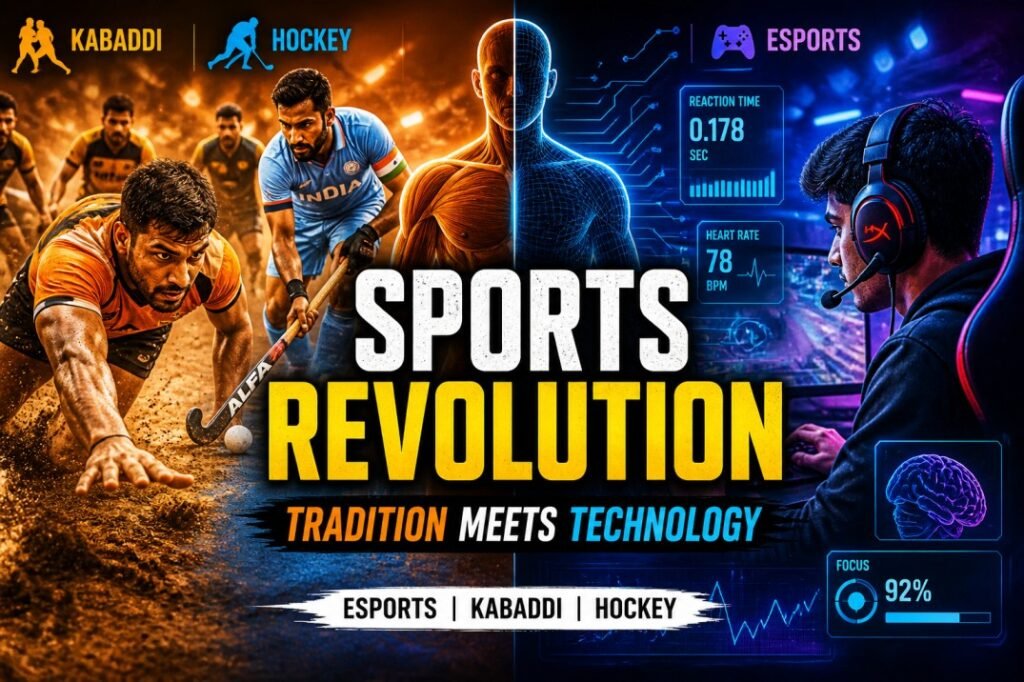
India’s sporting landscape has always been a study in contrasts—raw talent shaped by tradition, often thriving despite limited scientific backing. But that narrative is changing. From the mud pits of kabaddi akharas to the digital arenas of esports and the astro-turfs of hockey, sports science is emerging as the invisible force redefining performance, recovery, and longevity.
At the heart of this evolution is a simple idea: talent alone is no longer enough.
Kabaddi: From Rural Roots to Data-Driven Dominance
Kabaddi, once synonymous with rural India, has undergone a remarkable makeover, thanks in part to leagues like the Pro Kabaddi League. What was once a game of instinct and brute strength is now deeply analytical.
Teams are investing in GPS trackers, biomechanical analysis, and injury prevention systems. Raiders’ movements are studied frame-by-frame to optimize agility, while defenders train using resistance-based drills designed through sports physiology.
The role of recovery—ice baths, physiotherapy, and nutrition planning—has become central. Institutions like the Sports Authority of India are actively promoting scientific training modules even at grassroots levels.
Kabaddi hasn’t lost its essence—it has simply evolved.
Hockey: Precision Meets Performance Science
Indian hockey, governed by Hockey India, is another prime example of tradition embracing technology. Once struggling with consistency, the national team’s resurgence is closely tied to its adoption of sports science.
Wearable tech now tracks player workload, sprint speed, and fatigue levels in real time. Video analytics break down opposition patterns, helping coaches craft smarter strategies. Nutritionists tailor diets for peak endurance, while psychologists work on mental resilience—an often overlooked aspect in high-pressure tournaments.
The results are visible: improved fitness levels, fewer injuries, and a more structured approach to international competition.
Esports: Where Science Meets the Mind
While kabaddi and hockey deal with physical intensity, esports presents a different challenge—cognitive endurance. With organizations like Esports Federation of India pushing the ecosystem forward, sports science is finding new relevance in virtual competition.
Reaction time training, eye-hand coordination drills, and mental conditioning programs are now standard. Ergonomics—chair posture, screen positioning, and lighting—plays a crucial role in preventing long-term injuries.
Sleep cycles and nutrition are also monitored, as even milliseconds can determine victory or defeat. In esports, the brain is the muscle—and science is its coach.
The Bigger Picture: A Cultural Shift
What ties these diverse sports together is a broader shift in mindset. India is moving from a “play hard” culture to a “train smart” philosophy.
Private franchises, government bodies, and academies are increasingly collaborating with sports scientists, physiotherapists, and data analysts. The integration of AI, wearable tech, and performance analytics is no longer futuristic—it’s happening now.
Yet, challenges remain. Access to high-quality sports science is still limited outside elite setups. Bridging this gap will be crucial if India aims to become a consistent global sporting powerhouse.
Conclusion: Tradition Isn’t Being Replaced—It’s Being Reinforced
The rise of sports science in Indian esports, kabaddi, and hockey isn’t about abandoning tradition. It’s about refining it.
The mud, the sweat, the instinct—they still matter. But now, they are backed by data, discipline, and design.
And in that fusion lies India’s sporting future.