Bone Density Screening: Why It Matters for Young Athletes in Odisha
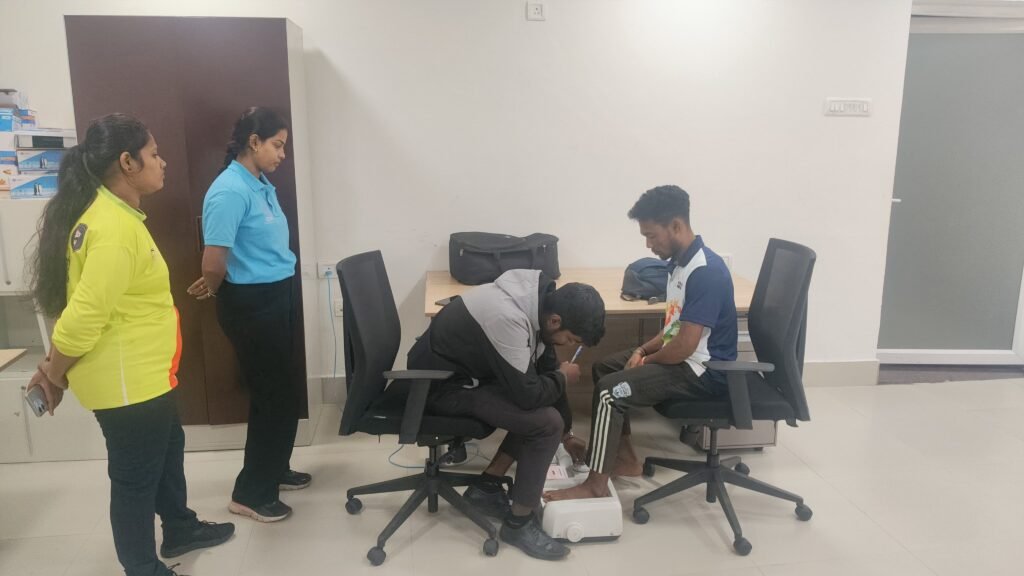
Bhubaneswar — Odisha took a major step towards scientific athlete monitoring as Sports Science India (SSI) conducted the state’s first large-scale Bone Mineral Density (BMD) screening camp at Kalinga Stadium. More than 150 young athletes underwent the test, many of them for the very first time.
The camp used portable DEXA-based scanners to map bone strength and mineral levels. The readings help coaches understand how well an athlete’s bones can handle high-intensity training, jumps, sprints or repetitive load.
Dr. Sarthak Patnaik, founder of SSI, said the initiative aims to make sports science accessible at the grassroots. “This will boost the strength of the athlete and prevent injury. We introduced this initiative to ensure that every athlete gets access to scientific screening at an early stage,” he said.
He added that the goal is to build a generation of injury-resistant athletes. “Our aim is to promote grassroots sports, and this kind of screening is essential for building strong, injury-resistant athletes across the state.”
What the Tests Mean for Athletes
Bone Mineral Density shows how much calcium, phosphorus and other minerals are packed inside the bones. Higher density means stronger bones; lower density often means higher risk.
Many young athletes never get screened, even though they train under high workloads. This is why experts say BMD testing is long overdue.
Dinesh Suri, Chief Operating Officer of Odisha’s Athletics Project under DSYS, said early checks can change training outcomes.
“Elite athletes undergo such tests, but early detection has its own advantage. Low BMD increases the chance of stress fractures. If we can assess bone health early, we can design better training for athletes,” he said.
Young athletes at the camp echoed the same relief and excitement.
Long jump athlete Mehek Nasrin, who has been training at Kalinga Stadium for three years, said the screening gave her clarity and confidence.
“This test is helpful for us to understand our bones and prevent upcoming injuries. For long jumpers like me, this knowledge really matters,” she said.
Why Athletes Must Get BMD Screening
Sports scientists note four essential reasons:
• Injury Prevention:
The test identifies low BMD early, lowering the chance of stress fractures in running, long jump, gymnastics and other impact-heavy sports.
• RED-S Assessment:
It helps detect the effect of Relative Energy Deficiency in Sport (RED-S), a condition linked to bone loss, fatigue and slow recovery.
• Performance Gains:
Athletes with stronger bones tolerate higher workloads. Coaches can use the readings to create targeted strength programmes.
• Long-Term Monitoring:
Tracking BMD over months shows whether training loads are helping or harming bone development.
A Model for Future Sports Science Camps
Dr. Patnaik said the entire camp was free of cost, ensuring all athletes—elite or grassroots—could benefit.
“Sports Science India is committed to providing scientific support without financial burden. These assessments help us understand each athlete’s needs and prevent avoidable injuries,” he said.
Coaches welcomed the initiative, calling it a necessary step in making Odisha’s young athletes stronger and smarter in their training cycles. Many hope the screening becomes a regular part of athlete monitoring.