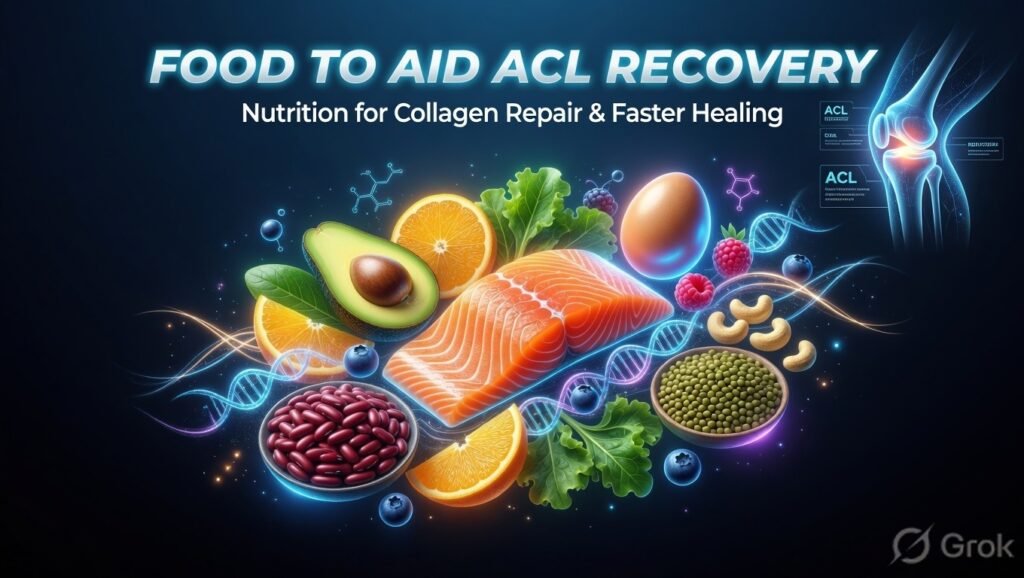
Food To Aid ACL Recovery
Be it through surgical intervention or rehabilitation, the recovery of an anterior cruciate ligament (ACL) injury can take months. What remains the significant aspects of healing are physiotherapy, progressive loading, sleep, and medical supervision. Besides these, researchers have also suggested that nutrition may play an important supporting role.
Scientists increasingly view ligament healing not simply as a mechanical process, but a biological one. Tissues need amino acids, vitamins, minerals, and energy to rebuild collagen, control inflammation, preserve muscle mass, and restore function. In a nutshell, it can be concluded that what you eat may influence how well or how soon you recover.
Why nutrition matters after an ACL injury
Ligaments are made primarily of collagen-rich connective tissue. Compared with muscle, ligaments have relatively poor blood supply, leading to slower healing.
Researchers writing in the Journal of Experimental Orthopaedics noted that ACL tissue recovery depends heavily on collagen turnover, nutrient availability, and managing repeated microtrauma. They argued that nutrition should be considered part of a comprehensive recovery strategy.
That does not mean food can replace surgery or physiotherapy. But it does mean diet may help create a better internal environment for healing.
- Protein: The Most Important Nutrient for Recovery
When movement is reduced after injury or surgery, muscle loss can begin quickly. At the same time, the body needs extra protein to repair damaged tissue.
Sports nutrition experts often recommend higher protein intake during rehabilitation to preserve lean mass and support healing. Many clinicians suggest roughly 1.6 to 2.2 grams of protein per kilogram of body weight daily, depending on age, activity level, and medical status.
Best practice: Spread protein across 3–5 meals rather than eating it all at once. This may improve muscle protein synthesis. For example, instead of one heavy dinner, aim for protein at breakfast, lunch, snacks, and dinner.
- Collagen & its supplements
The ACL is largely built from collagen fibers. That has made collagen supplementation—and collagen-rich foods—a major focus in injury recovery circles.
Several studies suggest collagen peptides or gelatin consumed before rehabilitation exercise may increase collagen-building amino acids in circulation. Some small trials on tendons and connective tissue show potential benefits when collagen is paired with exercise loading. Not just after injury, but collagen should be included in the diet as a preventive measure against injury and strengthening the ACL. Researchers from Norton Orthopedic Institute, Spalding University, and University of Louisville have mentioned in their research paper published in Journal of Experimental Orthopaedics that healthy ligaments are primarily comprised of type I and II collagen, along with glycosaminoglycans (GAGs).
According to them, ACL health is highly dependent on maintaining a collagen-rich extracellular matrix, in addition to ensuring adequate total energy intake and nutritional requirements. They proposed the addition of certain supplements that may accelerate damaged ACL healing.
Bovine hydrolyzed collagen or collagen peptides are short chain amino acids with type I and III collagen that can be absorbed more rapidly into the circulatory system than collagen obtained from gelatin or other dietary sources, they claimed.
Amino acids enriched in collagen (proline, hydroyproline, and hydroxylysine) combined with vitamin C are known to enhance collagen synthesis, according to their article.
They claimed that although ligament ECM consists primarily of type I collagen, type III collagen is advantageous during early healing.
Collagen synthesis and linkages are further enhanced with daily dietary requirements of zinc, sulphur containing amino acids, and beta-carotene.
How can you boost collagen naturally?
According to experts, it is important to understand that collagen can’t be absorbed by the body in its whole form. The body breaks down the collagen proteins that has been consumed into amino acids. According to researchers, eating collagen-rich foods doesn’t directly result in higher collagen levels in the body.
However, there are foods items that support collagen production. These foods contain the amino acids proline and glycine. Vitamin C, zinc and copper are also needed for the process.
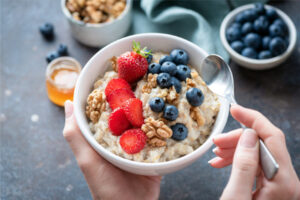
Vitamin C: It found in oranges, strawberries, bell peppers, broccoli, Brussels sprouts and potatoes.
Proline: Proline is found in mushrooms, cabbage, asparagus, peanuts, wheat, fish, egg whites and meat.
Glycine: Glycine is found in red meats, turkey, chicken and pork skin, peanuts and granola.
Copper: Copper is found in liver, lobster, oysters, shiitake mushrooms, nuts and seeds, leafy greens, tofu and dark chocolate.
Zinc: Zinc is found in oysters, red meat, poultry, pork, beans, chickpeas, nuts, broccoli, green leafy vegetables, whole grains and milk products.
Practical Strategy
Some clinicians suggest taking collagen with vitamin C about 30 to 60 minutes before rehab exercise. Evidence is promising but not conclusive.
- Omega-3 Fats: Helpful for Inflammation Control
After ACL surgery or injury, inflammation is normal and necessary—but excessive or prolonged inflammation may worsen pain and slow progress. Omega-3 fatty acids may help regulate inflammatory pathways. Some of the best natural sources of Omega-3 are Salmon, Sardines, Mackerel, Hilsa, flaxseeds, chia seeds and walnuts. Including these foods regularly may help overall recovery, especially when replacing heavily processed fats.
- Colorful fruits and vegetables
Produce provides antioxidants, polyphenols, potassium, magnesium, and vitamin C—all useful during healing. After surgery, oxidative stress rises. Antioxidant-rich foods may help the body manage this stress response. These are naturally available in berries, spinach, beetroot, carrots, Pomegranate, citrus fruits, leafy greens, pumpkin and sweet potato.
- Vitamin D and Calcium
If you are spending more time indoors during recovery, vitamin D levels may fall. That matters because vitamin D supports bone health, immune function, and muscle performance. This is especially relevant after ACL reconstruction involving bone tunnels and graft fixation. Natural Sources are sunlight exposure, egg yolks, fatty fish, fortified dairy, Calcium, Milk, Yogurt, Paneer, Sesame seeds, Tofu, and Sardines with bones.
- Zinc, Magnesium and Iron
These minerals support wound healing, tissue repair, and energy production. These are available in pumpkin seeds, meat, shellfish, beans, magnesium, nuts, seeds, dark leafy greens, whole grains, red meat, lentils, spinach and beans. Low iron can worsen fatigue during rehab
7. Hydration
Connective tissue function depends partly on hydration status. Dehydration may affect performance, recovery, and joint comfort. According to researchers, cartilage and connective tissues in the knee depend on water to maintain elasticity and lubrication. Dehydration can reduce joint shock absorption. This may also lead to slow healing. Thus, they advise athletes to aim for steady water intake throughout the day, besides electrolyte-rich fluids after intense exercise.
Foods That May Work Against Recovery
No food “ruins” ACL healing, but some patterns may make progress harder. One should avoid ultra-processed snacks; excess sugar; frequent fried foods; heavy alcohol intake and chronic undereating.