Recovery Over Reps: Why Modern Athletes Win With Science, Not Just Training
Elite sport has entered an era where what athletes do after training often matters more than the session itself. Coaches, physiologists, and doctors now agree that performance gains are no longer driven only by harder practice, but by smarter recovery. The shift is visible across football, cricket, hockey, and athletics, where recovery protocols are planned with the same precision as training drills.
The Science Behind Recovery
Training breaks the body down. Recovery is what builds it back stronger. During intense sessions, muscles develop micro-tears, glycogen stores deplete, and the nervous system undergoes fatigue. Without adequate recovery, athletes risk overtraining, injury, hormonal imbalance, and performance decline.
Sports scientists now monitor heart-rate variability (HRV), sleep cycles, hydration levels, and muscle load to determine how well an athlete is recovering before scheduling the next session.
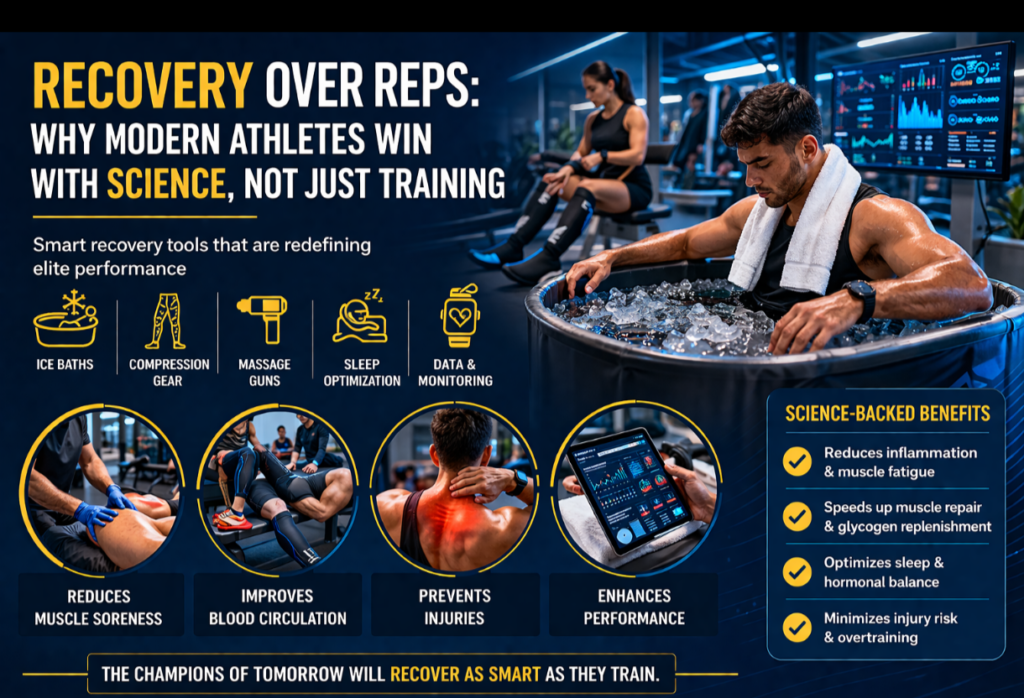
Ice Baths and Cold Water Immersion
Cold water immersion, commonly known as ice baths, helps reduce inflammation and muscle soreness by constricting blood vessels and limiting swelling. Once the body warms up again, fresh oxygenated blood flows back into the muscles, accelerating repair.
Teams in elite leagues and Olympic training centres routinely use 8–12 minute ice bath sessions post-training or post-match to reduce delayed onset muscle soreness (DOMS).
Compression Gear and Circulation
Compression tights, sleeves, and boots are used to improve blood circulation and reduce muscle stiffness. By aiding venous return, they help flush out metabolic waste like lactic acid and bring nutrients back into fatigued muscles.
Athletes often wear compression garments during travel to prevent swelling and during sleep to promote recovery overnight.
Massage Guns and Myofascial Release
Massage guns have become a staple in locker rooms. These devices use percussive therapy to stimulate blood flow, loosen tight muscles, and break down adhesions in fascia. This helps restore range of motion and reduces muscle tightness without the need for long manual massages.
Physiotherapists recommend short sessions on major muscle groups immediately after exertion and before sleep.
Sleep: The Most Powerful Recovery Tool
Doctors emphasise that deep sleep is where the real recovery happens. Growth hormone release, tissue repair, and nervous system reset occur primarily during REM and deep sleep cycles. Many teams now track sleep quality using wearable technology and insist on 8–9 hours of rest as a non-negotiable rule.
Load Management and Data Tracking
GPS trackers, wellness questionnaires, and recovery scores are used to decide whether an athlete should train fully, partially, or rest. This data-led approach has reduced soft tissue injuries and prolonged careers.
Expert Insight
Sports medicine experts suggest that overtraining is now a bigger threat than undertraining. According to team doctors, many injuries occur not because athletes trained too little, but because they did not recover enough between sessions.
Real-World Examples
Marathon runners, footballers playing congested fixtures, and hockey players in tournament formats rely heavily on structured recovery routines to maintain consistency across competitions. Veteran athletes often credit disciplined recovery habits for extending their peak years.
Modern sport recognises a simple truth: performance is built in recovery. Ice baths, compression gear, massage guns, sleep monitoring, and data tracking are no longer luxuries — they are essential tools. As sports science evolves, the champions of tomorrow will not just be those who train the hardest, but those who recover the smartest.