THE QUADRICEPS TEAR (When we chose Rehab Plan over Surgery)
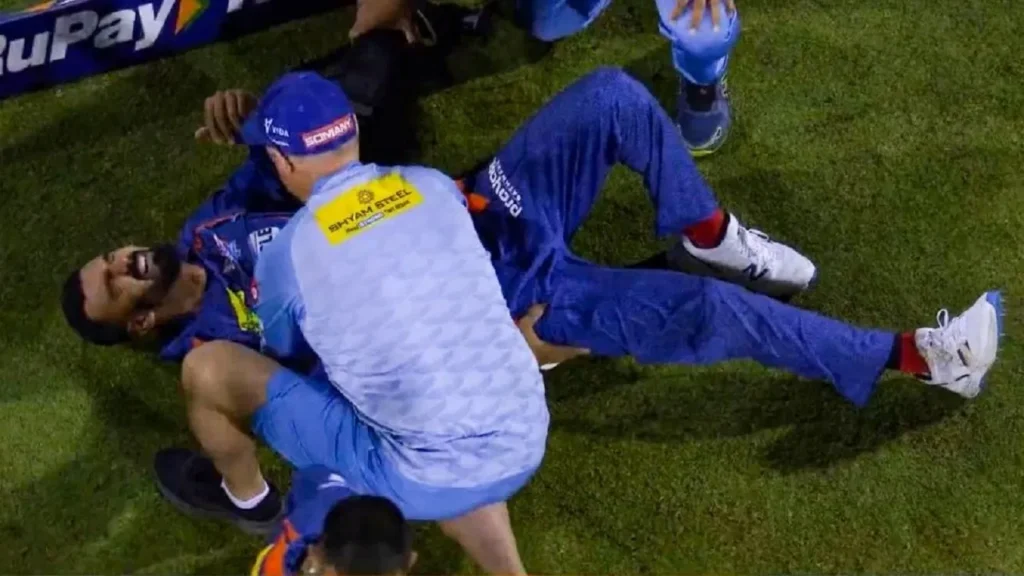
In 2023, Indian cricketer, KL Rahul who was captaining Lucknow Super Giants during Indian Premier League (IPL 2023) had a full-fledged tear of the quadriceps tendon, following which he had to undergo a surgery and months of mental battle to make a comeback to sports. Quadriceps tendon tear (quadriceps tendon rupture) is a rare but serious injury that makes it difficult for your knee to work properly. Often, surgical intervention is required. But, me and my team accepted a challenge of treating quadriceps tendon tear in a 40-year-old by taking the non-surgical route. Here’s how we succeeded, as I share my experience in this article.
Patient and his problem
The male patient a bank employee, who sustained an injury of the left knee and sought medical advice because of continuous pain, had a partial tear of the quadriceps tendon, consisting of a full thickness tear of the distal rectus femoris tendon sheath and a partial tear of the intermediate layer of quadriceps tendon. His condition was diagnosed with the help of MRI images and clinical examination. The patient’s weight was 81 kg and height 1.70m with a BMI of 28 kg/m². He did not participate in any sports and could be regarded as sedentary.
Diagnosis
On clinical examination, a palpaple depression was detected just above the patella on the lower end of the quadriceps. There was no marked effusion with pressure pain localized above the patella. ROM was limited to 0-090 because of pain, there was no extension lag and the extension strength was 4/5. The patient was able to perform a straight leg raise.The MCL and LCL were stable in 0 and 30 degrees of flexion, the PCL was tested using the posterior drawer test and showed no signs of instability. The ACL also showed no signs of instability using the Lachman and Pivot shift test, the medial and lateral meniscus were tested with the Mc murray test and were intact. Patella Apprehension was also negative. The X-ray showed no bony defect and no intraarticular effusion. An MRI was then performed, and it showed a complete thickness tear of the distal rectus femoris tendon and a partial tear of the intermediate layer of the quadriceps tendon.
Why we didn’t operate?
The patient had good muscle tone and functional deficit was absent. Hence, a non-surgical management plan was executed. The treatment consisted of a long knee brace, a period of non weight bearing followed by protected weight bearing and gradual return to strength training. In order to decrease the load of rectus femoris muscle and to prevent reinjury, core stability exercises were also implemented with good functional outcome.
Treatment Plan
The initial phase was composed of a long knee brace for 3 weeks, pain medication and non-weight bearing for 4 weeks. After 3 weeks range of movement exercises were initiated and after4 weeks partial weight bearing was tolerated, together with cryotherapy and transcutaneous electrical nerve stimulation (TENS). After 6 weeks, the patient proceeded to full weight bearing. At this stage we included strength training with isometric contractions and light eccentric exercises. The next exercises were introduced: the straight leg raise with additional weight after time and the ball press for the hamstrings. After 1 week, wall squats were introduced. Core training with ventral and dorsal planking was also introduced to reduce the load on the quadriceps muscle and to reduce the possibility of reinjury. These exercises were continued during a home training plan with regular follow up at Sports Science India (SSI) centre. At 8 weeks after injury, we noticed a complete reduction of the depression in the quadriceps tendon. The power improved to grade 5. The patient was able to walk comfortably without a walker and he had no complaints of pain. We contacted the patient again after 6 months and did a KOOS score, which suggested excellent recovery.