Sleep: The Secret Performance Multiplier Every Athlete Needs
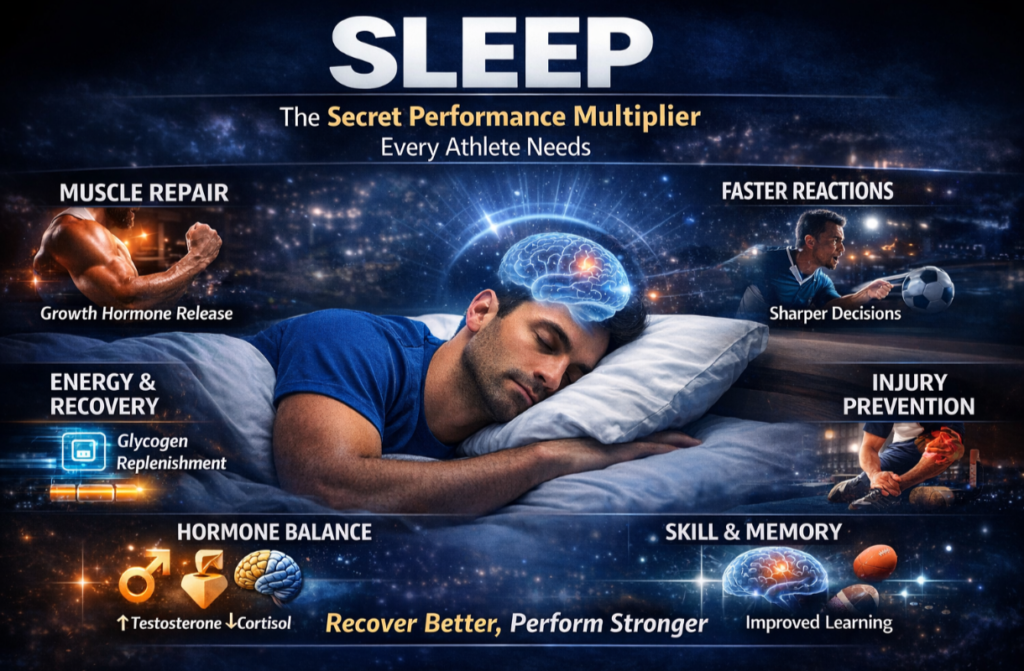
In the pursuit of marginal gains, athletes often look to advanced training methods, nutrition plans, and recovery tools. Yet, one of the most potent performance enhancers requires no equipment, no supplements, and no cost—sleep.
Modern sports science now treats sleep as a cornerstone of athletic performance, not just passive rest. What happens during 7–9 hours of quality sleep directly affects speed, strength, accuracy, endurance, and even injury risk.
Where the Real Recovery Happens
During deep sleep, the body releases growth hormone in high amounts. This is when muscle tissues repair micro-damage from training, inflammation drops, and protein synthesis rises. Cutting sleep short means cutting this recovery cycle short, often leading to prolonged soreness and slower progress.
As sleep researcher Matthew Walker explains, “Sleep is the single most effective thing we can do to reset our brain and body health each day.”
Sharper Brain, Faster Reactions
Sleep restores the prefrontal cortex—the brain’s control center for decision-making and reaction. Studies show that even one night of poor sleep can slow reaction time to levels comparable with mild alcohol impairment. For athletes in fast-paced sports, this can be the difference between success and error.
Fuel Tanks Refilled Overnight
Sleep also restores muscle glycogen, the primary fuel for high-intensity efforts. Without proper sleep, athletes often report early fatigue, reduced power output, and lower endurance capacity in training and competition.
Hormones That Build, Not Break
Quality sleep maintains the right hormonal balance:
Increased testosterone and growth hormone for recovery and strength
Reduced cortisol, the stress hormone that breaks down muscle tissue
Chronic sleep loss shifts the body toward a muscle-degrading state, limiting performance gains.
Evidence from the Field
A landmark study from Stanford University found that basketball players who extended their sleep to nearly 10 hours per night improved sprint speed and shooting accuracy significantly. Similar results have been observed in tennis players improving serve precision and endurance athletes increasing time-to-exhaustion after better sleep routines.
Lower Injury Risk, Better Skill Learning
Athletes sleeping less than seven hours per night show nearly double the injury rate compared to those who sleep eight or more hours. Fatigue affects neuromuscular control, increasing the likelihood of strains and awkward movements.
Sleep also “locks in” motor learning. Practicing a skill and then sleeping leads to better performance the next day without additional training.
The Practical Sleep Formula for Athletes
- Aim for 8–9 hours of nightly sleep
- Take 20–30 minute naps after intense sessions if needed
- Avoid screens at least an hour before bed
- Keep the room cool, dark, and quiet
- Maintain consistent sleep and wake times
Training stresses the body. Sleep is when the body adapts and grows stronger. For athletes seeking a legal, natural, and proven performance edge, prioritizing sleep may deliver more results than adding another workout to the schedule.