Bhubaneswar: India has long positioned itself as a country that recognises diversity in identity. The landmark NALSA v. Union of India affirmed the right to self-identify one’s gender, calling it integral to dignity and equality. This legal shift laid the foundation for a more inclusive society — including in sports.
But the reality on the field tells a more complicated story.
While laws acknowledge gender diversity, Indian sports structures still largely operate within a rigid male-female binary. Studies point out a clear gap between constitutional ideals and sporting governance, with inclusion often remaining more theoretical than practical.
The Struggle for Inclusion on the Field
For transgender and non-binary athletes in India, access to sport is still uneven. Many face barriers ranging from lack of clear eligibility rules to social stigma and limited infrastructure.
Grassroots efforts, however, are beginning to challenge this exclusion. Initiatives like transgender-only football matches and leagues have created safe spaces for participation and visibility. These platforms are not just about competition — they are about identity, dignity and belonging.
As one activist involved in such initiatives noted, these leagues help restore “a sense of belonging” for athletes who have long been sidelined.
Policy Gaps and Structural Challenges
Despite growing awareness, policy frameworks in India still lag behind. The Transgender Persons (Protection of Rights) Act, 2019 prohibits discrimination, yet sports-specific guidelines remain unclear or inconsistent.
Experts argue that eligibility criteria, verification processes and participation rules are often ambiguous, leaving athletes in limbo.
Even recent policy discussions have drawn criticism. The proposed Transgender Persons Amendment Bill 2026 has sparked protests, with activists claiming it undermines the principle of self-identification and risks reversing progress.
This reflects a deeper issue — the absence of a unified, rights-based framework tailored specifically for sports.
The Debate: Fairness vs Inclusion
Gender neutrality in sports is not just a social question; it is also a competitive one. Globally, governing bodies are still debating how to balance inclusion with fairness, especially in categories where physical differences may influence performance.
In India, this debate often remains underdeveloped, with limited scientific, legal and sporting consensus. International policies vary widely, highlighting how complex and evolving the issue is.
Athletes like Dutee Chand have already brought attention to gender-related regulations, challenging norms and forcing institutions to rethink outdated practices.
Voices from Within: Stories Driving Change
Perhaps the most powerful force behind change is personal experience. Recently, stories like that of Anaya Bangar have brought renewed focus on gender identity in Indian sport.
Speaking about her journey, she highlighted the emotional and social challenges of transitioning, underlining the importance of acceptance and support.
Such voices are gradually shifting public discourse from abstract debate to lived reality.
The Road Ahead: Building Truly Inclusive Sport
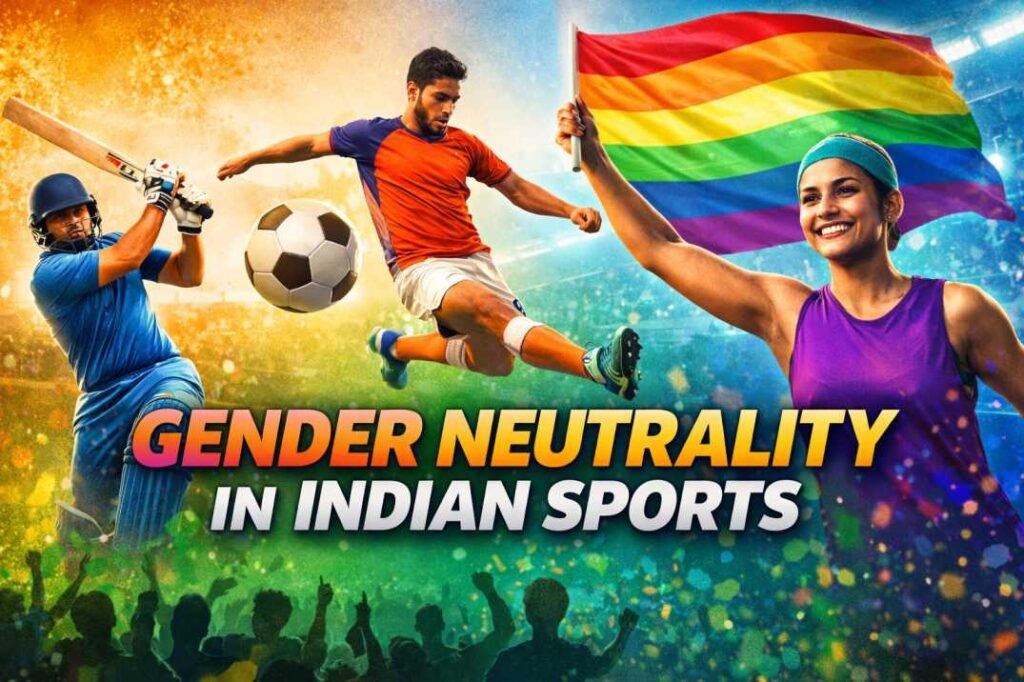
Gender neutrality in Indian sports is still at a formative stage. Progress is visible — in law, in awareness, and in grassroots movements — but systemic change remains slow.
For India to truly embrace inclusive sport, experts suggest three key steps:
- Clear, science-backed and humane participation policies
- Investment in inclusive infrastructure and training spaces
- Greater representation of gender-diverse voices in decision-making
Ultimately, sport is meant to unite, not exclude. As India aspires to become a global sporting powerhouse, the question is not just about medals — but about who gets to compete for them.
The journey toward gender-neutral sport in India is ongoing. And perhaps, its success will be measured not just by records broken, but by barriers removed.

 Sohini Mukherjee
8 Oct 2026 · 8:46 PM IST
2 min read
7 Reads
Sohini Mukherjee
8 Oct 2026 · 8:46 PM IST
2 min read
7 Reads