NBA’s Global Boom, British Struggle: Why UK Players Still Find It Hard to Break Through
The NBA’s global footprint has never been stronger – When the 2024–25 season tipped off, a record 125 international players from 43 countries graced opening night rosters — from France and Serbia to Cameroon and Australia.
Yet, amid the league’s cosmopolitan rise, British basketball continues to lag behind. Only a handful of homegrown players have made it to the world’s top basketball league, and even fewer have stayed long enough to make a lasting impact.
One of the rare success stories this season is Amari Williams, a seven-foot center from Nottingham who was drafted by the Boston Celtics — becoming just the sixth homegrown Briton in 25 years to enter the NBA.
Amari Williams: From Farmland Dreams to the Celtics
Williams’ journey has been anything but typical.
At 16, he left his home in Nottingham to attend an agricultural boarding school in Preston — the only place where he could train full-time.
“We were living on a farm. Going from the city to the countryside was completely different,” Williams recalled.
After a five-year college career between Drexel University and Kentucky, he was drafted by Orlando, traded to Boston, and eventually signed a two-way contract with the reigning champions.
“It’s a great feeling,” he told CNN. “There’s no better place to learn than Boston. The best thing is, there’s no better players to learn from.”
Williams’ rise is more than personal — it’s a rare beacon for British basketball, which remains hampered by infrastructure gaps and lack of direction.
“We Had to Build Our Own Team” – The Tosan Evbuomwan Story
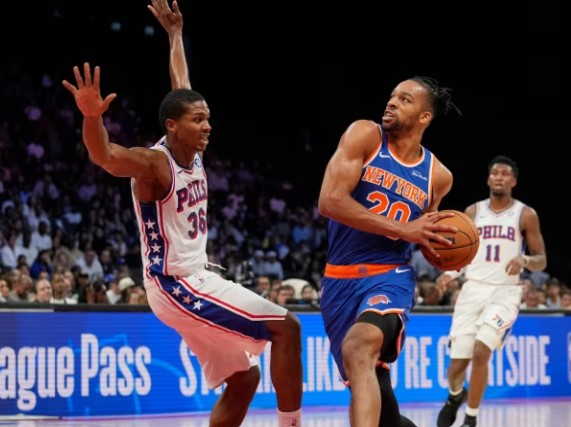
Tosan Evbuomwan, a 24-year-old forward for the New York Knicks, knows that struggle intimately.
Growing up in Newcastle, he didn’t even have a school basketball team — so he and his friends created one.
“There were no coaches, no structure. We just played because we loved the game,” Evbuomwan said.
His raw talent caught the eye of Newcastle Eagles Academy, leading to a scholarship at Princeton University. Four years later, he was the Ivy League Player of the Year, earning NBA contracts with multiple teams before landing in New York.
“I can count on one hand how many shooting guns there are in the UK,” he laughed. “We didn’t even know how to train properly — that’s how underdeveloped it was.”
A Sport Growing in Popularity — but Not in Pathways
Basketball is booming in Britain. According to Sport England’s 2024 Active Lives survey, over 1.5 million people play the sport weekly, making it the second-most popular team sport after football.
Yet, that enthusiasm hasn’t translated into professional development.
Even as NBA fandom among British adults grew 24% since 2022, the sport’s governing structures remain fractured.
In October, FIBA suspended the British Basketball Federation (BBF), citing “governance issues and non-compliance.” The ban prevents Britain’s men’s team from competing in international events — a serious setback for the sport’s image.
Reform and Renewal — But Is It Enough?
Despite turmoil at the top, the grassroots game has received a long-overdue boost.
In September, the UK Government and the NBA announced a joint £10 million investment to improve recreational facilities and expand access nationwide.
“Basketball is booming in Britain — and this investment will help take it to the next level,” said Prime Minister Keir Starmer.
Still, without a unified system to identify and nurture talent, players like Williams and Evbuomwan must continue to carve their own paths — often through U.S. college programs rather than domestic academies.
The Next Generation — Inspired, But Is the System Ready?
Williams says it was Evbuomwan’s journey that motivated him to keep going.
“Seeing Tosan do it first really inspired me,” Williams said. “It made me believe it was possible.”
Evbuomwan now mentors Williams — and hopes to pass that guidance on to future generations.
“Whatever I can do to help him, I’ll do it,” he said. “The same way Sochan helped me — experience matters.”
Their stories show that while the NBA’s global door is open, the pathway from Britain is still narrow.
Until the UK builds a system to match its passion, British hoopers will remain outliers in a league that’s increasingly defined by international excellence.