Hincapie Becomes Second Player Sent Off Under FIFA’s New Mouth-Covering Rule

Ecuador defender Piero Hincapie became the second player to be sent off at the 2026 FIFA World Cup for covering his mouth while confronting an opponent during his side’s Round of 32 defeat to Mexico.
The Arsenal centre-back was shown a red card deep into stoppage time after speaking to Mexico striker Santiago Gimenez with his mouth covered as Ecuador’s World Cup campaign came to an end following a 2-0 defeat.
The incident was not spotted by Slovenian referee Slavko Vincic during play, but the Video Assistant Referee (VAR) intervened and recommended an on-field review. After watching the replay on the pitchside monitor, Vincic dismissed Hincapie.
Second dismissal under new FIFA rule
Hincapie is only the second player to receive a red card under FIFA’s new regulation introduced specifically for the 2026 World Cup.
Paraguay winger Miguel Almiron became the first player to be dismissed under the rule during his side’s group-stage victory over Turkey earlier in the tournament. Despite playing with 10 men, Paraguay held on to secure a 1-0 win.
The regulation was introduced to discourage players from hiding potentially abusive or offensive comments during confrontations on the pitch.
Friendly conversations remain exempt
The rule has already generated debate during the tournament.
Last week, England midfielder Jude Bellingham covered his mouth while speaking to Ghana captain Jordan Ayew but was not punished.
Before the World Cup began, FIFA’s head of referees, Pierluigi Collina, clarified that players would not automatically be penalised simply for covering their mouths.
He explained that referees would distinguish between “friendly conversations” and confrontational exchanges, with only the latter potentially leading to disciplinary action.
Ultimately, referees retain discretion over whether a player’s behaviour warrants a red card after considering the circumstances.
Rule introduced after IFAB approval
The new law was approved during a special meeting of the International Football Association Board (IFAB) in Vancouver in April before being implemented for the expanded 2026 World Cup.
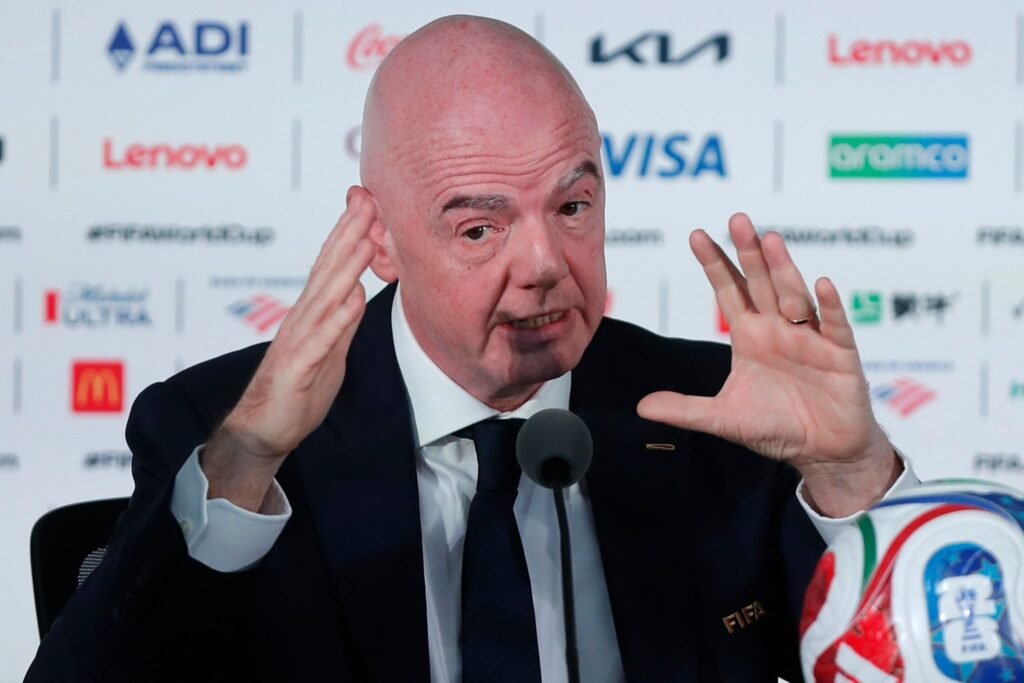
FIFA president Gianni Infantino had publicly supported the proposal, arguing that officials should begin with the presumption that players hiding their mouths during heated confrontations may be attempting to conceal inappropriate comments.
The issue gained international attention earlier this year when Benfica winger Gianluca Prestianni covered his mouth while speaking to Real Madrid forward Vinicius Jr during a UEFA Champions League match.
Initially accused of making racist remarks, Prestianni denied the allegation. A subsequent UEFA investigation instead found him guilty of homophobic conduct, resulting in a six-match suspension, with three matches suspended.
Ecuador’s campaign ends in disappointment
Hincapie’s dismissal came moments before the final whistle as Ecuador’s World Cup journey ended with defeat to Mexico.
Mexico’s victory secured their place in the last 16, where they could face England if the Three Lions overcome DR Congo in their Round of 32 fixture.
For Hincapie, the sending-off adds another high-profile example of FIFA’s determination to strictly enforce one of the tournament’s most controversial new regulations.