How Trunk Strength Directly Improves Sprint Speed and Jump Height
In the pursuit of speed and explosive power, athletes often prioritise leg strength and plyometrics, but sports science shows that performance gains frequently begin at the centre of the body — the core. Far beyond visible abdominal muscles, the core includes deep stabilisers that connect the upper and lower body and act as a bridge for force transfer during sprinting and jumping.
Force transfer: where speed is won or lost
During sprinting, the legs can generate ground reaction forces up to five times body weight. However, if the torso lacks stability, part of that force is lost through unwanted trunk movement. This “energy leakage” reduces stride efficiency, posture control, and ultimately, sprint speed. A stable core ensures that power generated by the legs is effectively translated into forward motion.
Sprinting efficiency depends on trunk stability
Elite sprinters display minimal side-to-side torso movement at top speed. This allows better hip alignment, stronger knee drive, and optimal stride length and frequency. Studies in sprint biomechanics indicate that athletes with superior trunk control maintain their form longer under fatigue, preventing late-race drop-offs in performance.
Jump performance: the core as a power link
In vertical and horizontal jumps, the kinetic chain runs from the feet through the hips and core to the arms. If the core is unstable, this sequence is disrupted. A strong trunk improves take-off posture, enhances arm swing coordination, and ensures effective force transmission during triple extension of the hip, knee, and ankle — all crucial for higher and longer jumps.
Injury prevention through core control
Poor trunk stability is often linked to hamstring strains, lower back stress, and hip flexor issues. When the core cannot stabilise the pelvis during high-speed movement, surrounding muscles compensate, increasing injury risk. This is why modern training programmes emphasise core stability to protect athletes from overuse injuries.
What effective core training looks like
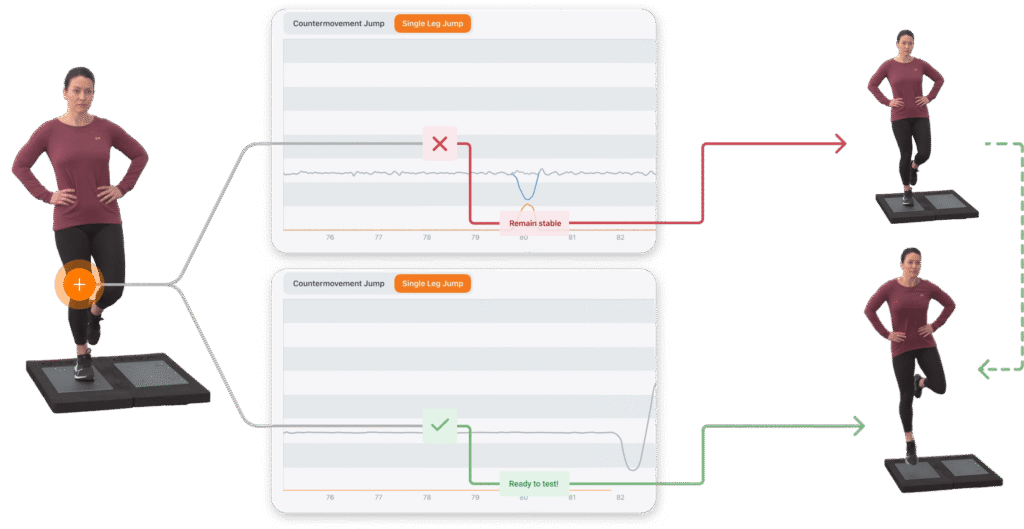
For athletes, core training is less about crunches and more about resisting movement. Exercises such as planks, side planks, Pallof presses, farmer’s carries, and medicine ball throws train the body to remain stable while the limbs move explosively — a direct requirement of sprinting and jumping.
A stronger core does not necessarily make muscles bigger, but it makes movement more efficient, powerful, and controlled. In sports where performance margins are measured in fractions of a second and centimetres, core strength becomes a decisive factor. For athletes aiming to run faster and jump higher, the path to improvement often starts at the centre.