From Ancient Wisdom to Modern Data: The Journey of Sports Science
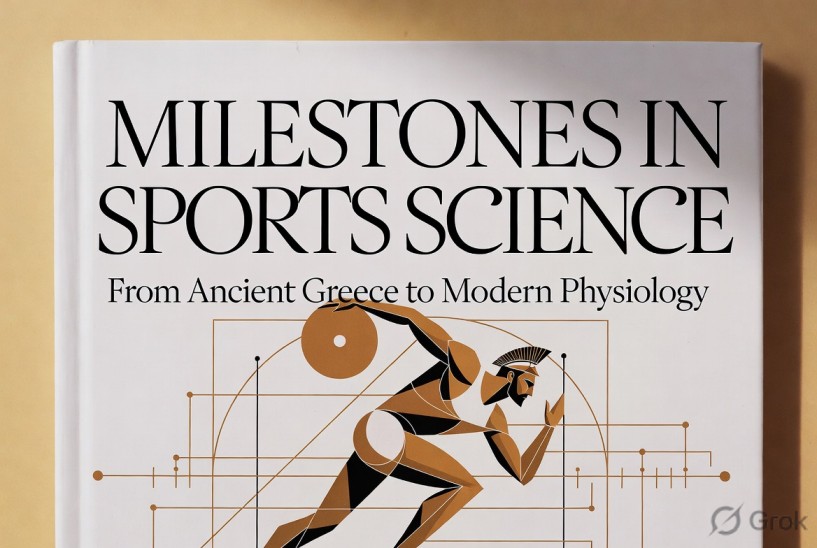
BHUBANESWAR: Sports science has evolved from ancient training practices intertwined with physical education and military drills into a data-driven discipline shaped by technological advances over the past century.
Ancient Origins in Greece
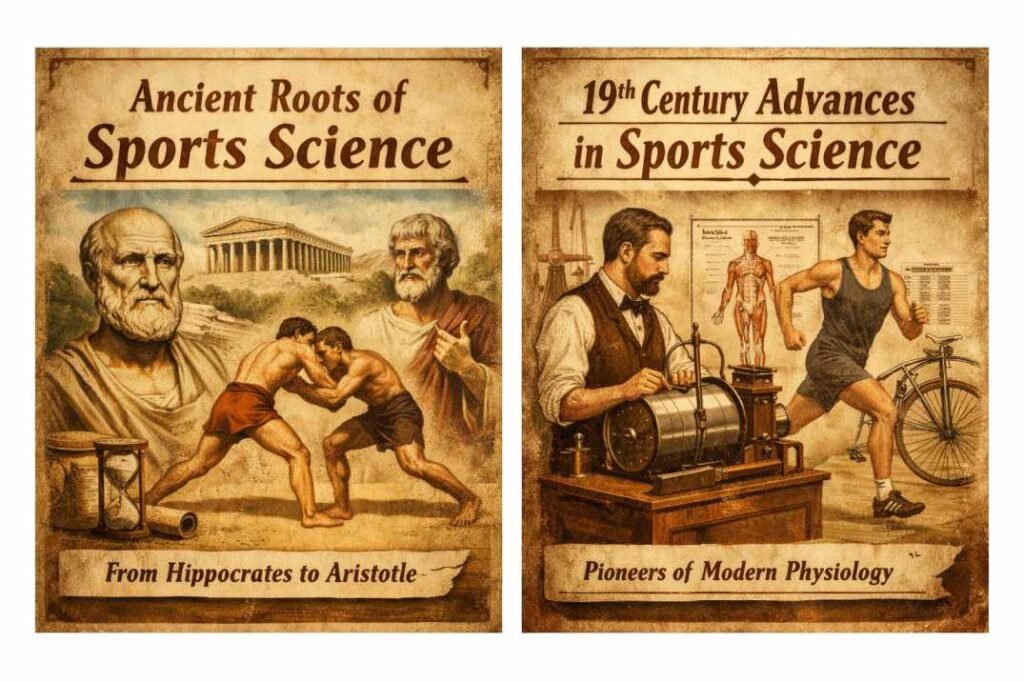
Sports science traces its roots to antiquity, where early observations of human movement informed training in civilizations like Greece and Rome. Pioneers such as Hippocrates and Galen studied physiological responses to exercise, laying groundwork for later developments, though formal study remained rudimentary.
In her book titled ‘Sports Science and Physical Education volume I’ by professor Luminita Georgescu of University of Pitesti, it has been mentioned that physical exercise was used for prophylactic and therapeutic purposes since antiquity. The author claims that it has been illustrated in writings dating back as far as approximately 5000 years in Ancient Greece.
“In his book, Ars Gymnastica, the Greek physician Herodicus (5th century), Hippocrates’s teacher (approximately 460 B.C. – 370 B.C.), described compounds/ programs of exercises and he recommended to his patients wrestling or walking a few kilometers without stopping.
The connections between exercise – muscles, immobilization – atrophy, as well as the role of physical exercise in recovering the muscle strength were studied by Hippocrates,” she writes.
The father of kinesiology is Aristotle (384 – 322 B.C.), who explained the muscles’ action. His knowledge was then improvised by Galen (130 – 200), Galileo (1564- 1642), Newton (1642 – 1727) and Borelli (1608 – 1679).
Flavius Philostratus (3rd century A.D.): He wrote about physical excercise in his book “Gymnasticon.”
Joseph Duchesne (1544-1609): He stated that “exercise is a beneficial thing that guarantees man the avoidance of many invalidities and diseases”… “It grants the body agility, strengthens the nerves and joints”.
Sanctorius Sanctorius (1561-1636): In several of his books made reference to physical exercise and rest.
Giovanni Alfonso Borelli (1608-1679) of Naples: He wrote about the mechanics of the muscles and of exercise.
Per Henrik Ling (1776-1839) (master of sword fighting): He structured physical exercise sessions in three parts: warm-up, working the body and cool-down. He had set the bases of the Royal Gymnastic Central Institute in Stockholm.
Edward Hitchcock Jr. (1828-1911): His contributions to the development of exercise physiology in his studies on physical exercise, training and the body were significant.
19th-Century Foundations
The 1800s marked a shift with figures like Austin Flint Jr. (1836–1915), who analyzed exercise’s physiological effects in medical texts, and Victor Balk, who explored athlete efficiency. Renaissance-era anatomy and Gutenberg’s printing press accelerated knowledge dissemination, fostering university-based research.
- Georges Demeny (1850-1917) used chronography and cinematography to study gait and human movement.
- George Wells Fitz, (1860-1934) set the foundations for the first department in Anatomy, Physiology and Physical Training at Harvard University in 1891.
- Pierre de Coubertin (1863-1937), French pedagogue and historian, was the founder of the International Olympic Committee and of the modern Olympic Games.
- Elli Bjorksten (1870-1947) applied knowledge related to the harmonization of the exercise.
- Elin Falk (1872-1942) described the exercises which contribute to maintaining the correct posture of the body.
- August Krogh (1874-1949) is the Nobel Prize winner for describing the mechanism of capillary blood flow in resisting or active muscle.
- The Hungarian football teams in 1950s: They used statistical analysis to refine their tactics.
- Charles Reep: He was the military accountant who brought data analysis to English game of soccer. He is considered to be the first sports analyst. At 24, he had joined the English Royal Air Force to serve as an accountant. In the Air Force, he learned mathematical skills and attention to detail that he went on to employ throughout his career.
During World War II, Reep was deployed in Germany. He was awarded the rank of Wing Commander. But, he was also passionate about sports and made his contributions towards football. He established himself as the first performance analyst in professional football
20th-Century Expansion
Post-1900, sports science formalized through subfields like biomechanics and exercise physiology, fueled by chronophotography from Georges Demeny (1850–1917). The 1960s–1970s introduced interval training and anaerobic thresholds in sports like cycling, transitioning from intuition to evidence-based methods. Bibliometric analyses show publication growth from 1984, peaking after 2007 with interdisciplinary focus.
1960: Earnshaw Cook published the first ever book of baseball statistics studies titled ‘Percentage Baseball.’
1970s: The concept of Total Football: A revolutionary philosophy was perfected by the legendary Ajax and Netherlands teams of the 1970s and was called Total Football, which changed the face of the sport.
Total Football is based on the key principle that no outfield player should have a fixed position. Total Football was made famous in the 1970s by legendary coach Rinus Michels and Johan Cruyff and the Netherlands team displayed it. Austria’s ‘Wunderteam’ of the 1930s and Hungary’s ‘Magical Magyars’ of the 1950s had also performed with thrilling fluency. Both national teams were heavily influenced by English coach Jimmy Hogan.
Academic Recognition (1950–1975)
The 1954 founding of the American College of Sports Medicine (ACSM) unified researchers. Soviet “Big Red Machine” programs (1950s–1980s) pioneered periodization and plyometrics, dominating Olympics (e.g., 1956 Melbourne: 37 golds).
In 1968, Kenneth Cooper’s Aerobics popularized VO2 max testing and steady-state cardio, sparking the fitness revolution. Liverpool Polytechnic launched the world’s first sports science degree in 1975, enrolling 22 students under pioneers like Tom Reilly.
Technological and Analytical Revolution (1976–2000)
Title IX (1972, USA) boosted women’s sports participation. 1980s GPS and heart-rate monitors emerged; Soviet defector Anatoly Voronin refined strength training models.
1990s saw lactate threshold testing standardize endurance protocols. The 1992 Dream Team professionalized Olympics, accelerating analytics.
Milestone Year Impact
- First Sports Science Degree 1975 Institutionalized multidisciplinary study
- Aerobics Book by Cooper 1968 Popularized aerobic fitness metrics
- ACSM Founded 1954 Standardized research protocols
- Title IX Legislation 1972 Expanded women’s opportunities
- 21st-Century Data-Driven Dominance (2001–Present)
Wearables, AI, and genomics transformed personalization. Moneyball (2003) applied sabermetrics to baseball; FIFA’s 2010 GPS tracking quantified soccer loads.
Post-2010, CRISPR gene editing and cryotherapy advanced recovery; COVID-19 accelerated virtual biomechanics. By 2024, quantum sensors and neural interfaces promised hyper-precise feedback. Bibliometrics reveal exponential publication growth since 2007, with networks spanning physiology and AI.
Sports science now ensures ethical edges, combating doping via WADA (1999) while fostering inclusivity. This trajectory positions it as essential for future athletic frontiers.