Futuristic Looks, Vintage Tech: The Science Behind Para-Athletes’ Blades
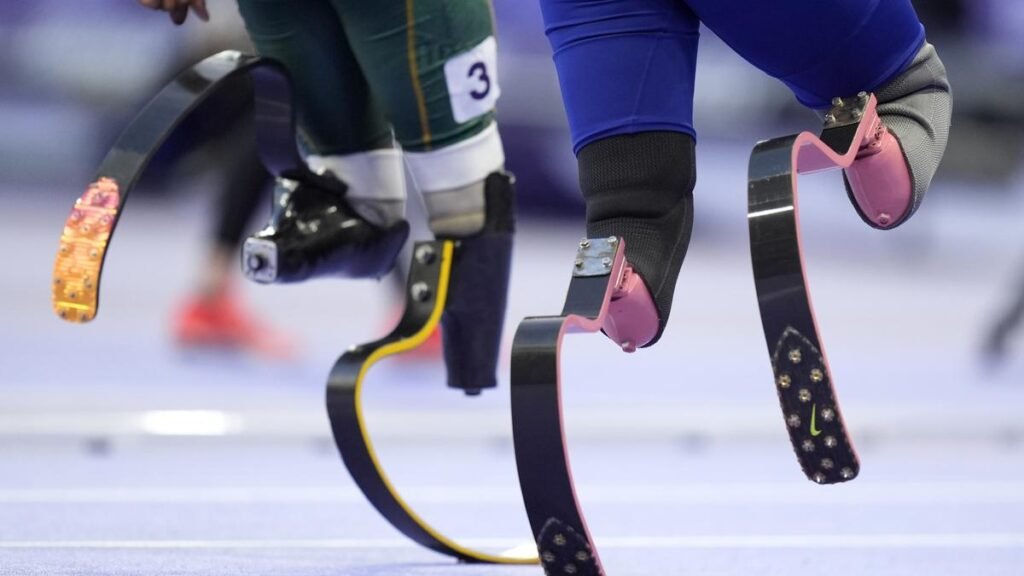
New Delhi — As athletes in the T64 category (single or double leg amputations) take to the track at the Para World Championships, the iconic, dark-black, “J” shaped carbon fibre prostheses they wear—known as blades—look straight out of a science fiction movie. However, despite their advanced appearance, the core technology powering these devices is remarkably decades old. This technical reality governs the performance of elite competitors, including the highly decorated long jumper Markus Rehm.
The Enduring Design of the Blade
The most striking piece of technology in T64 events is the blade itself, yet its success lies in its mechanical simplicity and durability:
- The Cheetah’s Vintage Edge: Four-time Paralympic champion Markus Rehm, known as ‘the blade jumper’, competes with the Ossur Flexfoot Cheetah blade. This design, popularized by Oscar Pistorius, has seen its basic structure virtually unchanged since being invented by engineer Van Phillips in 1984. Rehm’s blade is attached to his right leg, which was amputated below the knee.
- Decades-Old Speed: The longevity of old designs is proven by current records. “The current World Records in the 100m, 200m and 400m… in the T64 category are held by Johannes Floors (double below the knee amputee). He’s using blades that were first introduced in 1992. That design is older than he is!” said former Paralympic champion Heinrich Popow to Sportstar.
- Mechanical Perfection: The iconic “J” shape of the blade is effective because it is mechanically near perfect, functioning as a spring by absorbing and then releasing energy with each stride—a critical necessity for sprinting and jumping.
Why Tech Innovation is Restricted in Sport
While high-tech prosthetics exist for general use, elite para-athletes are limited to these simpler, decades-old designs due to specific regulations designed to maintain fairness in competition.
- Advanced Daily-Wear vs. Sport: For regular users, prosthetics are highly advanced, featuring microprocessors, batteries, sensors, and AI algorithms to predict gait and provide maximum support. This is not the goal of sporting devices. “For daily wear you want all the support you can get. But that’s not what sport is about. Sport is about overcoming weakness,” said equipment expert Heinrich Popow to Reuters.
- The “Doping” Line: Manufacturers could build significantly superior sports prosthetics, but regulations prevent it. “If it was allowed you could absolutely create something far superior… But then you might need to put a motor or increase the length of the blade… That would almost be like doping,” explained Andrea Cremer, technical manager at Ottobock to thd Reuters.
- Strict Competition Rules: World Para Athletics (WPA) rules include technical restrictions:
- MASH (Maximum Allowable Standing Height): Athletes in the T64 category are assigned a Maximum Allowable Standing Height, and if the prosthetic causes them to exceed this limit, they cannot compete.
- New Design Embargo: “You also can’t just debut a new design,” added Popow. The WPA requires any blades being used to have been in use for at least nine months.
Athlete Evolution Outpaces Technology
With radical shifts prohibited, manufacturers are limited to minor tweaks, such as adding more layers of carbon fibre to make blades stiffer for heavier athletes.
However, Popow insists that the available technology is more than sufficient. “The blades that para athletes use are already made out of carbon fiber. That’s already stronger than the human body,” he said (credit: Sportstar).
Instead of technology, the major shift in the sport has been the human element. “The technology has not changed that much since my time as an athlete. But what’s changed massively is the level of athleticism and professionalism of para athletes,” Popow concluded (credit: Reuters). This has led to champions like Rehm competing at a level that, with his personal best jump of 8.71m, would have won a gold medal at nearly every able-bodied World Championships since 1991.