Australia Beat England by Eight Wickets in Two Days, Travis Head Scores 123
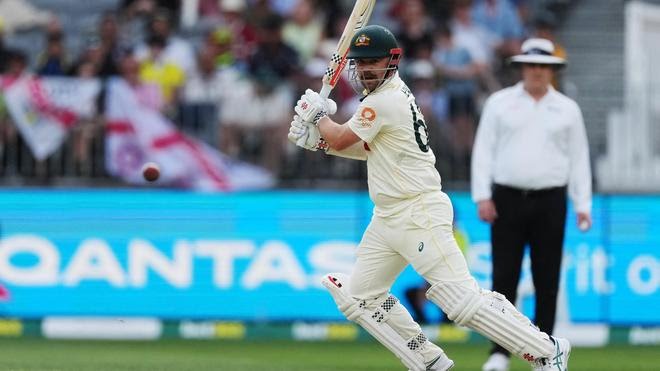
Australia secured a commanding victory over England by eight wickets in just two days of the first Ashes Test at Perth, chasing down a target of 205 runs with ease. Travis Head starred with 123 runs, marking his 10th Test century, and was ably supported by Marnus Labuschagne, who scored 50, forming a crucial 100-run partnership that put the result beyond doubt. Captain Steve Smith sealed the win by scoring the winning run.
England had earlier set a 204-run lead after being bowled out for 164 in their second innings, having dismissed Australia for 132 in the first innings. Mitchell Starc and Scott Boland wreaked havoc on the English middle order, with Starc claiming key wickets including Zak Crawley, Joe Root, and Ben Stokes, while Boland removed Ben Duckett, Ollie Pope, and Harry Brook. A brief lower-order counterattack by Gus Atkinson and Brydon Carse added 50 runs but could not prevent defeat.
This result places the match among the rare two-day Tests, a list of only 25 such matches in history, the most recent being India vs. South Africa in January 2024. These matches highlight how a team can dominate so completely that victory is secured in under 48 hours of play.
The outcome also reignited discussion around pitch conditions. The seamer-friendly Perth surface proved extremely challenging for batting, yet, unlike Eden Gardens in Kolkata—where Indian pitches drew sharp criticism—English and Australian commentators have largely remained silent. With 19 wickets falling on Day 1, the most on an opening Ashes day in 126 years, Sunil Gavaskar’s observations on selective outrage in pitch scrutiny remain highly relevant, showing how conditions continue to shape not just the contest but the broader conversation around cricket.