SSI FANZINE
  • Home
  • Magazine
  • Cricket
  • Soccer
  • Hockey
  • Tennis
  • F1
  • Injury & recovery
  • Miscellaneous
  • Sports Tech
  • Videos
No Result
View All Result
  • Home
  • Magazine
  • Cricket
  • Soccer
  • Hockey
  • Tennis
  • F1
  • Injury & recovery
  • Miscellaneous
  • Sports Tech
  • Videos
No Result
View All Result
SSI FANZINE
No Result
View All Result

Racing the Clock: How Injuries to Neymar, Salah, James and Rice Are Quietly Shaping FIFA World Cup 2026
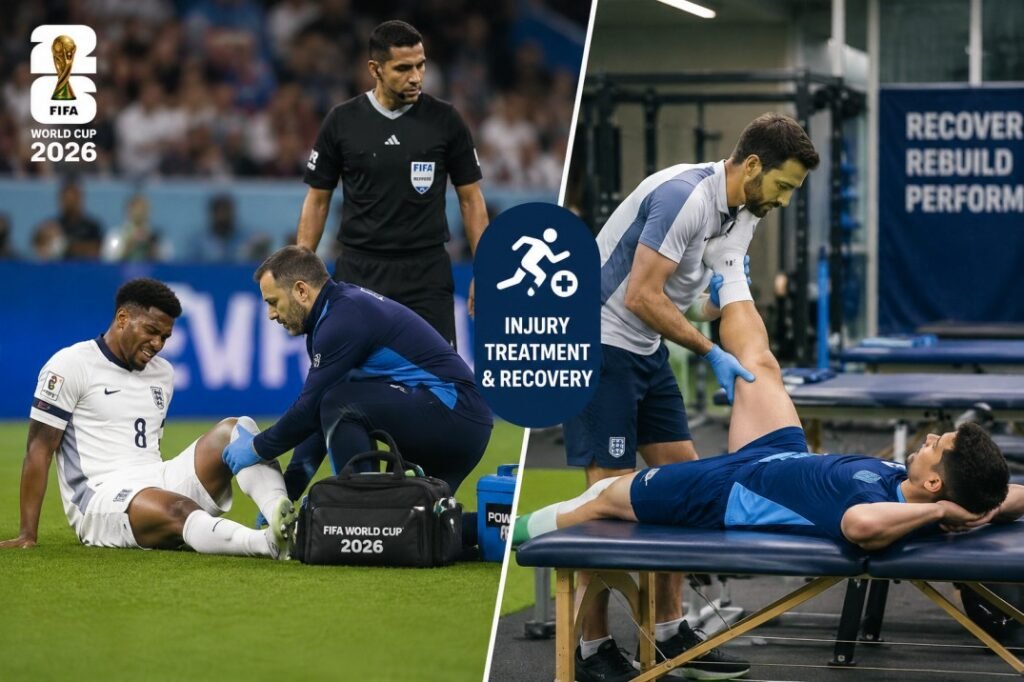
As Neymar fights his way back onto the pitch and Mohamed Salah races the clock, the 2026 World Cup is turning into a study of two very different outcomes — recovery and uncertainty

Baibhav Mishra by Baibhav Mishra
July 5, 2026
in Injury & recovery, Sports Feature
Racing the Clock: How Injuries to Neymar, Salah, James and Rice Are Quietly Shaping FIFA World Cup 2026

There is a moment every injured athlete knows well. It happens somewhere between the scan result and the first tentative jog back on the training pitch — a stretch of time that is equal parts hope, boredom, and fear. At the World Cup, that moment is playing out in real time, in front of a global audience, for some of the biggest names in football.

This tournament has quietly become a case study in how bodies break down and heal under pressure. On one side, there is Neymar, who tore his calf three weeks before the competition even began and has now clawed his way back into Brazil’s squad. On the other, there is Mohamed Salah, whose World Cup could end not with a bang but with a knee that simply will not cooperate in time. In between sit Reece James and Declan Rice, two England players whose bodies are being managed match by match, almost like a science experiment nobody signed up for.

Put together, these four stories are less about football tactics and more about physiology — about how muscle, ligament, and nerve behave under the strain of the world’s biggest stage.

Neymar: A Race Against a Three-Week Clock

Calf injuries have a reputation among sports doctors for being deceptively stubborn. They look minor on a scan and feel minor to the athlete within days — but the muscle fibres involved are exactly the ones that generate the explosive push-off needed for sprinting and cutting, which is why so many players re-injure the same spot when they return too early.

That was the tightrope Neymar walked. He picked up the injury just three weeks before Brazil’s World Cup opener, a brutally short runway for any recovery, let alone one for a 34-year-old whose body has already carried the weight of nearly two decades of professional football. He missed Brazil’s group opener, watching from the sidelines as his team was forced to find a way to win without him.

But calf strains, unlike ligament tears, respond well to a specific kind of patience: controlled loading. Rather than complete rest, modern sports medicine leans on a gradual reintroduction of strength work, allowing the muscle to rebuild its tolerance for the sudden, sharp forces of sprinting. It is slow, unglamorous work — and it paid off. Neymar made his long-awaited return for Brazil, coming off the bench for an emotional cameo as the Selecao secured top spot in their group. It was not a full ninety minutes, but it was proof that his body had cleared the first, hardest hurdle. The bigger question now is whether it holds up under the accelerating physical demands of the knockout rounds, where there is no more room for caution.

Mohamed Salah: When the Clock Runs Out First

If Neymar’s story is about a recovery that arrived just in time, Salah’s is a reminder that not every injury bends to a deadline. The Egyptian forward picked up a knee problem during the group stage, and unlike a calf strain, knee issues carry a different kind of uncertainty — swelling, joint stability, and the risk of aggravating a small problem into a much larger one are all harder to predict than muscle recovery timelines.

Salah’s hopes of playing in Egypt’s knockout match now hang in the balance. This is the uncomfortable truth about knee injuries in professional sport: even when structural damage is minor, the joint’s tolerance for high-speed rotation and sudden stops often takes longer to return than the pain does to fade. Team medical staff are almost certainly weighing a familiar trade-off — the short-term value of having their star player on the pitch for one match against the long-term risk of turning a manageable issue into a serious one.

It is a decision made under intense pressure, both medical and emotional, and it captures something true about elite sport: recovery is rarely just a biological process. It is also a negotiation between what the body can do and what the moment demands.

England’s Balancing Act: Reece James and Declan Rice

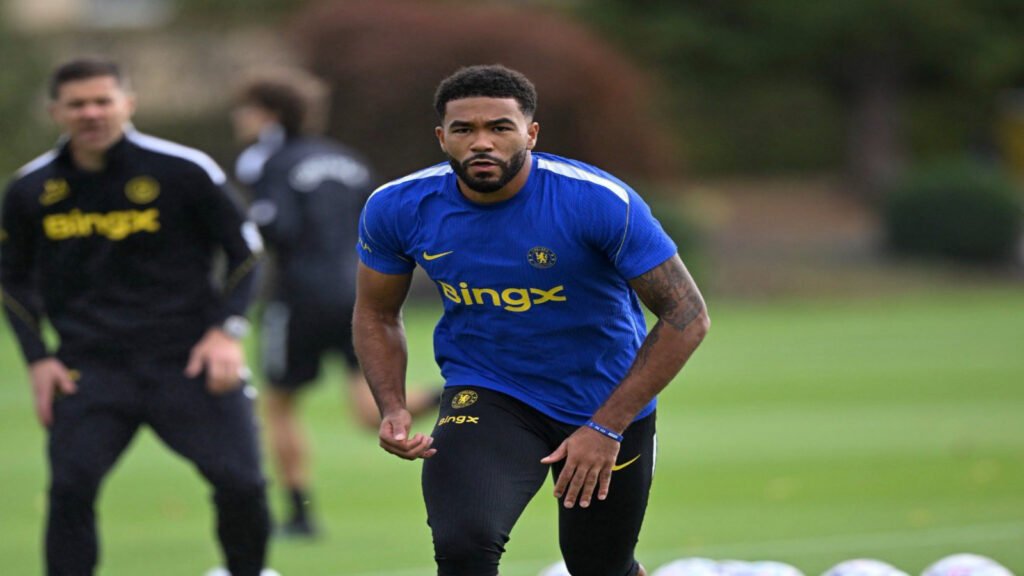
England’s situation offers a quieter, more procedural version of the same story. Reece James has been missing from England’s last two matches, an absence that has left the team visibly short-handed defensively. Manager Thomas Tuchel has expressed optimism that James will be “available very soon,” though the defender was still missing from training following England’s win over DR Congo — a small but telling sign that “soon” in football medicine rarely means “now.”

Declan Rice’s situation is different in nature, though similarly cautious. He has been managing nerve-related back pain throughout the tournament, a type of injury that often does not follow a clean, linear recovery curve the way a muscle strain might. Rice was rested for England’s group finale before returning for the knockout win over DR Congo, only to be withdrawn again in the second half. Tuchel has been careful to describe it as management rather than injury — a distinction that matters more than it might seem, since it suggests an ongoing, low-level irritation rather than a fresh setback.

Together, James and Rice illustrate a less dramatic but arguably more common reality of tournament football: most players are not fully fit or fully injured, but somewhere in between, being carefully rationed match by match.

Two Roads, One Lesson

What ties these four cases together is not the injuries themselves but the different rhythms of recovery they represent. Neymar’s calf followed a predictable, if nerve-wracking, path back to fitness. Salah’s knee is a reminder that some joints do not care about deadlines. James and Rice show that recovery is often not a single event but an ongoing negotiation between pain, performance, and caution.

For fans, injuries like these can feel like footnotes to the real drama of goals and results. But for the players and medical staff living through them, they are the real story — a daily calculation of risk, patience, and hope, playing out under lights far brighter than any physiotherapy room was built for. As the World Cup moves deeper into its knockout stages, it is worth remembering that every player still on the pitch is, in some sense, a small medical success story — and every one on the sidelines is a reminder of how fine the line between fit and injured really is.

Please follow and like us:
fb-share-icon
Tweet
Pin Share
Tags: Declan Rice back painfootball injury recoveryMohamed Salah knee injuryNeymar calf injuryReece James injurysports injury recoveryWorld Cup 2026 injuries
Baibhav Mishra

Baibhav Mishra

Related Posts

The Blade’s Edge: India’s Men’s Foil Team Fences its Way to the 2026 Asian Games
Fencing

The Blade’s Edge: India’s Men’s Foil Team Fences its Way to the 2026 Asian Games

July 5, 2026
FIFA’s New Red Card Rule Explained: What Is the Prestianni Law?
Football

FIFA’s New Red Card Rule Explained: What Is the Prestianni Law?

July 5, 2026
The Rise of Smart Stadiums: How AI, Biometrics, and Cashless Tech Are Transforming Live Sports
Sports Feature

The Rise of Smart Stadiums: How AI, Biometrics, and Cashless Tech Are Transforming Live Sports

July 5, 2026
Next Post
Sarthak Chavan Scripts Indian Motorsport History with Landmark Top-Six Finish in Europe

Sarthak Chavan Scripts Indian Motorsport History with Landmark Top-Six Finish in Europe

One Second to Glory: Why Sajan Prakash’s Final Season Could Define His Legacy

One Second to Glory: Why Sajan Prakash's Final Season Could Define His Legacy

Alexandra Eala’s Wimbledon Fairytale Inspires a Nation as Filipino Tennis Reaches New Heights

Alexandra Eala's Wimbledon Fairytale Inspires a Nation as Filipino Tennis Reaches New Heights

Discussion about this post

Recommended

Rain Halts Play As New Zealand And Pakistan Share Points In Colombo Showdown

Rain Halts Play As New Zealand And Pakistan Share Points In Colombo Showdown

9 months ago
East Bengal Clinches Dramatic 3-2 Victory Over Mohun Bagan in Kolkata Derby at Kalyani

East Bengal Clinches Dramatic 3-2 Victory Over Mohun Bagan in Kolkata Derby at Kalyani

11 months ago
@TKI_cricket /X

From ‘Cursed’ to Champion: How Did Preethi Pal Rewrite India’s Para Athletics History?

9 months ago
Ronaldo Sent Off as Ireland Stun Portugal, France Seal World Cup Spot

Ronaldo Sent Off as Ireland Stun Portugal, France Seal World Cup Spot

8 months ago

Blogs

Prize Money Debate and F1 Driver Market Shake Global Sports Landscape

Invisible Sidelines: Why Youth Sports Are Failing Athletes When It Matters Most

‘Rigged?’ NHL Draft Lottery Sparks Fan Fury After Leafs Land No. 1 Pick

From Mat to Monitor: How Sports Science Is Rewriting India’s Sporting DNA

Upcoming Multi-Sport Action: A Packed Global Calendar Keeps Fans on the Edge

Road To 2030 Commonwealth Games: India’s Bold Sporting Vision Takes Shape

No Result
View All Result
Alexandra Eala’s Wimbledon Fairytale Inspires a Nation as Filipino Tennis Reaches New Heights

Alexandra Eala’s Wimbledon Fairytale Inspires a Nation as Filipino Tennis Reaches New Heights

July 5, 2026
One Second to Glory: Why Sajan Prakash’s Final Season Could Define His Legacy

One Second to Glory: Why Sajan Prakash’s Final Season Could Define His Legacy

July 5, 2026
Sarthak Chavan Scripts Indian Motorsport History with Landmark Top-Six Finish in Europe

Sarthak Chavan Scripts Indian Motorsport History with Landmark Top-Six Finish in Europe

July 5, 2026
Racing the Clock: How Injuries to Neymar, Salah, James and Rice Are Quietly Shaping FIFA World Cup 2026

Racing the Clock: How Injuries to Neymar, Salah, James and Rice Are Quietly Shaping FIFA World Cup 2026

July 5, 2026
Grigor Dimitrov Rewrites His Wimbledon Story With Gritty Win Over Matteo Berrettini

Grigor Dimitrov Rewrites His Wimbledon Story With Gritty Win Over Matteo Berrettini

July 5, 2026
The Blade’s Edge: India’s Men’s Foil Team Fences its Way to the 2026 Asian Games

The Blade’s Edge: India’s Men’s Foil Team Fences its Way to the 2026 Asian Games

July 5, 2026

Highlights

Racing the Clock: How Injuries to Neymar, Salah, James and Rice Are Quietly Shaping FIFA World Cup 2026

Grigor Dimitrov Rewrites His Wimbledon Story With Gritty Win Over Matteo Berrettini

The Blade’s Edge: India’s Men’s Foil Team Fences its Way to the 2026 Asian Games

India’s Young Paddlers Secure U-19 Asian Championship Bronze After Memorable Run in Bangkok

Marc Marquez Redefines Greatness: Why Beating Valentino Rossi’s Record Is No Longer His Biggest Goal

Notts Hold Nerve to Stay Top as Yorkshire, Essex Cruise in T20 Blast

Trending

Alexandra Eala’s Wimbledon Fairytale Inspires a Nation as Filipino Tennis Reaches New Heights
Tennis

Alexandra Eala’s Wimbledon Fairytale Inspires a Nation as Filipino Tennis Reaches New Heights

by Sohini Mukherjee
July 5, 2026
0

Alexandra Eala's dream run at Wimbledon 2026 has become much more than a personal breakthrough—it has transformed...

One Second to Glory: Why Sajan Prakash’s Final Season Could Define His Legacy

One Second to Glory: Why Sajan Prakash’s Final Season Could Define His Legacy

July 5, 2026
Sarthak Chavan Scripts Indian Motorsport History with Landmark Top-Six Finish in Europe

Sarthak Chavan Scripts Indian Motorsport History with Landmark Top-Six Finish in Europe

July 5, 2026
Racing the Clock: How Injuries to Neymar, Salah, James and Rice Are Quietly Shaping FIFA World Cup 2026

Racing the Clock: How Injuries to Neymar, Salah, James and Rice Are Quietly Shaping FIFA World Cup 2026

July 5, 2026
Grigor Dimitrov Rewrites His Wimbledon Story With Gritty Win Over Matteo Berrettini

Grigor Dimitrov Rewrites His Wimbledon Story With Gritty Win Over Matteo Berrettini

July 5, 2026

Sports Science India Fanzine
India's First Sports Science Magazine.

Quick Links

  • Shop
  • My Account
  • Member Login
  • Register
  • Subscription Plan
  • Terms and Conditions
  • Privacy Policy
  • Shipping Policy
  • Refund and Returns Policy

Featured

  • IPL 2025
  • Indian Super League
  • English Premier League
  • La Liga
  • UEFA Champions League
  • Europa League
  • Serie A
  • Bundesliga
  • Ultimate Fighting Championship
  • I-League
  • Copa America

Contact Info

Sports Science India
Plot No - A17/1A, Unit-7, Surya Nagar,
In front of S.P Vigilance Office,
Bhubaneswar - 751003

+91 78479 22850

ssifanzine@outlook.com

  • About
  • Advertise
  • Careers

© 2025 - SSI FANZINE. All Rights Reserved.

RSS
Follow by Email
Facebook
fb-share-icon
X (Twitter)
Tweet
No Result
View All Result
  • Home
  • Magazine
  • Cricket
  • Soccer
  • Hockey
  • Tennis
  • F1
  • Injury & recovery
  • Miscellaneous
  • Sports Tech
  • Videos

© 2025 - SSI FANZINE. All Rights Reserved.