Time For Tuchel To Deliver As England Enter World Cup Knockout Test
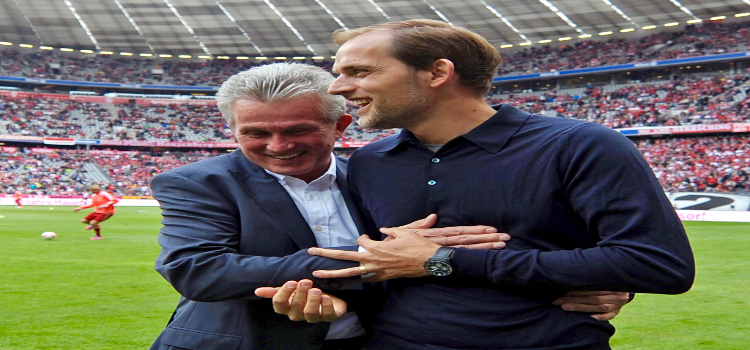
England’s FIFA World Cup campaign enters its most important phase on Wednesday as Thomas Tuchel’s side take on DR Congo in the Round of 32, knowing there is no margin for error from this point onwards.
The Three Lions progressed as Group L winners after victories over Croatia and Panama, either side of a disappointing goalless draw against Ghana. While England achieved their first objective, their performances have done little to convince they are genuine favourites for the title.
For Tuchel, the group stage was only the beginning. The German has previously described the knockout rounds as the “third chapter” of England’s World Cup story. Now comes the stage where every decision could define his tenure.
Knockout football leaves no room for mistakes
The group stage allowed Tuchel to rotate his squad, manage workloads and experiment with different combinations. Those luxuries have now disappeared.
One defeat would end England’s World Cup dream and pile immediate pressure on a manager who was appointed with one clear objective — ending the nation’s 60-year wait for another World Cup title.
Recent results have already highlighted how unforgiving this tournament has become. Germany suffered a shock exit against Paraguay on penalties, while the Netherlands were knocked out by Morocco, leading to Ronald Koeman’s resignation less than a day later.
Those surprises serve as a reminder that reputation means very little once the knockout rounds begin.
Tuchel acknowledged the unpredictability of the tournament, saying the narrow margins in recent matches should keep England focused rather than nervous.
Defensive uncertainty remains England’s biggest concern
England’s biggest weakness continues to be at the back.
Tuchel has repeatedly changed his defensive combinations throughout the tournament due to injuries and tactical adjustments.
Reece James and Jarell Quansah will both miss the clash against DR Congo after suffering injuries during the group stage. Their absence leaves Tottenham defender Djed Spence as England’s only recognised right-back.
The manager could move Ezri Konsa across to the flank, while John Stones is also pushing for a return after being rotated during the group stage.
Jordan Pickford remains England’s undisputed first-choice goalkeeper, but the defence in front of him has lacked stability throughout the tournament.
Former England captain Wayne Rooney recently pointed out that successful teams are normally built around a settled goalkeeper and back four — something England have yet to establish under Tuchel.
Those concerns could become even more significant if England progress to face stronger opponents later in the competition.
Selection calls could define Tuchel’s tournament
Beyond the defence, Tuchel faces important decisions in attack.
Bukayo Saka made his first World Cup start against Panama after recovering from an Achilles problem and completed just over an hour before being substituted.
The Arsenal winger appears to be regaining fitness, but Tuchel must decide whether he is ready to start another high-intensity knockout match.
Managing player fitness has been a recurring theme throughout England’s campaign, but balancing freshness with continuity becomes increasingly difficult as the tournament progresses.
Every selection now carries far greater significance.
Declan Rice remains England’s most important player
If the Panama victory highlighted one thing, it was England’s dependence on Declan Rice.
The Arsenal midfielder was rested after picking up a yellow card and nursing minor fitness concerns. His absence exposed England’s midfield balance as Panama repeatedly found opportunities on the counter-attack.
Although England won comfortably, they allowed 13 shots — a statistic that raised fresh questions about their defensive organisation.
Rice offers far more than defensive protection. His positioning, passing range, leadership and set-piece delivery make him one of England’s most complete players.
Alongside captain Harry Kane and Jude Bellingham, Rice has become virtually irreplaceable in Tuchel’s system.
Should England hope to challenge for the trophy, keeping the midfielder fit could prove decisive.
England must avoid becoming the next upset
The expanded World Cup has already produced several major surprises.
Paraguay eliminated Germany, Morocco knocked out the Netherlands, while Brazil required a stoppage-time winner to edge past Japan.
Those results have reinforced the fact that every knockout fixture carries enormous risk regardless of rankings or reputation.
England enter the match as favourites, but DR Congo have already shown they are capable of competing with stronger opposition throughout the tournament.
Tuchel insisted England must embrace those expectations rather than fear them, acknowledging that his players are expected to progress beyond the Round of 32.
The challenge now is to translate that belief into performance.
The experimentation, squad rotation and tactical adjustments of the group stage are over. Every decision from this point forward could shape England’s World Cup destiny.
Against DR Congo, Tuchel has the opportunity to prove that his team is ready for the biggest tests still to come.