Financial Fair Play Crackdown: Are Europe’s Giants Walking a Tightrope Again?
European football is once again under the microscope.
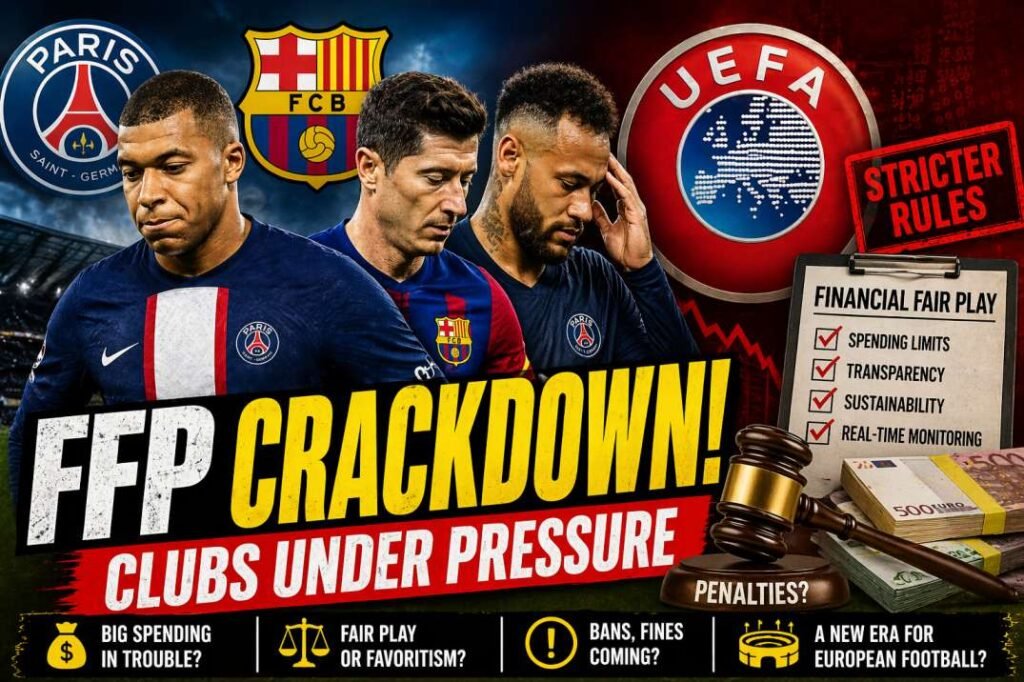
With UEFA reinforcing its Financial Fair Play (FFP) regulations, the era of unchecked spending appears to be tightening. Clubs that once pushed financial boundaries are now being forced to rethink their strategies.
At the center of the storm are familiar heavyweights like FC Barcelona and Paris Saint-Germain—teams synonymous with both success and scrutiny.
What Has Changed This Time?
Unlike earlier FFP versions, the updated system introduces stricter financial sustainability rules:
- Clubs can only spend a fixed percentage of their revenue on wages and transfers
- Increased transparency in sponsorship deals
- Real-time monitoring instead of post-season audits
This shift means clubs can no longer rely on creative accounting or delayed reporting to balance the books.
The Barcelona Balancing Act
Few clubs illustrate this struggle better than Barcelona.
Once dominant both on and off the pitch, the club has spent recent seasons navigating financial turbulence—selling assets, restructuring wages, and making tough squad decisions.
Yet, the pressure remains.
Every transfer window now becomes a puzzle:
How to stay competitive without crossing financial red lines?
PSG and the Superstar Model
Meanwhile, PSG’s model of assembling global superstars is also facing renewed questions.
Massive wages, luxury signings, and commercial partnerships have long defined the club’s strategy. But under stricter FFP enforcement, sustaining this approach may prove challenging.
The question is no longer just about winning titles—it’s about justifying the cost of winning.
The Domino Effect Across Europe
This crackdown isn’t just about elite clubs.
- Mid-tier clubs must now operate with sharper financial discipline
- Young talent development is becoming more valuable than expensive transfers
- Smart scouting and analytics are replacing big-money gambles
In many ways, this could rebalance European football, making it more competitive—but also less glamorous.
Fans Caught in the Middle
For supporters, the situation is complex.
On one hand:
- Financial discipline ensures long-term club stability
On the other:
- It may limit blockbuster signings and star-studded squads
Fans are left asking:
Do we want sustainability—or spectacle?
A New Era or Old Story Repeating?
Financial Fair Play has been here before. And so have controversies.
The difference now is enforcement.
If UEFA follows through with consistent penalties—fines, transfer bans, or squad restrictions—it could mark a turning point in how football operates financially.
If not, critics will argue it’s just another cycle of rules that clubs eventually learn to navigate.
The Bigger Picture
This isn’t just about rules—it’s about the future identity of football.
Will the sport move toward financial discipline and fairness,
or continue to be shaped by wealth and influence?
As Europe’s giants walk this tightrope, one thing is clear:
The game off the pitch may soon matter just as much as the one on it.