Pride, Pressure and the Playoff Equation: Why This Draw Meant More Than the Scoreline
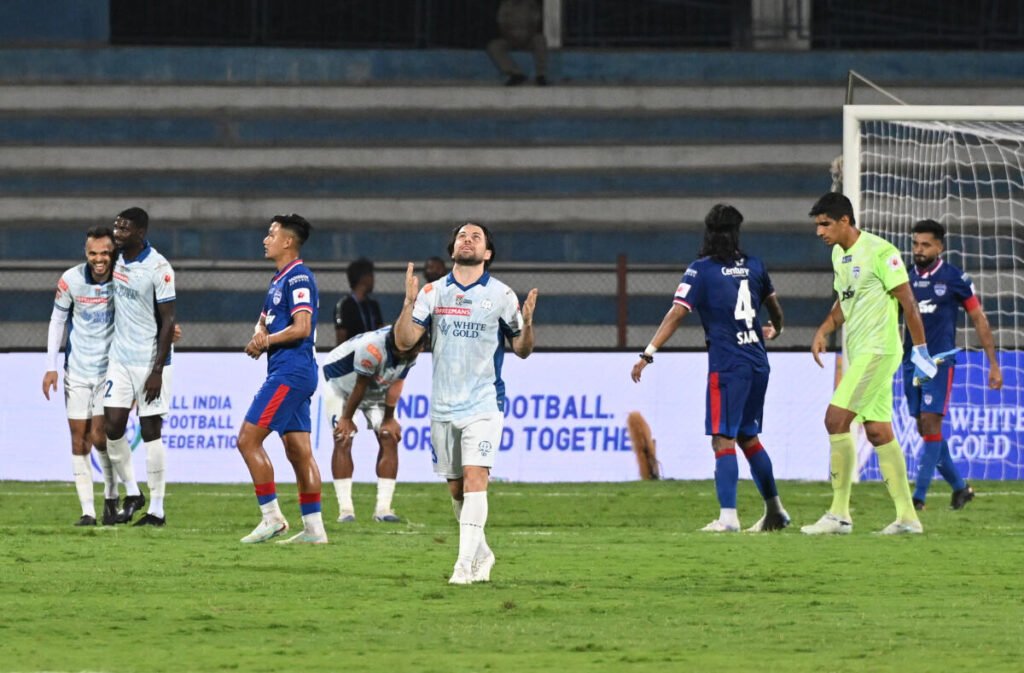
At first glance, the 1-1 result between Kerala Blasters FC and NorthEast United FC at the Jawaharlal Nehru Stadium, Kochi looked like just another shared point in the long Indian Super League season.
But beneath the scoreline, this was a match loaded with anxiety, redemption arcs, and the harsh reality of what late-season ISL football does to teams hovering near the danger zone.
A Match Played With the Weight of the Table
Both sides came into this fixture not thinking about style, flair, or dominance — but about not losing.
For Kerala Blasters, the season had been about rebuilding belief under new leadership and clawing back confidence after a shaky start. Every home game in Kochi had turned into a referendum on whether the team still had the mental strength to compete when it mattered most.
NorthEast United, on the other hand, arrived with a very different emotional baggage. The Durand Cup triumph earlier in the campaign had raised expectations, but league inconsistency had quietly dragged them into a battle they did not anticipate. This game was less about showcasing talent and more about proving they would not collapse under pressure.
The Nature of the Goals Told the Story
Kerala’s opener came through an own goal — a moment that symbolised how tight and nervy the contest was. There was no sweeping move, no creative brilliance. Just pressure, chaos in the box, and a mistake forced by urgency.
NorthEast’s equaliser, scored late by Rinzuala, was not just a goal. It was a psychological rescue act. It ensured that the Highlanders left Kochi with belief intact rather than questions about their temperament in crunch situations.
Tactical Caution Over Entertainment
This was not a game for highlight reels. It was a game of cautious midfield battles, compressed defensive lines, and calculated risks. Both coaches set their teams up to avoid errors rather than chase dominance.
The midfield rarely opened up. Full-backs hesitated to bomb forward. Strikers were often isolated. Every pass carried the fear of a turnover. This is what ISL football looks like when the table starts dictating behaviour.
Kochi’s Crowd as the Emotional Barometer
The atmosphere at Kochi reflected the mood of the home side. Early encouragement turned into nervous anticipation as the match wore on. When NorthEast scored late, the silence inside the stadium captured what the point meant — not disaster, but certainly not relief either.
What This Draw Really Did
This result did not dramatically change the standings. It did something subtler:
It kept both teams alive but uncomfortable.
It postponed clarity in the playoff/relegation equation.
It reinforced how fine the margins are in the latter stages of the ISL season.
It showed that late-season football is often about temperament, not talent.
The Bigger Takeaway
Long after the scoreline is forgotten, this match will be remembered by both camps as the night when the season’s tension was visible in every touch, every clearance, every cautious decision.
Because sometimes, in football, a draw says far more about a team’s state of mind than a win ever could.