

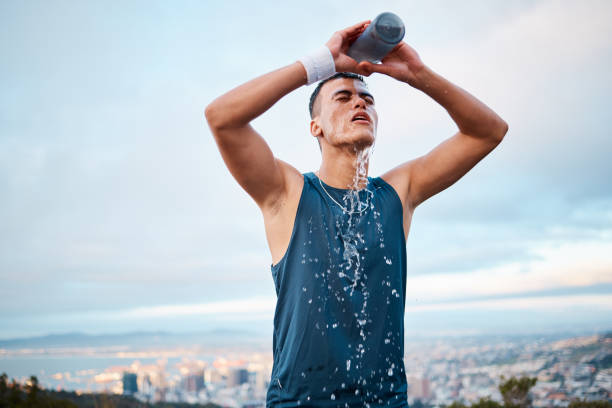
Hydration for athletes is not simply about drinking water during training; it is a planned, science-backed method that directly influences endurance, strength, focus, and recovery. Research in sports hydration science confirms that even a 1–2% loss of body weight due to fluid loss can reduce aerobic capacity, increase heart rate, and impair muscle efficiency. This is why athlete hydration strategies today begin well before competition and continue long after it ends. Water maintains blood volume for oxygen delivery, supports temperature regulation, and sustains electrolyte balance in sports, which is essential for nerve signaling and muscle contraction.
Electrolyte Balance in Sports and Sweat Loss
During intense exercise, athletes lose not only water but also sodium, potassium, and chloride through sweat. When these electrolytes are not replaced, dehydration effects on performance appear as cramps, fatigue, and reduced coordination. Sweat loss can range from 0.5 to 2.5 liters per hour depending on heat, humidity, and intensity.
Key sub-points:
- Electrolytes help muscles contract efficiently
- Sodium helps retain fluids longer in the body
- Ignoring sweat loss leads to early exhaustion
- Case Study: Endurance Athletes and Hydration Strategy
A study on competitive marathon runners showed that athletes who followed structured athlete hydration strategies based on body-weight loss finished races stronger and reported lower fatigue than those who drank only when thirsty. Thirst, according to sports hydration science, is a late signal of dehydration. By the time an athlete feels thirsty, dehydration effects on performance may have already started.
Cognitive Impact: Focus, Reaction, and Decision Making
Hydration for athletes is also critical for the brain. Studies indicate that mild dehydration slows reaction time, reduces concentration, and affects decision-making. This becomes crucial in sports like football, wrestling, tennis, and cricket where quick thinking matters. During major tournaments played in extreme heat, several teams now use personalized hydration plans to maintain both physical and mental sharpness.
As sports scientist Dr. Lawrence Armstrong noted in hydration research, “Even mild dehydration can degrade mental performance and increase perceived effort during exercise.”
Practical Hydration Tips for High-Performance Athletes
Effective athlete hydration strategies include:
Drinking 400–600 ml fluids 2–3 hours before activity
Sipping fluids every 15–20 minutes during exercise
Replacing 150% of fluid lost after activity
Using urine color and body weight as hydration indicators
These simple monitoring methods are widely used in elite training setups to prevent dehydration effects on performance.
Sports hydration science proves that proper hydration for athletes is a performance multiplier. Maintaining electrolyte balance in sports, following structured athlete hydration strategies, and applying hydration tips for high-performance athletes help sustain endurance, improve recovery, and sharpen focus. In modern sport, where marginal gains determine outcomes, mastering hydration is no longer optional—it is essential.















Discussion about this post