India Slips to 142: Ranking Drop Signals Alarming Decline in Football System

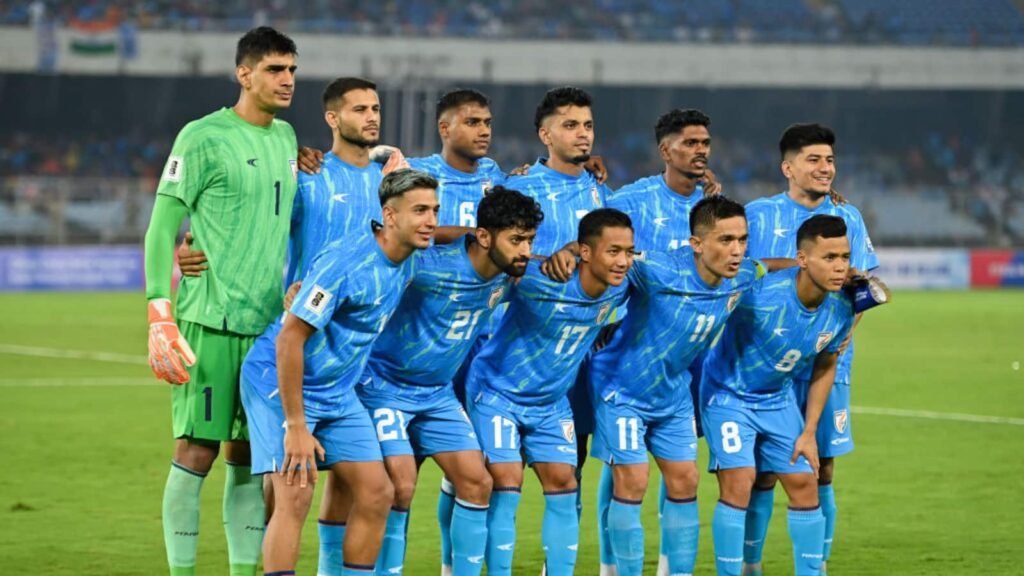
Indian football’s downward spiral continued on Wednesday as the national team slipped six places to 142nd in the latest FIFA rankings. The slump, coming on the back of a winless AFC Asian Cup 2027 Qualifiers campaign, has intensified concerns that the sport in the country is regressing at every level.
The Blue Tigers failed to win any of their five qualifying matches, bowing out after a 1–2 defeat to Singapore on October 14, and compounding their misery with a 0–1 loss to Bangladesh this week. The performances exposed glaring issues — a lack of creativity, a shortage of reliable goal-scorers and an overall dip in quality and confidence.
This latest setback arrives when the entire domestic ecosystem is already unstable. The Indian Super League’s future hangs in the balance, with no clarity on commercial partners after a failed tender process. Legal and structural questions continue to surround the league even as the Supreme Court–appointed committee led by Justice (Retd.) L. Nageswara Rao stresses the need to balance AIFF’s autonomy with the interests of prospective investors.
For many fans, this is reminiscent of India’s darkest phase in 2015, when the team dropped to an all-time low of 173rd. A decade later, the fear of slipping back into that era feels increasingly real.
Experts warn: Indian football must rebuild from its foundations
Several former players, analysts, administrators and global bodies have spoken in recent months about the steps needed to arrest Indian football’s decline. Their concerns and recommendations include:
Overhauling AIFF governance, with calls for a new constitution and transparent leadership.
Resolving the ISL contract crisis to ensure India’s top league does not shut down, preserving a stable season for clubs and players.
Protecting player rights, after global players’ union FIFPRO warned about contract breaches amid the league uncertainty.
Strengthening youth development, especially through dedicated striker training programmes.
Improving data, scouting and technical infrastructure to modernise football decision-making.
Ensuring financial stability, with unified long-term planning between AIFF, clubs and league partners.
Decentralising administration, giving more power to regional bodies to improve grassroots development.
Many experts believe that unless these reforms are implemented urgently, India’s footballing crisis may deepen further, making recovery harder in the years to come.