Germany Crush Slovakia 6–0 to Seal World Cup Berth
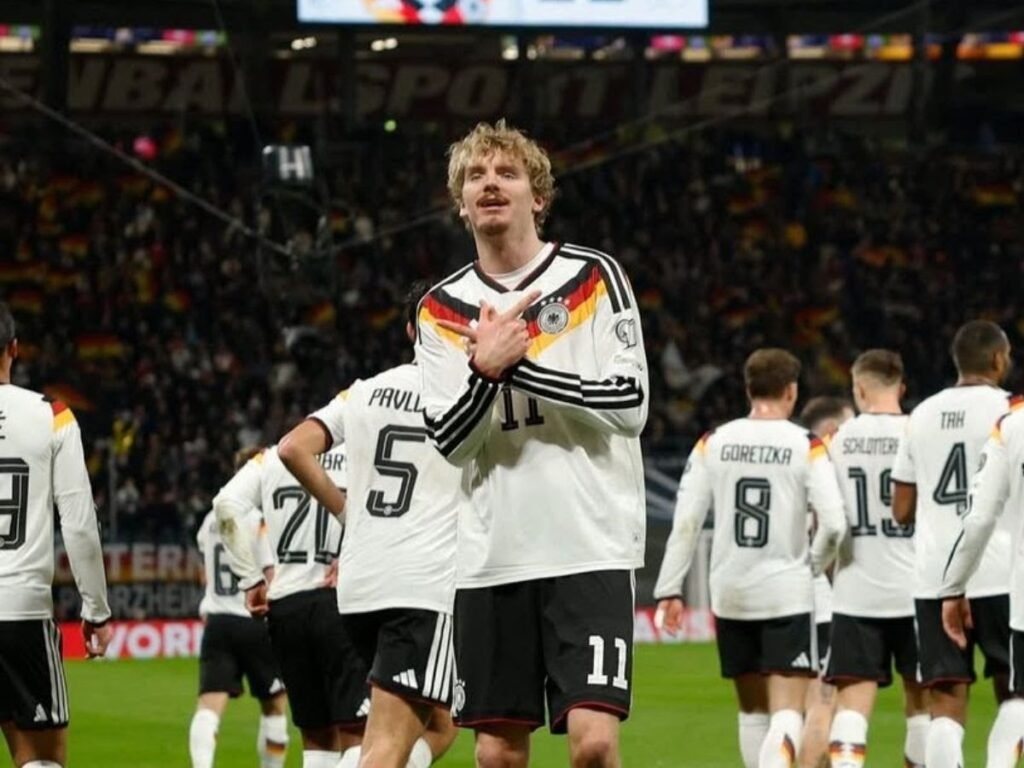
Germany’s qualification for the upcoming World Cup, sealed with a commanding win over Slovakia, wasn’t just another footballing milestone — it was the culmination of a long, painful journey. A journey that began with one of the darkest chapters in their modern football history.
The wounds of FIFA World Cup 2022 still run deep in German football.
Despite a spirited 4–2 victory over Costa Rica in their final Group E match, Germany were dramatically eliminated from the tournament. Their fate was sealed not by their own result, but by Japan’s astonishing win over Spain earlier that night — a twist that sent shockwaves through the footballing world.
It was a moment that stunned the nation.
A moment that felt unreal for a team with four World Cup trophies.
A moment that marked Germany’s second straight group-stage exit, following the disaster of 2018.
For a side boasting depth, talent and a proud footballing heritage, the failure was unthinkable. Germany, once the standard-bearer of discipline and dominance, suddenly looked fragile, lost, and stripped of their aura.
That heartbreak in Qatar became the burden Germany carried into the next qualification cycle — a reminder that nothing could be taken for granted anymore.
Germany didn’t just win against Slovakia. They announced their return to world football with a performance that felt like a statement written in bold letters across Europe. On a charged night in Leipzig, the four-time world champions crushed Slovakia 6–0 to seal their place at the upcoming World Cup — a victory loaded with power, precision and purpose.
A Night Germany Needed
For a team still carrying the scars of two successive group-stage eliminations, including the heartbreaking 4–2 win over Costa Rica in 2022 that wasn’t enough to save them, this qualifier was more than just a match.
It was a moment to prove that the Germany the world once feared was rebuilding — and rising.
From the First Whistle: Total Control
Germany stepped onto the pitch with a fire that Slovakia simply couldn’t extinguish. Their passing was crisp, their movement relentless, their finishing clinical.
By the 10th minute, the tone was set.
Nick Woltemade soared above the Slovak defence to bury a thumping header and open the floodgates.
The pressure never dipped — and neither did Germany’s hunger.
The second goal came from a beautifully worked move:
Leon Goretzka slipped a perfectly timed pass to Serge Gnabry, who placed the ball beyond the keeper with effortless precision.
Moments later, the artistry of Florian Wirtz lit up the arena. His vision, balance and close control tore Slovakia apart. Two exquisite passes… two devastating finishes… both by Leroy Sané, who looked unstoppable on the night.
By halftime, Germany had raced to a 4–0 lead.
The crowd was no longer cheering — they were roaring.
Coach Julian Nagelsmann’s substitutes kept the assault going.
Ridle Baku came on and immediately made an impact, guiding a clean finish into the net for Germany’s fifth.
But the moment of the night belonged to the youngest player on the field.
Assan Ouedraogo, just 19, stepped onto the pitch for his debut — and within minutes, hammered home the sixth. The stadium erupted as he became the youngest debut goalscorer in German history. It wasn’t just a goal. It was the beginning of a new era.
Slovakia arrived in Leipzig confident after beating Germany in the reverse fixture earlier in the qualifiers. But on this night, they were outplayed, outpaced and overpowered.
Germany didn’t allow them space to breathe.
Every press, every tackle, every transition felt like a team determined to erase the memories of past failures.
When the final whistle blew, Germany had delivered not just qualification — but a message.
A message that the slump of recent years was a phase, not a downfall.
A message that their new generation is fearless, fast and frightening.
A message that the eagle has taken flight again.