USOPC Aligns Policy with Federal Order Barring Transgender Women from Women’s Sports
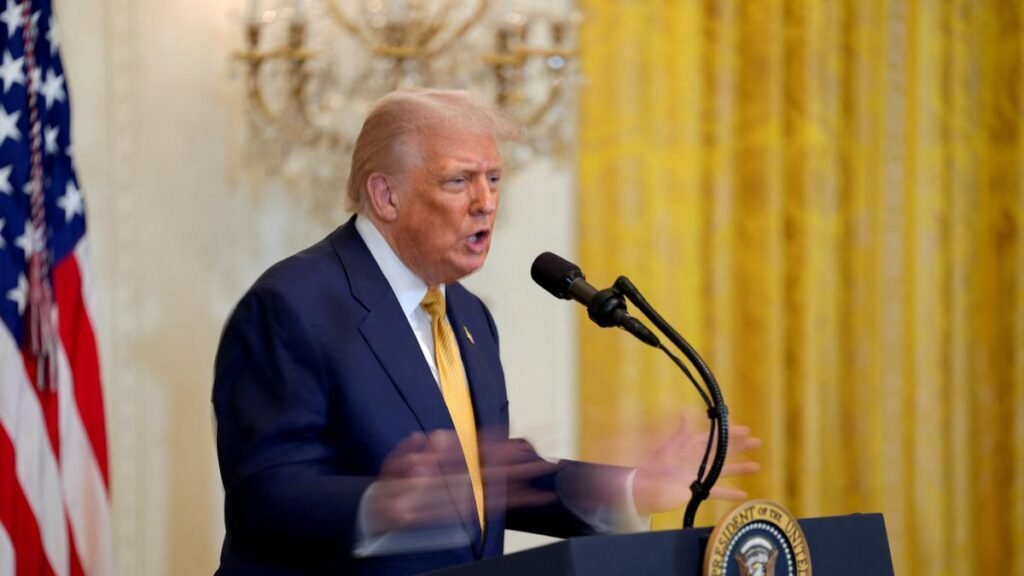
Colorado Springs, Colorado – The United States Olympic & Paralympic Committee (USOPC) has updated its Athlete Safety Policy to conform with an executive order signed earlier this year by U.S. President Donald Trump, which prohibits transgender women from competing in women’s sports. This significant policy shift by the national Olympic body was announced on Monday, July 21, 2025.
Alignment with Federal Directive
In its updated policy, the USOPC stated, “The USOPC will continue to collaborate with various stakeholders with oversight responsibilities, e.g., IOC, IPC, NGBs, to ensure that women have a fair and safe competition environment consistent with Executive Order 14201 and the Ted Stevens Olympic & Amateur Sports Act.” While the USOPC has not yet provided further comment on the change, a memo sent this week to the Team USA community from USOPC President Gene Sykes and CEO Sarah Hirshland, as reported by ABC News, cited federal obligation: “As a federally chartered organisation, we have an obligation to comply with federal expectations.”
The Scope of President Trump’s Executive Order
President Trump’s executive order, titled “Keeping Men Out of Women’s Sports,” was signed in February with the explicit aim of excluding transgender girls and women from female sports. Proponents of the directive argue it will restore fairness to women’s athletic competitions. Conversely, critics contend that the order infringes upon the rights of a very small minority of athletes.
The order instructs the Department of Justice to ensure all government agencies enforce a ban on transgender girls and women from participating in female school sports, based on Trump’s interpretation of Title IX – a federal law prohibiting sex discrimination in education. The directive extends beyond high school and college sports, also calling for the U.S. government to deny visas to transgender females seeking to compete within the United States. President Trump has also publicly stated he would not allow transgender athletes to compete in the Los Angeles Olympics in 2028.
Conflict with International Olympic Committee Guidelines
This new USOPC policy creates a direct divergence from the International Olympic Committee’s (IOC) existing guidelines. The IOC’s current framework allows transgender athletes to compete under general guidance that focuses on preventing any athlete from gaining an unfair advantage, a more inclusive approach than the one now adopted by the USOPC. The executive order specifically instructs the State Department to pressure the IOC to change its broader policy.
Anticipated Impact on Athletes
Despite the broad scope of the executive order, its practical impact is expected to affect a relatively small number of athletes. The president of the National Collegiate Athletics Association (NCAA) testified before a Senate panel in December, indicating awareness of fewer than 10 transgender athletes among the 530,000 competing across 1,100 member schools.
The policy change by the USOPC marks a significant moment for the future of transgender athletes within the U.S. Olympic and Paralympic movements, placing them in a complex landscape shaped by evolving national and international sports governance.