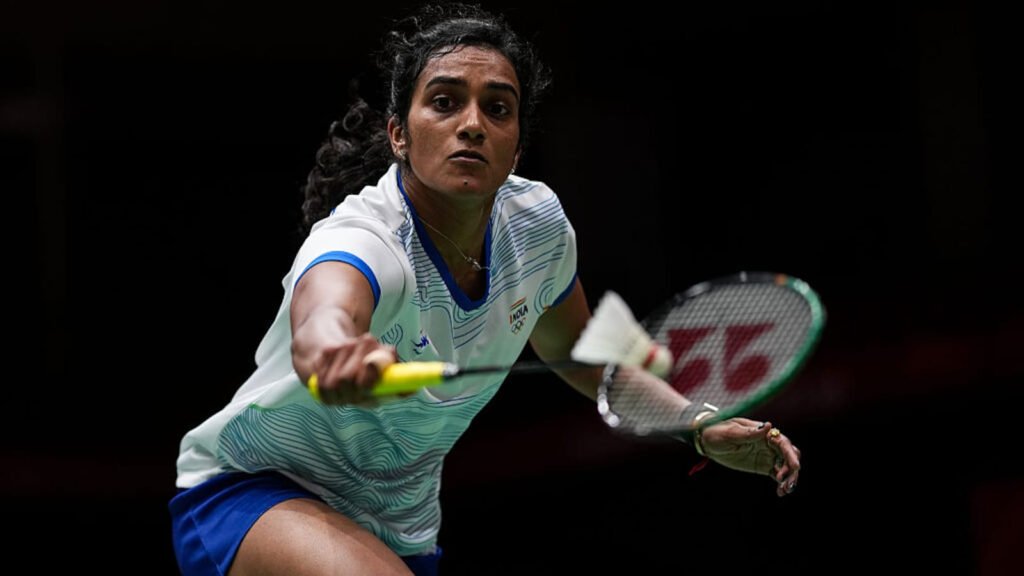
Lakshya Sen’s spirited campaign at the Kumamoto Masters Japan 2025 came to an end on Saturday after a gruelling 77-minute semifinal clash against Japan’s Kenta Nishimoto. The world No. 15 Indian, seeded seventh, went down 19-21, 21-14, 12-21 in a match marked by sharp momentum swings, tactical adjustments, and moments of brilliance that ultimately weren’t enough.
Sen opened strong, quickly racing to an 8-4 lead in the first game. But Nishimoto — backed by the home crowd and known for his gritty mid-game surges — clawed his way back to level at 18-18 and snatched the opening game.
The Indian, however, responded with authority in the second. Trailing 1-5 early, he slowed the pace, forced longer rallies, and won eight of the next nine points to take control. His 21-14 win forced a decider and briefly rekindled hopes of a comeback victory.
But the final game told a different story. Nishimoto returned with renewed aggression, pushing Sen deep into the backcourt and attacking early in rallies. With a four-point lead at the interval, the Japanese shuttler tightened his grip and closed the match 21-12, preventing Sen from finding any meaningful rhythm.
A Season of Highs, Lows, and Learning Curves
This semifinal appearance is Sen’s third deep run of the 2025 season, following a final at the Hong Kong Open and a semifinal at the Macau Open. His impressive win over former world champion Loh Kean Yew in the quarterfinal showcased flashes of the world-class form that once took him to the All England final.
However, the season has also been turbulent. Sen has suffered 11 first-round exits in 19 tournaments, reflecting a struggle to find consistency at the top level. His defeat in Kumamoto continues a pattern: spectacular wins against top players, but difficulty in sustaining pressure deep into tournaments.
Notably, Sen was the only Indian to reach the semifinals in Kumamoto, with HS Prannoy bowing out earlier, underscoring the weight of expectation he carries in Indian men’s singles.
The Bigger Picture: Where Sen Must Sharpen Up
The match revealed several key insights into Sen’s current game:
1. Difficulty Converting Early Leads
Despite strong starts in Games 1 and 2, Sen allowed Nishimoto to claw back. Maintaining intensity through mid-game phases remains a gap.
2. Tactical Rigidity Under Pressure
Slowing down rallies worked in Game 2, but when Nishimoto shifted gears in Game 3, Sen struggled to adapt quickly.
3. Rhythm Recovery Needs Work
Once Nishimoto dominated early exchanges in the decider, Sen found it hard to break the opponent’s tempo — a critical skill at the elite level.
These are not weaknesses of talent, but of refinement — areas that can be strengthened with experience and sharper tactical instincts.
A Step Forward — With Lessons for the Road Ahead
While the loss will sting, the semifinal finish reflects Sen’s growing ability to compete deep into major tournaments again. His shot-making, stamina, and on-court clarity continue to improve with every event, and his performances this season suggest a trajectory trending upward, despite inconsistency.
For Indian badminton, Sen remains one of the brightest hopes in men’s singles — capable of beating anyone on his day. The next step is consistency: turning semifinal runs into finals, and finals into titles.
Kumamoto may not have delivered a medal, but it delivered something just as important — clarity on what comes next.

 Vishesh Shukla
16 Oct 2026 · 10:25 PM IST
1 min read
8 Reads
Vishesh Shukla
16 Oct 2026 · 10:25 PM IST
1 min read
8 Reads 
 Sohini Mukherjee
13 Oct 2026 · 8:58 PM IST
3 min read
11 Reads
Sohini Mukherjee
13 Oct 2026 · 8:58 PM IST
3 min read
11 Reads