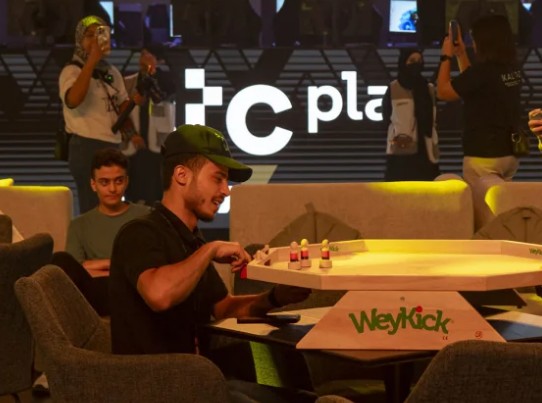
In Riyadh, a new kind of global competition is reshaping the esports landscape — and sparking heated debate along the way.
The Esports World Cup (EWC), launched on July 3, has united top players, teams, and publishers from around the world in an eight-week, high-stakes showdown boasting a record $60 million prize pool — the largest in esports history. For some, it’s a much-needed lifeline for a struggling industry; for others, it’s a troubling example of sportswashing.
Ralf Reichert, CEO of the Esports World Cup Foundation, says the goal is to create a “World Cup moment” for gaming. The foundation — part-funded by Saudi Arabia’s government — has also launched a Club Program offering 28 organizations six-figure payouts to promote sustainable growth. Global giants like Fnatic, T1, and G2 Esports have joined in, alongside sponsors such as Adidas and KitKat.
But the event’s Saudi connection looms large. Critics — including Amnesty International and FairSquare — warn that the kingdom’s esports push is an attempt to soften its image amid continuing human rights concerns, including crackdowns on dissent and women’s rights activists.
Some teams, like Team Liquid, have tried to balance participation with advocacy, pledging to wear Pride jerseys and engage on equality issues. Others, including Fnatic, argue that “progress lies in engagement, not isolation.”
Saudi Arabia’s Public Investment Fund has poured billions into gaming through the Savvy Gaming Group, which owns ESL and FACEIT. And for now, the EWC — born in Riyadh — is here to stay.
As esports looks for its next era of growth, the question remains:
Can the industry separate competition from politics — or is it now part of the same game?
 Sohini Mukherjee
19 Oct 2026 · 10:10 PM IST
4 min read
6 Reads
Sohini Mukherjee
19 Oct 2026 · 10:10 PM IST
4 min read
6 Reads