Why Do F1 Teams Hide Their True Colours at Testing? The Story Behind Special Liveries
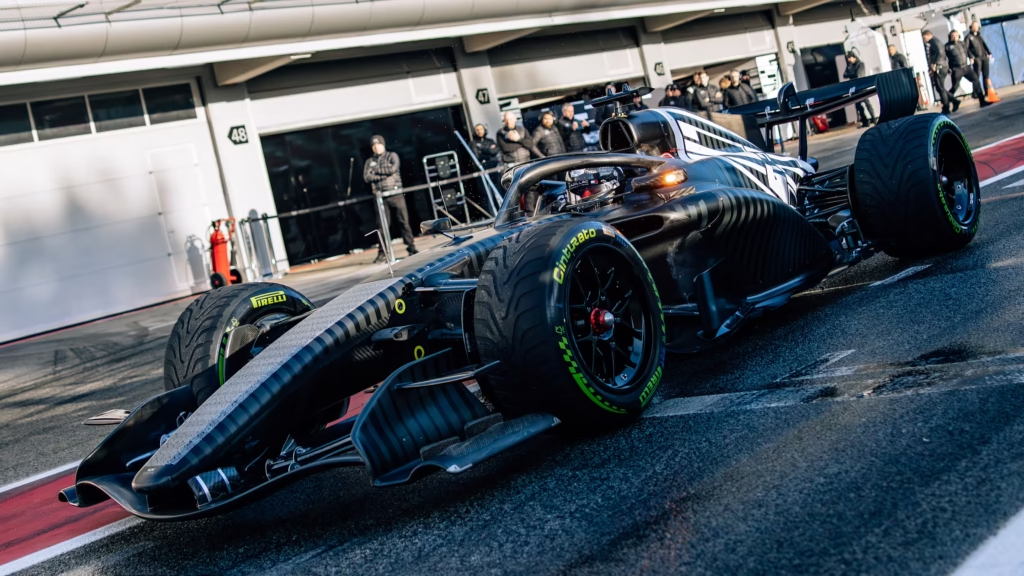
Formula 1 fans often notice that cars running during pre-season testing look strikingly different from those seen on race weekends. Teams regularly opt for special or temporary liveries during testing, and the reasons go far beyond aesthetics, as explained by Sportstar.
One of the primary motivations is protecting technical secrets. Testing is the first time new cars appear on track, and teams are keen to conceal aerodynamic concepts and design details from rivals. Special liveries — often featuring camouflage-style patterns or unconventional colour schemes — make it harder for competitors to analyse bodywork shapes through photographs and videos.
Another key factor is timing and marketing strategy. Many teams conduct testing before officially unveiling their race-season livery. Using a placeholder design allows them to separate the technical debut of the car from the commercial launch, ensuring sponsors receive maximum attention during dedicated reveal events.
Special liveries are also used for practical reasons. During early tests, sponsorship deals may still be under finalisation, and teams prefer not to lock themselves into a permanent design too early. A neutral or simplified livery offers flexibility while preparations continue behind the scenes.
Beyond secrecy and logistics, testing liveries can serve as a fan-engagement tool. Some teams have used unique designs to generate buzz on social media or to celebrate milestones, knowing that pre-season testing attracts significant attention despite lap times having little competitive relevance.
As one team representative noted during testing, “Pre-season is about learning, not showing everything we have. The livery is part of that approach.”
In essence, special liveries at testing reflect Formula 1’s blend of innovation, competition and showmanship. While the colours may change by the first race, their purpose remains clear — to test quietly, reveal strategically and race fully prepared.