

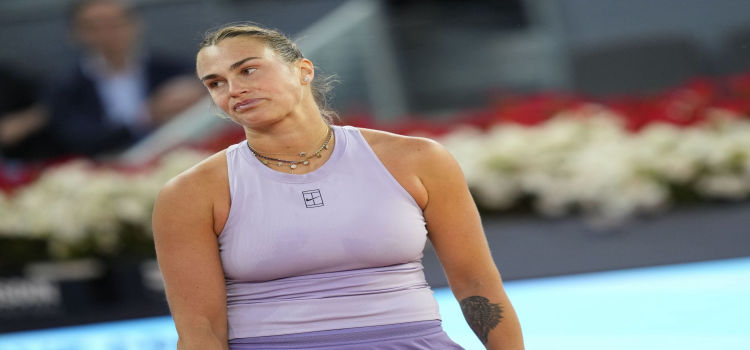
Love it or loathe it, the Battle of the Sexes-style exhibition between Aryna Sabalenka and Nick Kyrgios has sparked debate across the tennis world.
The women’s world number one will face the 2022 Wimbledon finalist in an exhibition match on 28 December, with the contest set to be broadcast live on BBC One.
The match has been framed as entertainment, but it also raises sporting, cultural and competitive questions ahead of first ball.
Can Sabalenka challenge Kyrgios?
If any women’s player is capable of pushing Kyrgios, Sabalenka appears the strongest candidate. The 27-year-old enjoyed a prolific 2025 season, winning four titles including the US Open and reaching multiple finals.
Her serve has ranked among the most effective on tour this year, while her power from the baseline allows her to dictate rallies. According to data shared by organisers Evolve, women move around 9% slower on average than men, leading to Sabalenka’s side of the court being reduced by the same margin.
Each player will be limited to a single serve, a rule designed to curb Kyrgios’ biggest weapon and create a more even contest, according to organisers.
The match will be played as a best-of-three sets format, with a 10-point tie-break if it goes to a decider.
Does the result really matter?
Supporters see the event as light-hearted entertainment aimed at attracting younger audiences to tennis. Critics argue it risks reinforcing negative comparisons between men’s and women’s sport if Sabalenka loses.
Sabalenka has dismissed those concerns, stating that the match is about enjoyment and visibility rather than proving physical equality. She has said the event could help bring greater attention to women’s tennis, regardless of the outcome.
Kyrgios, meanwhile, has insisted he is unconcerned by criticism and sees the match as an opportunity rather than a statement on competitive hierarchy.
Kyrgios’ fitness under scrutiny
Kyrgios’ natural talent has never been in doubt, but his fitness remains a talking point. Injuries have limited his appearances over the past two seasons, including a long absence caused by wrist and knee problems.
The Australian returned briefly earlier this year but has not played regular singles tennis in recent months. He has acknowledged the physical challenges of his comeback, while suggesting the shorter exhibition format suits his current condition.
Is there genuine demand?
Questions have been raised about the purpose of the event, but ticket sales suggest strong public interest. The match, staged at the 17,000-capacity Coca-Cola Arena, is close to a sell-out, according to organisers.
Tickets range from upper-tier seats to premium courtside options, reflecting the crossover appeal of sport and entertainment that both players say they want to promote.
While comparisons with Billie Jean King’s historic 1973 Battle of the Sexes remain inevitable, the modern version is being positioned as spectacle rather than social movement, with its success likely to be judged more on engagement than legacy.













Discussion about this post