Athlete First: How the National Sports Governance Bill 2025 Shifts Power from Boardrooms to the Playing Field
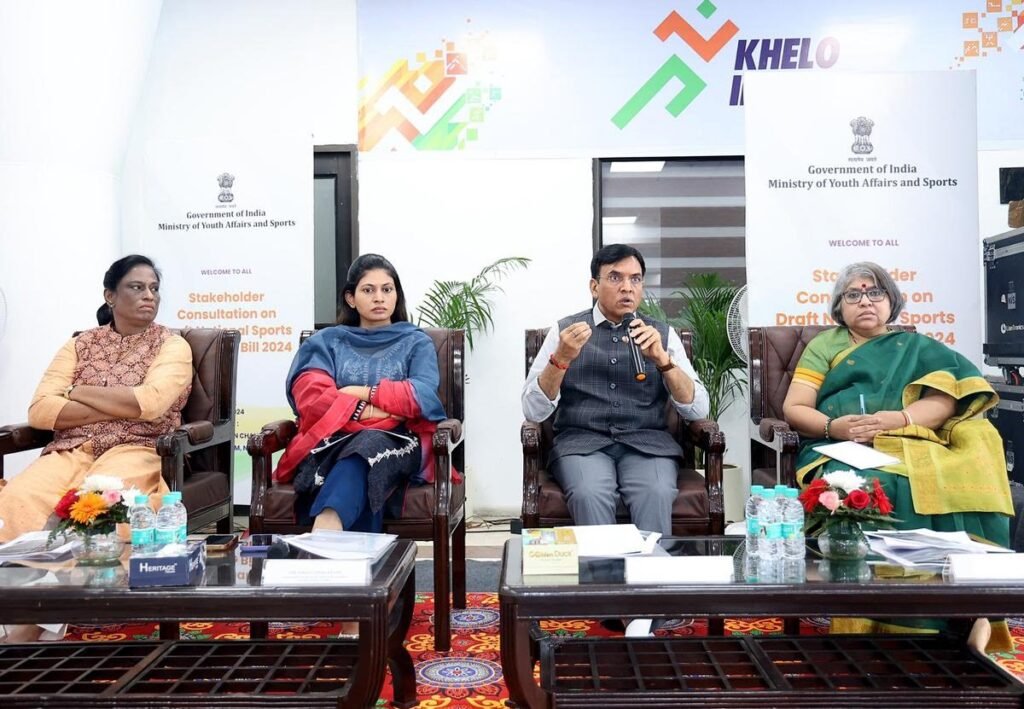
New Delhi : As Parliament debates the National Sports Governance Bill 2025, much of the attention has focused on its impact on powerful federations and the perennial tussle between government oversight and institutional autonomy. But beneath the headlines about the BCCI and administrative overhaul, the Bill marks a significant—and overdue—shift: for the first time, India’s sports governance framework is truly centering the interests and welfare of athletes themselves.
A Legacy of Athlete Marginalization
Indian sports have long grappled with top-heavy administrations, where players’ voices have too often been sidelines rather than central to decision-making. From opaque selection processes to limited representation in governing bodies, athletes have historically had little say in the structures that dictate their careers.
The National Sports Governance Bill 2025 directly addresses this imbalance. Athlete welfare, representation, and grievance mechanisms are not afterthoughts—they are embedded in the architecture of the new system.
Athlete Representation: From Tokenism to Structural Power
The Bill mandates that every national sports federation must include at least two outstanding sportspersons and four women on its executive committee, with voting rights and years of experience enshrined in law. Sporting bodies are also required to set up dedicated athlete commissions and grievance redressal mechanisms, giving players not just a voice but a pathway to policy influence and recourse.
In a country where athlete-led protests and complaints have often been ignored until they reach the courts or public outrage, this change could fundamentally alter how sports are run.
Making Safeguards Real: Ethics, Safety, and the Right to Know
Ethics and safeguarding are elevated as non-negotiable standards. Every body must adopt an enforceable Code of Ethics and strategies to protect vulnerable groups (notably women and minors), with these policies subject to both internal oversight and transparency provisions, including the Right to Information Act.
Fast-Tracking Disputes: The National Sports Tribunal
Another hurdle Indian athletes have faced is endless litigation and bureaucratic delays. The creation of a National Sports Tribunal—headed by a Supreme Court judge and with limited scope for appeal—promises speedier, more athlete-friendly resolution of issues ranging from team selection to election disputes. This ensures that athletes spend less time wading through legal gray areas and more time focused on their craft.
A Cultural Shift: From Controller to Facilitator
Perhaps most groundbreaking is the Bill’s rhetoric and structural intent: the Ministry’s role is redefined, not as a controller but as a facilitator of sporting excellence. Performance audits and mandatory athlete forums are expected to make India’s federations not just compliant with international best practices, but responsive to the real-world needs of the talent they are meant to nurture.
The Road Ahead
Skeptics worry about overreach and institutional resistance. However, if implemented faithfully, this law could mark a generational change: a system where athlete rights, safety, and voices are no longer fringe concerns but the backbone of Indian sports administration. In the years to come, India’s sporting successes may increasingly be built not just on talent, but on a foundation of governance designed for—and, at last, by—athletes themselves.