How Rodrigo Lopez Turned Rock Bottom Into a Record-Breaking USL Legacy
A Closet, a Crumbling Career, and a Life on the Brink
Rodrigo Lopez was in his late 20s when he found himself living in a walk-in closet — not as a metaphor, but as his actual bedroom. His professional football career had all but evaporated. After bouncing around MLS, PDL, and the early years of the USL, his last contract with Los Angeles Blues expired with no new offers in sight.
He had a girlfriend, a child, and mounting responsibilities. His “room” was a storage space in a shared house with former teammates. The dream had slipped away quietly.
“It was a big master bedroom,” Lopez recalls. “The closet was huge. So I just turned it into my room.”
Soccer, it seemed, was over.
Then came the phone call that changed everything.
It was Sacramento Republic — a new franchise with ambition and a desire for experience. They wanted Lopez. He hesitated. But after weeks of uncertainty, he signed. A few hundred miles north, a career rebirth awaited him.
And that is where the legend began.
Redefining Greatness in the USL
Greatness in the USL is difficult to define. International icons like Didier Drogba, Tim Howard, and Joe Cole all passed through the league. Rising stars like Alphonso Davies, Tyler Adams, and Ricardo Pepi used it as a launchpad.
But none carved out a career like Rodrigo Lopez.
Across more than 400 matches, representing six USL clubs, Lopez became the heartbeat of Sacramento Republic. His 2014–15 form earned him a dream move to Liga MX — validation after years of setbacks. His longevity, perseverance, and relentless work ethic made him a symbol of the USL’s soul: raw, unpredictable, and unforgiving.
He endured unpaid stints, played through injuries, survived two career-threatening setbacks, and sometimes worked multiple jobs just to make ends meet. At 38, as he steps away from the game, Lopez admits the decision is both emotional and practical.
“It’s time,” he says. “I didn’t want to risk more injuries. I just want to settle with my family now.”
From Construction Sites to 13-Hour Training Days
Lopez’s journey nearly ended before Sacramento ever called.
With no club, he worked construction to support his family — a jarring transition for someone raised in football circles. His father, a former professional player in Mexico, moved the family to California when Rodrigo was an infant. Hard work was ingrained in him.
But construction humbled him immediately.
He showed up for his first day in a BMW, designer jeans, and clean sneakers — and was promptly sent home.
“He told me, ‘Go get the dirtiest clothes you have, and come back,’” Lopez laughs.
What followed was a 12-hour day of hauling dirt. And then another. And another.
Yet he still played Sunday league matches, refusing to completely let football go.
Then Sacramento called — and Lopez hesitated again. Why? Because the head coach, MLS legend Preki, had cut him earlier in his career. The money wasn’t great, and pride was at stake.
His family gave him the push he needed.
“They told me, ‘You have the chance of a lifetime. If you work for it, you can prove everyone wrong.’”
Lopez responded with a training regimen fit for a movie montage:
gym at dawn, construction all day, running in the mountains or on the beach at night.
Thirteen-hour days. No shortcuts.
By preseason, he arrived sharper than ever.
And he dominated.
Becoming a Sacramento Icon
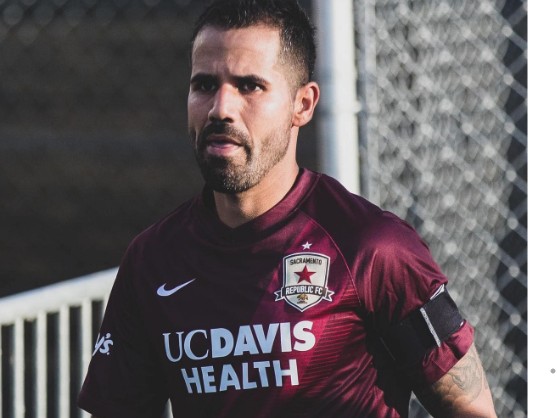
In their debut season, Sacramento Republic were electric — and Lopez was their engine. He became an MVP finalist, an all-league selection, a four-time Team of the Week honoree, and playoff MVP. The club won the USL Championship, establishing themselves as one of the league’s premier teams.
“And,” Lopez says, pausing for effect, “the story changes there.”
It did. For good.
Lopez didn’t just revive his career — he became the greatest player the USL has ever seen, in the purest sense of the term: resilience, longevity, leadership, and an unbreakable spirit.
Conclusion: A Legacy Built on Heart, Hard Work, and Belief
Rodrigo Lopez’s story is more than a football journey — it is a testament to perseverance. From sleeping in a closet, to hauling dirt on construction sites, to leading Sacramento Republic to titles and defining a league, his career stands as one of American soccer’s great underdog tales.
He walked away from the game on his own terms, with a legacy built not on hype, but on heart.
And for thousands of young players navigating the chaos of the American soccer system, his message echoes clearly:
If you work for it, and believe in it, you can always prove everyone wrong.