MotoGP’s Barcelona Wake-Up Call: Safety Questions After a Chaotic Catalan GP
The 2026 Catalan Grand Prix at the Catalan Grand Prix turned from a showcase event into one of the most disturbing race days MotoGP has seen in recent years. What unfolded at the Circuit de Barcelona‑Catalunya was less about racing lines and more about survival, decision-making and the limits of safety in modern MotoGP.
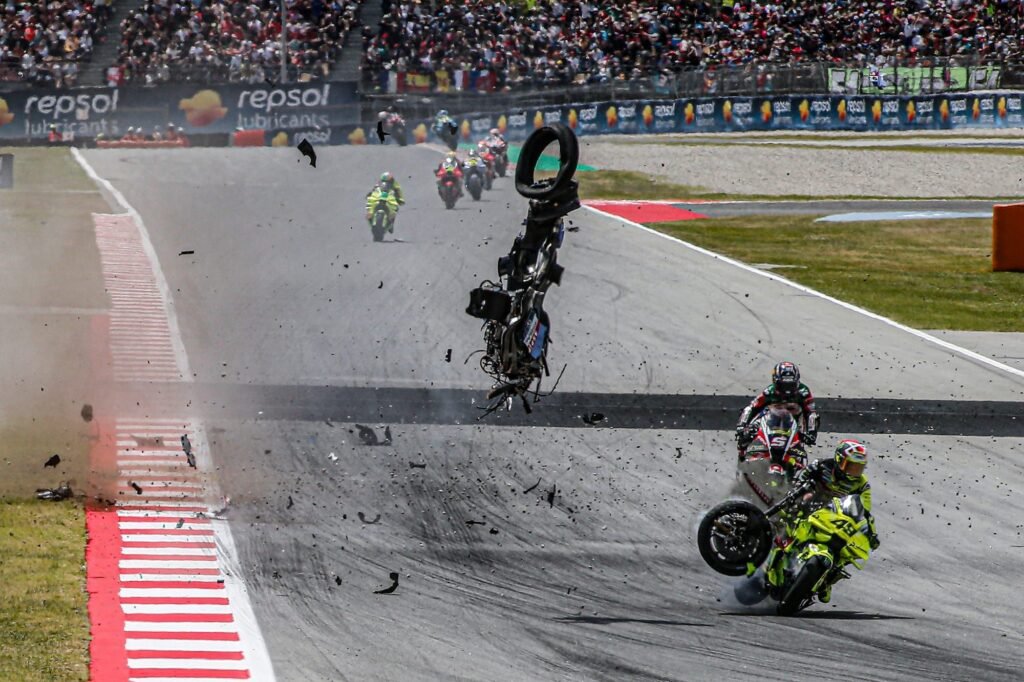
Originally scheduled for 24 laps, the race never reached its intended distance. On lap 12, Pedro Acosta suddenly slowed on the back straight when his KTM lost power at high speed. With riders packed closely behind at over 300 km/h, Alex Márquez had almost no reaction time and slammed into the slowing bike. Márquez was thrown violently off his machine, bringing out the first red flag. He later required surgery for multiple fractures.
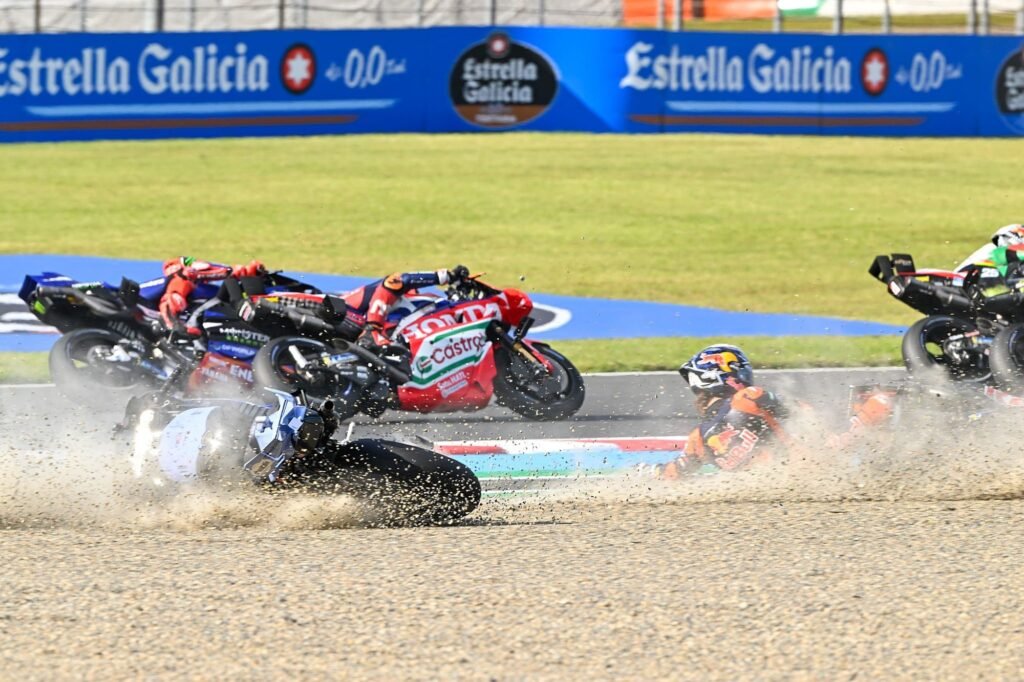
After a lengthy delay, the race was restarted — but chaos returned almost immediately. Into the heavy braking zone of Turn 1, Johann Zarco became involved in a multi-bike collision. In the pile-up, his leg was briefly trapped in another motorcycle’s rear wheel, a frightening image that again forced race officials to halt proceedings.
Despite two major incidents and visible rider distress, race direction authorized a third start. In the eventual 12-lap sprint that followed, Fabio Di Giannantonio emerged as the winner — a result that felt secondary to the larger concerns raised during the afternoon.
What made Barcelona particularly alarming was not just the crashes, but the circumstances around them.
The first incident stemmed from a mechanical failure at maximum speed, raising questions about how sudden technical issues can create unavoidable danger for following riders. The second underlined a familiar problem at Barcelona: the funnel effect into Turn 1, where a long acceleration zone compresses the field into a tight braking corner — a hotspot for collisions, especially on restarts.
But the most debated aspect of the day was the decision to restart the race twice after such serious accidents. Several riders voiced discomfort with returning to racing mode so quickly after witnessing high-impact crashes. The argument was not only about physical safety, but mental readiness. When adrenaline, shock and uncertainty mix, the risk multiplies.
Barcelona has long been regarded as a safe and well-designed circuit, yet this weekend showed how modern MotoGP speeds, tighter packs and restart dynamics can expose vulnerabilities in even the most respected tracks. Riders have since suggested reviewing the start procedure, grid positioning and even the first-corner layout to reduce the risk of mass incidents.
The events also reignited conversation about how rider feedback on safety is processed. Many believe MotoGP needs more structured, proactive mechanisms to address recurring circuit concerns rather than reacting only after major incidents.
In the end, the Catalan GP delivered a result on paper — but left MotoGP with uncomfortable lessons. The weekend forced the championship to confront a critical balance: the push to keep races alive versus the responsibility to recognize when the situation demands restraint.
Barcelona may well become a turning point, not for who won, but for how MotoGP chooses to protect those who race.