Usman Khawaja Grabs Lifeline in Adelaide: The Veteran Who Refused to Fade Away

When Steve Smith was ruled out of the third Ashes Test in Adelaide due to illness, most thought Australia’s middle order had been thrown into disarray. For Usman Khawaja, however, it was an unexpected lifeline—a chance to prove that age and setbacks are no match for experience and grit.
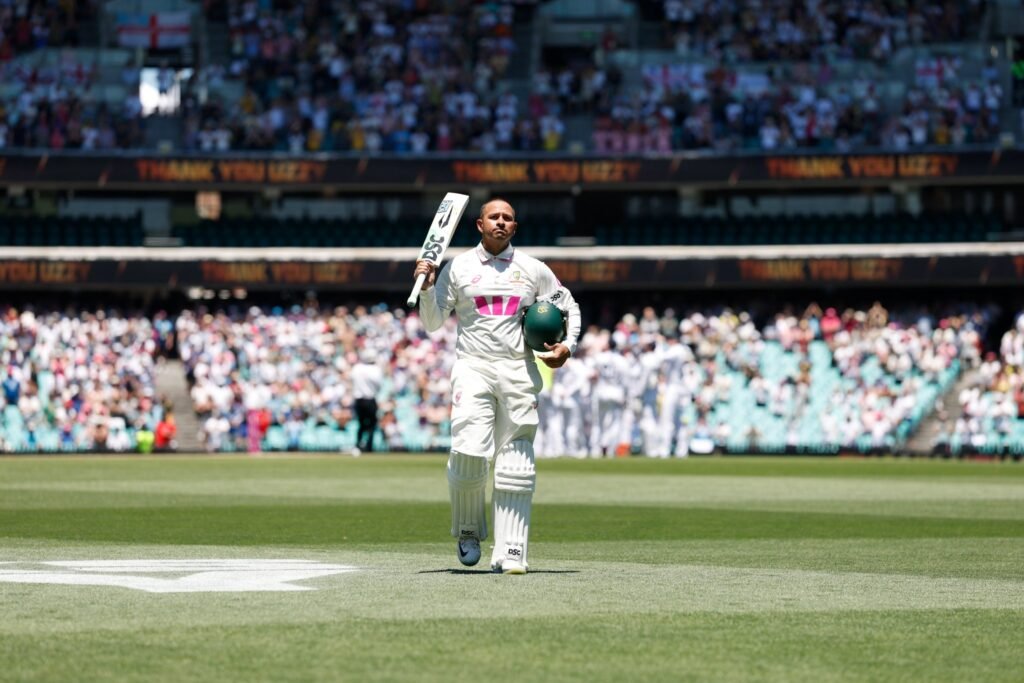
The 39-year-old southpaw, who had been overlooked for the opener’s slot in favour of younger players, walked in at 33/2 with the weight of the innings on his shoulders. Khawaja’s response was a masterclass in composure. He stitched together crucial partnerships, 61 runs with Marnus Labuschagne and 91 with Alex Carey, taking Australia to 326/8 on Day 1. His 82-run knock from 126 balls, studded with 10 elegant fours, was the steadying force the Aussies desperately needed.
But Khawaja didn’t stop there. In the second innings, he switched gears, scoring a brisk 40 off 51 deliveries, pushing Australia further ahead and giving the bowlers a comfortable cushion. It was a clear statement: Khawaja may not open anymore, but he remains a vital cog in Australia’s Test machinery.
This innings, however, isn’t just about runs—it’s about survival. After missing the second Test with back spasms and facing doubts about his place, Khawaja’s stoic knock has bought him time and credibility. The Adelaide crowd’s cheer when he reached his 28th Test half-century was not just for the runs but for a player refusing to bow out quietly.
The question now looms: How long can Khawaja maintain this form once Smith returns? At 39, time is not on his side. Yet, if there’s one thing this innings proves, it’s that Khawaja’s value goes beyond statistics—his experience, calm under pressure, and ability to anchor an innings make him a player Australia cannot easily write off.
For now, Usman Khawaja has saved himself—not just from being left out, but from fading into the background of Australian cricket history. Adelaide has reminded the cricketing world: the veteran is still very much a force to be reckoned with.