From Underdogs to Contenders: How Indian Athletics Leapt Forward in the Last 10 Years

A decade ago India’s athletics story was episodic: isolated stars, weak grassroots, and little high-performance infrastructure. Today the picture is very different. At the 2022 Asian Games (held in Hangzhou in 2023) Indian athletics returned 29 medals (6 gold, 14 silver, 9 bronze) — a level of continental depth almost unthinkable a decade earlier.
This improved density at continental meets has been matched by historic individual world-stage breakthroughs: India won gold at the 2023 World Athletics Championships (Neeraj Chopra, men’s javelin) — only the country’s second-ever world-championship athletics medal and a watershed moment for Indian field events.
How that happened: five pillars of change
1) Systematic grassroots investment — Khelo India and the pipeline
The gamechanger has been deliberate investment in the base. Khelo India centres, youth games and accredited academies created a national web of talent ID and daily training: over 1,000 Khelo India Centres have been notified across India and more than 28,000 athletes train at these centres (dashboard figures and government releases show 1,057+ KICs and ~28,110 athletes on the platform). A large cohort from Khelo India made it to global events — and 28 Khelo India athletes were part of India’s Paris 2024 Olympic contingent, underlining the scheme’s talent-to-elite pipeline.
Why it matters: consistent, daily coaching and competition at district/state level means more athletes reach the technical and physical levels needed to compete internationally.
2) High-performance systems, sports science and elite support
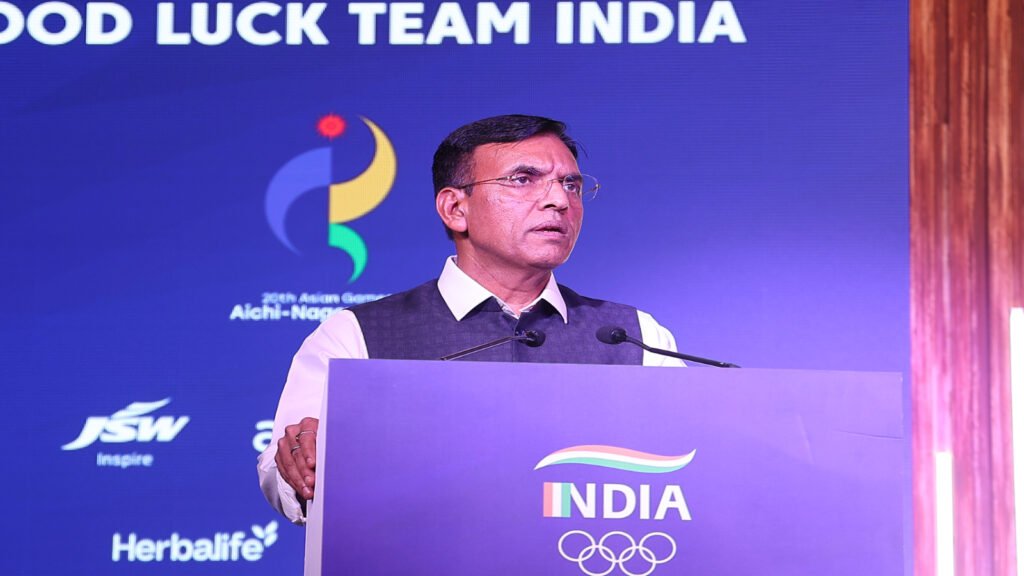
The Sports Authority of India (SAI), Target Olympic Podium Scheme (TOPS), and an expanding network of National Centres of Excellence and sports-science units have professionalised training — from biomechanics and nutrition to recovery and psychology. The government’s recent annual reports and policy notes point to hundreds of sanctioned infrastructure projects and dedicated funding lines to elite preparation and sports science. Sports Minister Anurag Thakur has emphasised that Indian athletes have “developed a winning mentality” thanks to such systemic support.
3) Private sector and athlete-led initiatives — a new ecosystem
The private sector (JSW Sports, NGOs and corporate academies) is no longer a marginal actor. Companies now run high-performance programmes, fund overseas exposure, and co-organise top-tier meets. A striking example: the Neeraj Chopra Classic — co-organised with JSW Sports and sanctioned by World Athletics — brought elite international competition to Bengaluru in 2025, giving Indian athletes home access to world-class fields and ranking points. This commercial/athlete partnership model has accelerated technical growth and spectator interest.
4) Role models & culture shift — the multiplier effect
Star performers (Neeraj Chopra foremost among them) have changed aspirations. Neeraj’s global successes — Olympic gold (Tokyo 2021), World Championship gold (Budapest 2023) and continued podiums — have made track & field a desirable career, inspiring a generation of javelin throwers, jumpers and middle-distance runners. Neeraj himself has acknowledged he’s “yet to reach his peak,” signalling rising standards and ambition among India’s elite.
5) Inclusivity and para-athletics rise
India’s recent hosting and record performance at the World Para Athletics Championships (New Delhi, 2025) — a 22-medal haul and best-ever result — shows investment is paying off across able-bodied and para pathways. That improvement adds to national pride, broadens the talent pool and validates inclusive policy measures.
Data points that prove it
- Asian Games (Hangzhou 2023): Athletics — 29 medals (6G, 14S, 9B). India’s overall best-ever Asian Games showing amplified athletics’ contribution.
- World Athletics Championships 2023: Gold — Neeraj Chopra (javelin), landmark global win.
- Khelo India footprint: ~1,057 Khelo India Centres; ~28,110 athletes engaged in KICs; 301 accredited academies and thousands of athletes benefiting from scholarships and infrastructure.
- Para athletics: Host nation India recorded 22 medals at the World Para Athletics Championships (2025) — historic best.
Voices from the field
“India can and will do better on the global stage — our athletes now have the mindset and systems to convert potential into medals.” — Adille J. Sumariwalla, President, Athletics Federation of India (AFI) (on India’s growing medal prospects and preparations for major championships).
“Our athletes have developed a winning mentality — the hard work of athletes and government support at every level is behind this success.” — Anurag Thakur, Union Minister of Sports & Youth Affairs, commenting after India’s Asian Games and broader sporting improvements.
“Yet to reach my peak — I want India to host more world-class events and see our youngsters compete at home against the world.” — Neeraj Chopra, Olympic & World Champion (javelin) — reflecting the athlete-led push to raise standards and infrastructure, including staging events such as the Neeraj Chopra Classic.
What this means for the next 10 years — risks and opportunities
Opportunities
- Bigger medal windows: A broader base + elite coaching raises the ceiling across multiple events (throws, jumps, middle distance, race walk).
- Home meets = faster progress: Hosting World Athletics-sanctioned events exposes more athletes to top competition without expensive travel. The NC Classic is a template.
- Commercial sustainability: Brand partnerships and private academies can underwrite long-term athlete development.
Risks & caveats
- Scaling quality vs. quantity: Thousands of Khelo India trainees is excellent — but converting numbers into globally competitive athletes requires sustained coaching quality and retention.
- Regional balance: Much progress clusters around states with robust state policies; ensuring uniform nationwide access remains a governance challenge.
- Sports science capacity: Expanding sports-science units rapidly is necessary — not just building centers, but staffing them with internationally-trained experts.
The bottom line — why this matters beyond medals
Indian athletics’ transformation is not only about podiums. It represents a systemic nation-building success: sports infrastructure reaching district towns, careers for young athletes, improved health and role models, and a new industry around events and coaching. The last ten years show a replicable recipe: identify talent early, give day-to-day quality coaching, provide elite exposure, and let star athletes and private partners amplify the ecosystem.
If India sustains funding, raises coaching standards, and deepens sports science at scale, the next decade could convert our current “firsts” (a World gold, a sustained Asian Games haul, and blockbuster home meets) into routine expectations — and that will change how India looks on the global athletics map.