Tanvi Khanna’s Epic Comeback Reflects India’s Squash Revolution
Mumbai: Indian squash has spent decades producing world-class talent, but 2026 feels different. The sport is no longer relying on isolated stars to keep the flag flying. Instead, it is thriving on a robust domestic ecosystem, a growing pool of professionals, increased corporate investment, and a generation of fearless young players who believe they can compete with the world’s best.
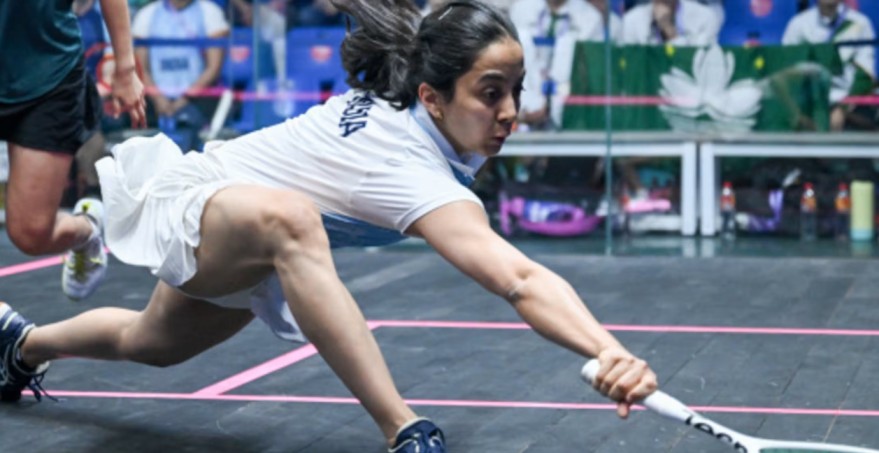
The latest evidence came in Mumbai, where India’s Tanvi Khanna scripted one of the finest comeback victories of her career to win the women’s title at the HCL-SRFI PSA Challenger Tour. It was a triumph that showcased not only her fighting spirit but also the remarkable transformation taking place in Indian squash.
A Champion’s Response
Champions are often remembered not for how they dominate but for how they respond when everything seems lost.
Against Egypt’s Farida Walid, Tanvi looked out of rhythm early in the final. She surrendered the opening game 8-11 before being completely overwhelmed in the second, losing 2-11. With the Egyptian firmly in control, few would have predicted what followed.
Instead of fading away, Tanvi gradually rediscovered her attacking rhythm. She began extending rallies, reduced her unforced errors and forced Walid to cover every inch of the court. Slowly but surely, the momentum shifted.
Tanvi edged the third game 12-10, followed it up with an 11-9 win in the fourth, and then sealed the deciding game 11-7 to complete one of the most stirring comebacks of the Indian squash season. In just 54 minutes, she had transformed a near-certain defeat into a memorable title-winning performance.
The victory marked the Delhi-based player’s fifth PSA title and reaffirmed her place among India’s leading squash professionals. More importantly, it showcased the grit and mental strength that increasingly define Indian squash on the global stage.
More Than Just Another Trophy
While Tanvi lifted the trophy, the bigger winner was Indian squash itself.
The Mumbai PSA Challenger attracted players from 15 countries, offering Indian athletes invaluable opportunities to compete against higher-ranked international professionals without the financial burden of travelling overseas. Events like these are becoming increasingly significant as Indian players look to climb the PSA rankings while gaining experience against elite competition.
For years, India’s biggest challenge wasn’t producing talent—it was providing enough competitive exposure. Promising youngsters often struggled to find ranking tournaments at home, forcing them to travel abroad at significant expense.
That landscape has changed dramatically.
With the HCL Squash Tour, PSA Challenger events and an expanding domestic calendar organised in partnership with the Squash Rackets Federation of India (SRFI), Indian professionals now enjoy more opportunities than ever before to earn valuable ranking points on home soil. These tournaments are helping bridge the gap between junior promise and world-class success.
The Indian Squash Renaissance
Indian squash has always possessed an impressive pedigree.
Legends such as Saurav Ghosal and Joshna Chinappa inspired an entire generation through their consistent performances on the PSA Tour and at major international events. They proved that Indian players could compete with—and defeat—the very best in the world.
Today, that legacy has evolved into something much larger.
India is no longer dependent on one or two stars.
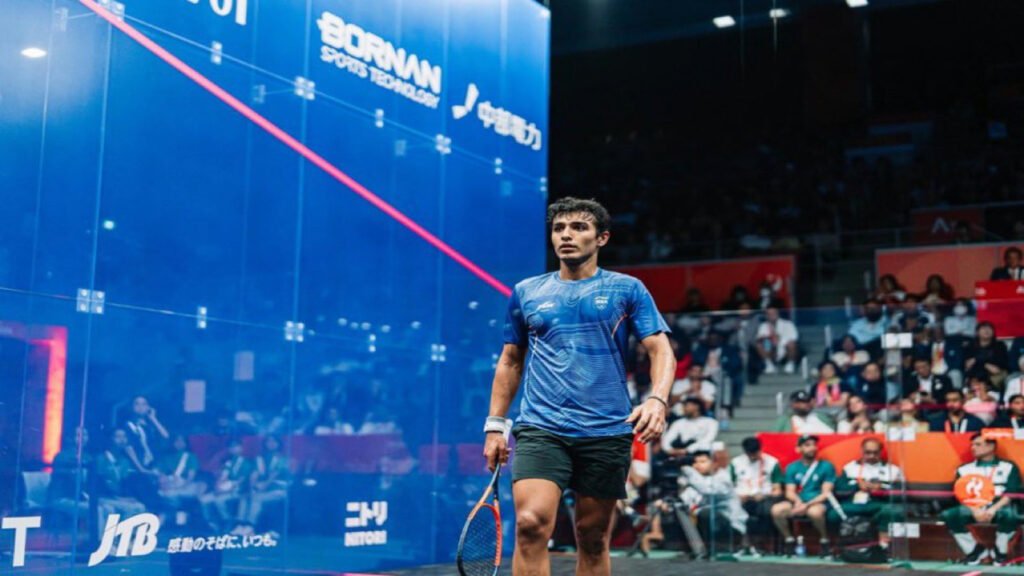
A talented new generation featuring Anahat Singh, Velavan Senthilkumar, Veer Chotrani, Ramit Tandon, Abhay Singh, Akanksha Salunkhe and Tanvi Khanna has created unprecedented depth across both the men’s and women’s circuits. Many of them are regularly competing in PSA tournaments around the world while steadily improving their world rankings.
Even more encouraging is the emergence of teenagers making their mark far earlier than previous generations. Better coaching, improved fitness programmes, sports science, international exposure and stronger domestic competition have transformed the development pathway for Indian squash players.
The rise of teenage sensation Anahat Singh has become symbolic of this changing landscape. Her fearless approach against experienced international opponents has shown that Indian juniors are no longer intimidated by rankings or reputations. They enter tournaments believing they belong among the world’s best.
Corporate Backing Changing the Game
Perhaps the biggest difference between today’s Indian squash ecosystem and that of a decade ago is sustained corporate investment.
Professional squash has historically struggled for visibility compared to cricket, badminton and tennis. But in recent years, committed support from organisations like HCL has significantly changed the narrative.
The HCL-SRFI PSA Challenger Tour has expanded competitive opportunities across multiple Indian cities, increased prize money and brought quality international fields to Indian courts. This means emerging Indian professionals can now gain valuable PSA ranking points without repeatedly travelling overseas.
The benefits go beyond rankings.
Young Indian players are now competing regularly against higher-ranked international opponents, exposing them to different playing styles and raising overall standards. Coaches, referees, tournament organisers and support staff are also benefiting from increased international exposure, strengthening the sport’s ecosystem from the grassroots to the elite level.
This sustained investment is creating a virtuous cycle—better tournaments produce better players, who in turn inspire more youngsters to take up the sport.
Youth Driving the Future
Perhaps the most exciting story lies below the senior circuit.
Across India, squash academies are witnessing growing participation among juniors. Chennai continues to be the country’s traditional powerhouse, but strong training centres are now flourishing in Delhi, Mumbai, Pune, Bengaluru and several other cities.
India’s impressive performances at junior international tournaments over the past few years have reinforced confidence that the country can soon produce multiple top-20 players simultaneously.
Young athletes now have access to better facilities, international coaching, sports psychologists, nutritionists and structured competition pathways than ever before. Parents increasingly see squash as a viable professional career, while schools and private academies are investing heavily in infrastructure.
The result is a larger, stronger and more competitive talent pipeline than Indian squash has ever enjoyed.
Global Ambitions
India’s ambitions have now expanded beyond producing occasional champions.
The long-term objective is clear—to establish itself as one of the world’s leading squash nations.
The foundations are already in place: quality coaching systems, modern infrastructure, a competitive domestic calendar, increasing corporate support and a generation of talented players willing to compete fearlessly against the world’s best.
The next challenge is consistency.
Can Indian players regularly win PSA Challenger events?
Can more athletes break into the world’s top 30—and eventually the top 10?
Can India become a consistent medal contender at every major multi-sport event?
Increasingly, the answers appear to be yes.
Looking Ahead: LA 2028 and Beyond
The excitement surrounding Indian squash is set to reach an entirely new level over the next two years. With squash making its historic Olympic debut at the Los Angeles 2028 Games, the timing could hardly be better for India. After years of building a strong domestic ecosystem, nurturing junior talent and expanding opportunities through the PSA circuit, the country finds itself on the cusp of a defining chapter in its sporting history.
Indian players are no longer travelling to major international tournaments merely to gain experience—they are increasingly entering competitions with genuine expectations of reaching the podium. The growing depth in both the men’s and women’s squads, combined with improved coaching, sports science support, world-class infrastructure and increased exposure through PSA events such as the HCL-SRFI Challenger Tour, has created unprecedented momentum.
From experienced campaigners to fearless youngsters breaking into the professional ranks, India now possesses a pipeline of talent capable of competing with the world’s traditional squash powerhouses. The consistency shown by players across the PSA circuit has reinforced the belief that Olympic success is no longer an ambitious dream but a realistic objective.
Tanvi Khanna’s fighting spirit in Mumbai perfectly captures what this generation of Indian squash players represents—fearless under pressure, resilient in adversity and relentlessly hungry for bigger achievements. Her remarkable comeback from two games down was not merely an individual triumph; it reflected the confidence and maturity that now defines Indian squash as a whole.
As one veteran observer remarked after the final, “These aren’t just results anymore. These are building blocks for something much bigger.” Every PSA title, every ranking breakthrough and every international tournament hosted in India is another step towards sustained global success.
For Indian squash fans, the future has never looked brighter. From the sweat-soaked courts of Mumbai to the grand stage of Los Angeles in 2028, the journey continues—one gritty comeback, one breakthrough performance and one historic victory at a time.
What’s Next?
The road ahead promises even greater opportunities. Indian players will continue their PSA campaigns while preparing for major international assignments, with the Commonwealth Games, Asian Games and PSA World Tour events providing regular opportunities to compete against the world’s elite.
If the current trajectory is any indication, more inspiring stories like Tanvi Khanna’s Mumbai triumph are waiting to be written. The next generation has already arrived—and they are determined to leave an enduring mark on world squash.
Tanvi’s Victory Carries a Larger Message
Tanvi Khanna’s comeback in Mumbai will rightly be remembered as one of the finest victories of her professional career.
Yet its significance extends far beyond a single PSA title.
It symbolises the resilience, confidence and growing maturity of Indian squash. The sport is building a sustainable pathway where experienced professionals continue to deliver while the next generation steadily raises the bar.
Every comeback victory, every PSA title, every successful international tournament hosted in India and every youngster inspired to pick up a squash racquet adds another chapter to this remarkable story.
Indian squash is no longer a promising sport waiting for its breakthrough.
It has become one of India’s fastest-rising success stories on the international sporting stage.
And if the current momentum continues, Tanvi Khanna’s unforgettable triumph in Mumbai may one day be remembered not simply as a remarkable comeback—but as another defining milestone in India’s transformation into a genuine global powerhouse in squash.