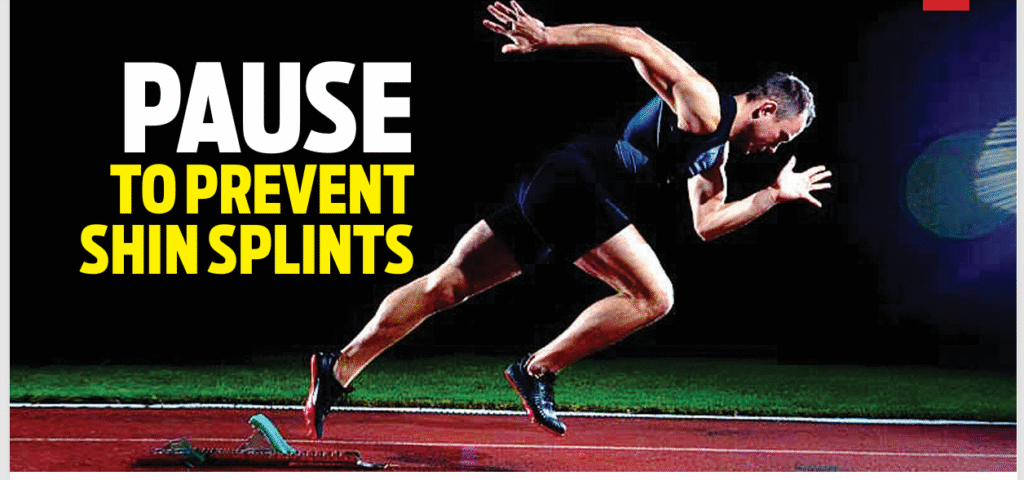
PAUSE TO PREVENT SHIN SPLINTS
Often athletes complain of pain in the front part of the lower leg bone, or the tibia (shin bone). This could be caused due to shin splints, especially found in sprinters or soccer players. In this condition, often it is detected that the muscles, tendons and tissue around the shin bone (tibia) has got inflamed. Athletes, who put repeated stress on their shin bones, muscles and connective tissues, are particularly at risk of developing this overuse injury. In most cases, the patient recovers with application of ice and rest without having to face any long-term health problems. But, if left untreated, it may develop into a tibia stress fracture.
SYMPTOMS AND NATURE OF PAIN
The most common symptom of shin splints is lower leg pain, ranging from mild to severe. Sometimes, the affected shin bone may be tender to the touch. Mild swelling may also be noticed. The pain may initially start off as come-and-go discomfort with activity and progress. It may later progress to a steady and persistent pain even after the physical activity has ended. The pain may get worse after activity.
WHAT CAUSES SHIN SPLINTS ?
It is mainly caused due to repeated stress on the shin bone by the pulling and tugging of the muscles and connective tissues. The repetitive pressure may be exerted while running or jumping, causing inflammation and weakening of the shin bone. When the bone doesn’t get ample rest and time to heal, the injury gets worse. The pain also turns severe. The repeated stress can occur due to starting of a new exercise regime or when the physical activity level is suddenly increased.
VULNERABLE GROUPS
There are specific groups of people who are at a higher risk of developing shin splints. These include runners or sprinters, especially those who run on uneven surfaces or suddenly intensify their running program. Athletes of high-impact sports are also at risk. This is very common among dancers. People with flat feet, high or rigid arches are also prone to such an injury. In their cases, muscles and bones may not absorb or distribute force from impact or loading activities. People who march or walk a lot, especially people from the armed forces, may also face these injuries quite often. People with underlying vitamin D deficiency or suffering from osteopenia or osteoporosis are also vulnerable as they have weaker bones.
POSSIBLE COMPLICATIONS OF SHIN SPLINTS
It is quite rare that complications may arise from this injury. But, if the patient continues rigorous physical activities without letting the legs heal, this may progress into a stress fracture. A stress fracture refers to little cracks on the bones. To treat a stress fracture, one may need to use crutches or use a walking boot until complete healing.
DIAGNOSIS AND TESTS
Healthcare providers often diagnose shin splints by examining the patient’s medical history and initially opt for a physical assessment of the condition. The healthcare provider will examine how the patient is walking and his or her lower leg, ankle, and foot. A complete examination involves moving the ankle and the foot around to feel the tenderness along the bone. The patient may be asked to stand on the affected leg or hop for accurate diagnosis. The healthcare provider may also opt for an X-ray to rule out stress fracture. They may also order a magnetic resonance imaging (MRI) scan or bone scan.
MANAGEMENT AND TREATMENT
The treatment of shin splints is based on the following points:
Rest: Take a break from sports and other rigorous physical activities. This gives the muscles and the bones the time to recover. The patient may be asked to take rest for a few weeks or longer, depending upon the severity of the condition.
Ice: Apply a cold compress to your shins every 10 to 20 minutes, three to four times a day, for a few days. Ice relieves the swelling and pain.
Pain relievers: Over-the-counter (OTC) nonsteroidal anti-inflammatory drugs (NSAIDs) can also reduce the pain and swelling.
Supplements: A vitamin D3 supplement may also be recommended to aid the recovery process.
Shin splint stretches: The patient may be asked to gently stretch and flex the lower leg muscles.
Slowly returning to physical activities: Return to sports or daily physical activities slowly and avoid a recurrence.
Supportive shoes and shoe inserts: For people with flat feet, shoe inserts (orthotics) can be effective. Orthotics support the arches and reduce stress on the muscles and bones.
Physical therapy: Physical therapy may also be helpful by opting for strengthening exercises. This also reduces the chance of repeated injury.
Recovery period: Shin splints aren’t permanent. They should go away usually in three to four weeks. If the shin splints don’t go away over a long period of time, one must consult medical practitioners and experts.
PREVENTIVE MEASURES
One can reduce the risk of developing the condition or making it worse. To lower the risk, the following can be opted for:
Wear supportive shoes when exercising: Running shoes should be replaced every 300 miles. Consider wearing orthotic inserts that support the arches. You may also consider speaking with a pedorthist.
Start slowly and increase your activity level and intensity over time: Avoid any sudden increases in activity level. One must stick to the 10% rule — don’t increase more than 10% per week in activity. Warm-up exercises are a must before the activity starts.
Avoid surfaces that are hard, uneven, or hilly while running.
Take rest between activities to allow the muscles and bones time to heal.