Pogacar Finally Cracks Milan–San Remo After Crash and Late Duel with Pidcock
Milan–San Remo is not the kind of race you win easily. It’s long, often controlled for hours, and then suddenly explosive in the final stretch. Riders don’t just need strength—they need timing, patience, and a bit of luck.
For Tadej Pogacar, it had been one of the few big races missing from his list. He had tried different approaches in previous years—attacking early, pushing hard on climbs—but the result was always the same: close, but not enough.
This time, things finally came together. But not without a scare.
The Crash That Complicated Everything
With about 30 kilometres to go, the race took an unexpected turn.
A crash in the peloton brought down several riders, including Pogacar. He hit the ground hard, picking up cuts and damage to his kit. For a brief moment, it looked like his race might be over—not because he couldn’t continue, but because of the time he lost.
In a race like Milan–San Remo, getting dropped that late can be decisive. But Pogacar got back on his bike quickly and started chasing.
Working His Way Back Into the Race
With support from his team, he managed to rejoin the front group before the decisive climbs. It wasn’t dramatic, just steady and controlled effort to limit the damage. By the time the race approached the Cipressa, Pogacar was back where he needed to be. That’s when the real racing began.
The Selection on the Climbs
On the Cipressa and later on the Poggio, Pogacar did what he often does—he increased the pace and tried to reduce the group. This time, only a few riders could stay with him. Tom Pidcock was one of them. The two rode clear, building a small but important gap over the chasing group. It wasn’t a huge lead, but enough to keep the race between them heading into the final kilometres.
A Sprint Decides It
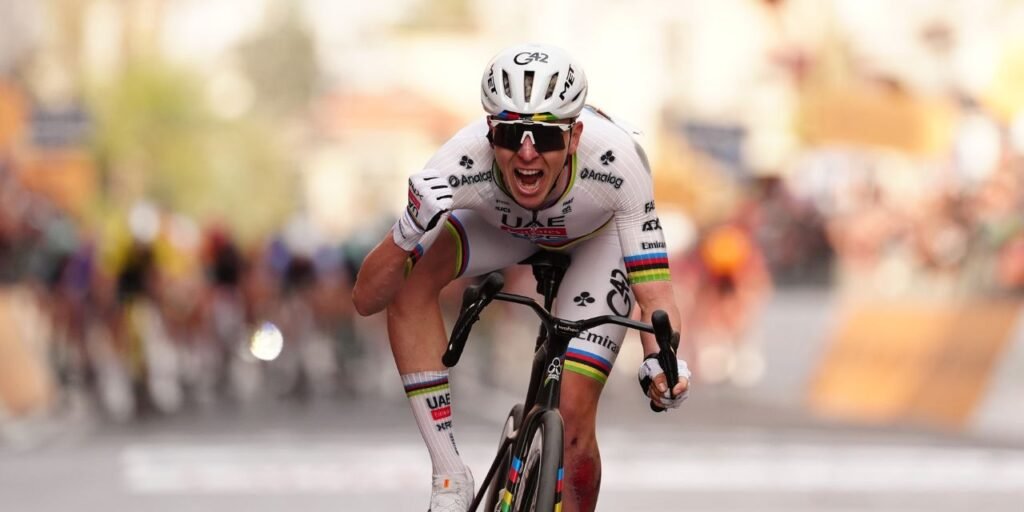
After such a long race, it came down to a simple situation: two riders, one finish line. Pogacar and Pidcock entered the final stretch together. Neither made an early move. It was a waiting game. With around 200 metres to go, Pogacar launched his sprint. Pidcock followed, but Pogacar had just enough of an advantage to hold him off until the line. It wasn’t a big gap, but it didn’t need to be.
Why This Win Matters
Pogacar has already won some of cycling’s biggest races, but Milan–San Remo is different. It’s unpredictable and often doesn’t suit riders who prefer to attack early. Winning here required a different kind of race from him—more controlled, more patient. Even after the crash, he didn’t panic. He got back, stayed in position, and made his move at the right time.
That’s what made the difference. This wasn’t Pogacar’s most dominant win, but it might be one of his most complete. He dealt with a setback, stayed in contention, and finished the job when it mattered. After several attempts, Milan–San Remo is finally his.