

India’s Olympic story began not with a team march or a national anthem, but with a lone athlete from colonial Calcutta who quietly made history on the world’s biggest sporting stage. At the 1900 Paris Olympic Games, Norman Gilbert Pritchard became the first Indian athlete to win Olympic medals, opening India’s medal account and setting the stage for the country’s future Olympic success.
According to historical records documented by Jagran Josh, Pritchard’s achievement remains a landmark moment in Indian sport, marking the country’s earliest presence on the Olympic podium (Source: Jagran Josh )
India’s First Olympic Medallist
Born on 23 June 1875 in Calcutta, Norman Pritchard was a gifted sprinter and hurdler who represented India at the second edition of the modern Olympic Games. Competing in Paris in 1900, he won two silver medals — in the 200 metres and the 200 metres hurdles.
The International Olympic Committee (IOC) officially credits these medals to India, making Pritchard the first Indian Olympic medallist and also the first Asian-born athlete to win Olympic medals (Source: Wikipedia – Norman Pritchard).
At the time, India did not have a formal Olympic association, and athletes often competed under loosely defined national affiliations. Despite later debates over nationality, the IOC’s records continue to list Pritchard’s medals under India’s name, cementing his place in Indian Olympic history (Source: India at the 1900 Summer Olympics – Wikipedia).
A Historic First, Amid Historical Debate
Historians have long discussed whether Pritchard competed as a British athlete or as an Indian representative, given the colonial context of the era. However, as reported by India Today, his Indian birth, early sporting career in Calcutta, and current IOC classification justify his recognition as India’s first Olympic medallist (Source: India Today).
Regardless of technical classifications, Pritchard’s achievement stands as India’s earliest Olympic success — a moment that would inspire generations to come.
The First Olympic Gold: India’s Rise Through Hockey
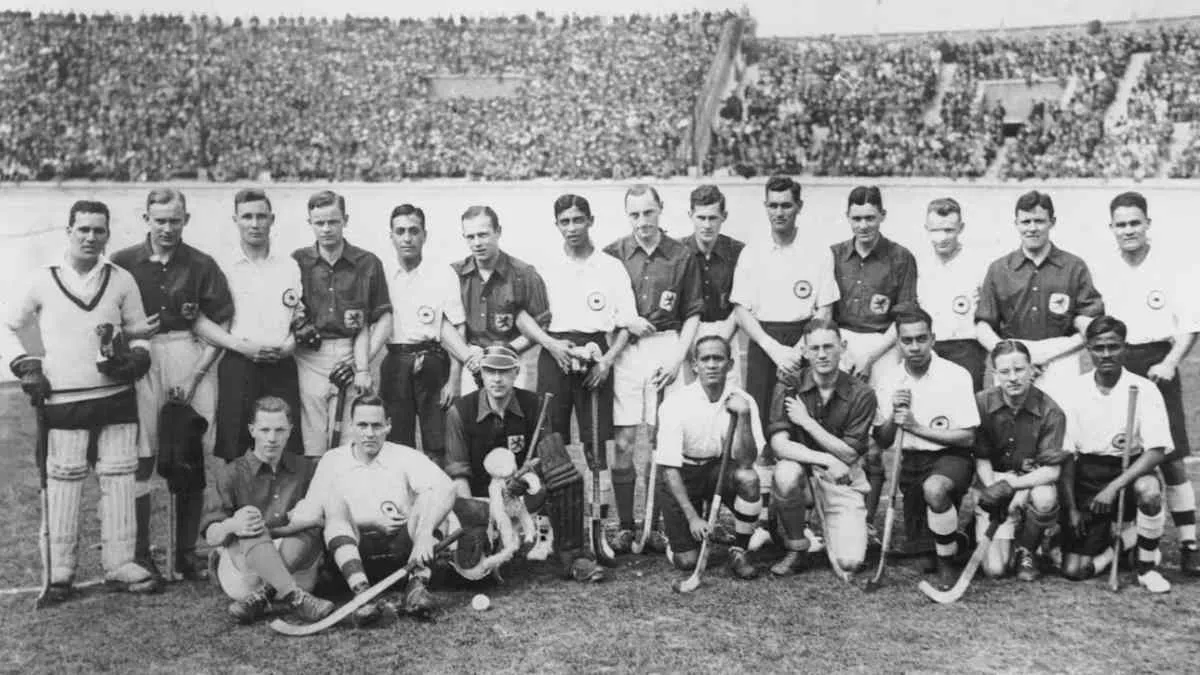
While Pritchard delivered India’s first medals, the country’s first Olympic gold medal arrived nearly three decades later. At the 1928 Amsterdam Olympics, the Indian men’s hockey team won gold, beginning a golden era that would see India dominate the sport on the world stage.
Led by the legendary Dhyan Chand, India’s hockey triumph in 1928 marked a turning point — transforming India from Olympic participants into Olympic champions (Source: Jagran Josh )
That historic gold medal traced its roots back to the path first opened by Pritchard in Paris.
Beyond the Track: A Remarkable Life
Norman Pritchard was more than an Olympian. Educated at St. Xavier’s College, Calcutta, he was a multi-sport athlete who excelled in athletics and football before moving abroad. Later in life, he relocated to the United States and pursued a career in cinema under the name Norman Trevor, becoming one of the earliest Olympians to transition into Hollywood (Source: India Today).
He passed away in 1929, but his legacy continues to resonate across Indian sport.
Why Norman Pritchard Matters Today
First Indian athlete to win Olympic medals (1900 Paris Olympics)
First Asian-born athlete to medal at the modern Olympics
His success laid the foundation for India’s Olympic identity
His legacy preceded India’s first Olympic gold in hockey in 1928
From a silver-medal performance on a Paris track to the golden dominance of Indian hockey, India’s Olympic journey began with one man’s quiet brilliance. Norman Pritchard may not be a household name today, but history remembers him as the athlete who placed India on the Olympic map.








Discussion about this post