India’s Bowling Brigade Turns X-Factor Ahead of 2026 T20 World Cup

For years, India’s white-ball legacy was defined by its batting might. But as the 2026 ICC Men’s T20 World Cup, to be co-hosted by India and Sri Lanka from February 7 to March 8, 2026, draws closer, the spotlight has shifted dramatically. This time, India’s most convincing case for a title run lies not in its run-scorers, but in its bowlers.
A well-rounded, match-up driven, ruthlessly consistent bowling attack is emerging as India’s biggest trump card, capable of dictating games across conditions in both host nations.
Recently, this attack showcased its collective strength by bowling out South Africa for just 74 in a dominant T20I performance, further underlining its tournament-defining potential.
The Pace Trinity: A Blueprint for Control and Carnage
India’s pace battery has evolved into a combination of elite skill, composure, and impact across all phases.
 Jasprit Bumrah — The Eternal Constant
India’s premier quick remains the heartbeat of the attack. Bumrah’s skiddy pace, reverse swing, dipping yorkers and deceptive slower balls make him the world’s most complete T20 bowler.
He enters the home World Cup riding a fresh milestone, having completed 100 T20I wickets at the Barabati Stadium in Cuttack on Tuesday.
His presence alone rewrites match equations.
 Arshdeep Singh — The Left-Arm Advantage India Needed
Arshdeep has become the perfect partner—swinging the new ball, striking early, and mastering the wide-line yorker at the death.
Crucially, he recently became the first Indian bowler to reach 100 wickets in T20 Internationals, a historic milestone that underlines his consistency and growth.
His maturity ensures India is dangerous with both the new ball and the old, especially on surfaces in India and Sri Lanka where cutters and angles flourish.
Together, the Bumrah–Arshdeep duo offers India 8 overs of high-quality threat every match.

The Spin Web: A Trio Designed for Subcontinental Success
With the World Cup being staged in spin-friendly India and Sri Lanka, this department may define India’s tournament.
Kuldeep Yadav — The Middle-Overs Enforcer
Kuldeep’s left-arm wrist-spin gives India wicket-taking power exactly where games tend to drift. His ability to turn the ball both ways, trap batters at the crease, and break partnerships makes him India’s biggest X-factor in the middle overs.
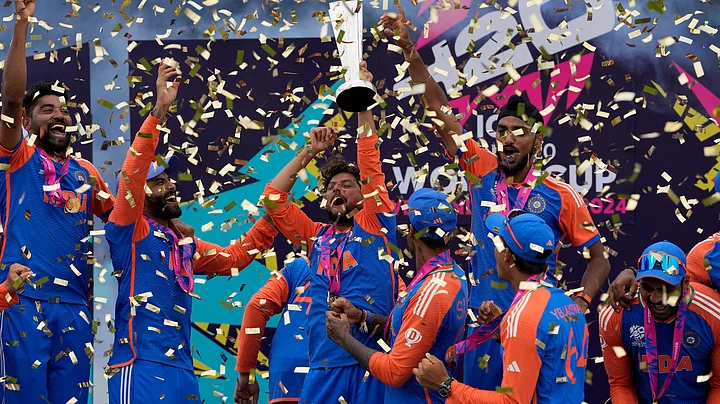
 In the previous T20 World Cup in 2024, India’s title triumph was built heavily on the control and breakthroughs delivered by Kuldeep Yadav and Axar Patel, whose combined impact in the middle overs repeatedly swung games in India’s favour. As the 2026 edition approaches, the team will once again bank on this proven spin duo to replicate that tournament-winning influence.
Axar Patel & Varun Chakaravarthy — Control Meets Mystery
Axar Patel: Accuracy, speed, and priceless economy. He shuts down scoring options while offering batting depth.
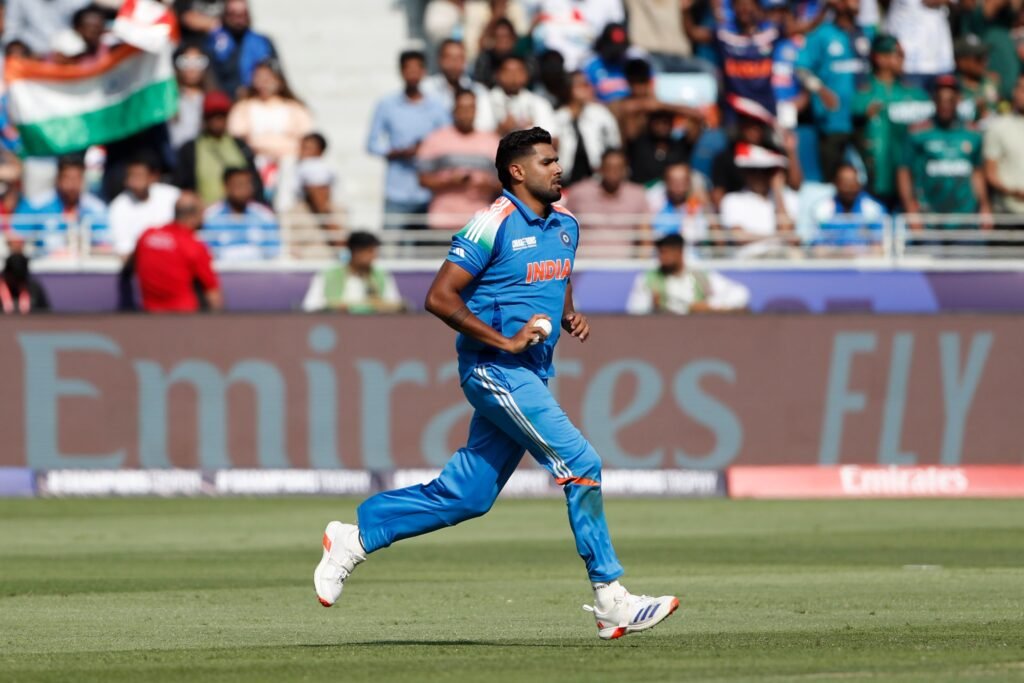
Varun Chakaravarthy: The mystery spinner whose drift and carrom ball thrive on slow surfaces.
This trio gives India a spin unit perfectly tuned for the subcontinent: stable, varied, and relentlessly probing.

The Hardik Pandya Balance Factor
A fit and firing Hardik Pandya gives India tactical luxury. He can bowl with the new ball, provide hard lengths in the middle overs, or act as a change-up option when conditions demand. His presence enables India to field an extra specialist—either batter or bowler—based purely on match-ups.
In ICC tournaments, Hardik’s intensity and experience offer an emotional edge too. Hardik Pandya showed he is back to full fitness with an all-round performance in the first T20 at Barabati, contributing with both bat and ball to India’s dominant display.
Clear Roles, Sharp Plans: India’s Bowling Identity Is Now Defined
India’s recent dominance—six bilateral T20I series wins and 27 victories since the last World Cup—has been built on a simple shift: the bowling unit is no longer reactive; it is proactive.
This team doesn’t merely compete with the ball.It controls games with it. It dictates match-ups. It creates pressure rather than waits for it.
As the World Cup returns to familiar conditions, this clarity becomes an even greater advantage.
The 2026 Vision: Can Bowling Win India the World Cup?
Perhaps more than ever before, the answer is yes The combination of Bumrah’s world-beating consistency, Arshdeep’s historic 100-wicket milestone and left-arm threat, Kuldeep and Varun’s mystery,Axar’s reliability, and Hardik’s balance, gives India an attack packed with multiple match-winners, adaptable across venues in both host nations.
In a format where one spell can change a campaign, India isn’t relying on just one bowler—they have five or six capable of delivering that spell.
As February 2026 approaches, one thing is clear: India’s bowling brigade is no longer the supporting act—it’s the spearhead of their World Cup dream.