


Dr. Acharya began by clarifying that skill acquisition and physical conditioning are not just performance tools — they are core pillars of injury prevention and management.
She highlighted that:
• Practice sessions are as critical as competition
• Performance quality depends on how well athletes are conditioned
• Emergency responses must be practiced just like match-day strategies
“Preparedness is not accidental — it is trained,” she emphasized.
“Every Second Counts When a Player is Down”
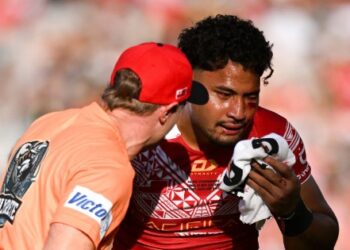
One of the strongest messages of the session was the importance of immediate response during on-field injuries. Dr. Acharya stressed that panic, delay, or unstructured reaction can turn a manageable injury into a serious medical threat.
She urged teams to be trained not only for:
• Musculoskeletal injuries
• But also for life-threatening conditions like airway obstruction, unconsciousness, and circulatory failure
Primary Assessment: The First 30 Seconds That Save Lives
The Primary Assessment Phase was described as the most critical stage, ideally completed within 30 seconds to 2 minutes. Dr. Acharya outlined the globally accepted DRABC protocol:
✅ DRABC Emergency Process
• D – Danger: Ensure the environment is safe for the athlete and responders
• R – Response: Check if the athlete is conscious and responsive
• A – Airway: Ensure the airway is clear
• B – Breathing: Check if the athlete is breathing normally
• C – Circulation: Look for pulse and control any bleeding
This process must be done with little or no movement of the athlete, especially when spinal injury is suspected.
“This is not optional knowledge — this is survival skill,” she asserted.
Secondary Assessment: Identifying the Injury Clearly
Once the athlete is stable, the Secondary Assessment begins. This stage focuses on identifying the exact nature of the injury and determining whether the player can continue.
Key elements include:
• Observing whether bleeding is continuous
• Checking the athlete’s overall condition
• Assessing pain, swelling, deformity, and movement restriction
TOTAPS: The Gold Standard of On-Field Injury Evaluation
Dr. Acharya explained the widely used TOTAPS method for structured sports injury assessment:
• T – Talk: Communicate with the player, understand what happened
• O – Observe: Look for swelling, deformity, discoloration
• T – Touch: Gently palpate to locate pain and tenderness
• A – Active Movement: Ask the athlete to move independently
• P – Passive Movement: Examiner moves the joint to test range and pain
• S – Skill Test: Functional sport-specific movement before return
This method ensures that no injury is underestimated and no decision is rushed.
Soft Tissue vs Hard Tissue: Beyond Textbook Knowledge
While athletes and support staff commonly understand the difference between:
• Soft tissue injuries (muscle, ligament, tendon)
• Hard tissue injuries (bone, joint)
Dr. Acharya stressed the need to go beyond labels and focus on:
• Mechanism of injury
• Functional limitation
• Immediate risk assessment
• Return-to-play decision safety
Practice the Response, Not Just the Game
A recurring theme of the session was the importance of regular emergency and injury-response drills. Dr. Acharya pointed out that:
• Performance under pressure depends on how well the response is rehearsed
• Emergency handling should be part of routine training curriculum
• Conditioning without safety preparedness is incomplete athlete development
Key Takeaway from SSI Sports Science Conclave 2025
Dr. Gayatri Upasana Acharya’s session delivered a powerful message:
• Injury management is a skill — not just medical knowledge
• The first 2 minutes decide the fate of the athlete
• Structured approaches like DRABC and TOTAPS are non-negotiable
• Conditioning, practice, and preparedness together define true sports professionalism
The session stood out as one of the most practical, life-saving, and athlete-centric discussions of the conclave.













Discussion about this post