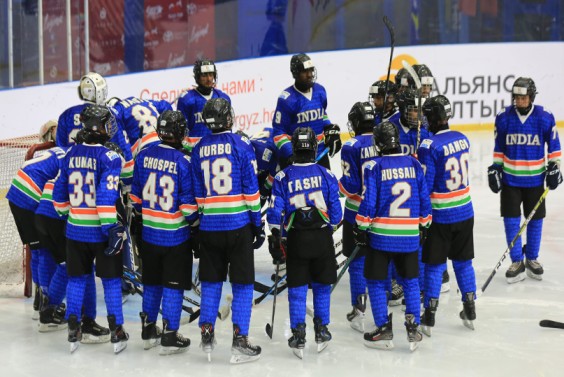
Players competing at the 2026 Winter Olympics will, for the first time, be required to wear neck guards, the International Ice Hockey Federation (IIHF) has confirmed. The landmark safety decision comes in the wake of Nottingham Panthers forward Adam Johnson’s tragic death in October 2023, after he was fatally struck in the neck by an opponent’s skate during an Elite League game.
A Rule Shaped by Tragedy
Johnson’s passing triggered widespread calls for enhanced player safety across the sport. The IIHF had initially announced in December 2023 that neck guards would become mandatory in all their competitions, but no official implementation timeline had been provided until now. A spokesperson has confirmed that the requirement will be enforced in alignment with the IIHF Rule Book during the Milan-Cortina Games.
Changing Safety Standards
Traditionally, neck guards have been optional at the Olympic level, and many global leagues have not required them. While youth international competitions already enforce the rule, the 2026 Games will mark the first time many elite athletes experience this additional layer of protection.
Despite Johnson’s fatal incident occurring in the British Elite League, the league has not made neck guards compulsory. Similarly, the NHL—widely regarded as the world’s premier ice hockey league—has not mandated neck guards for current players.
NHL’s Partial Adoption
The NHL will require neck guards only for new players entering the league from the 2026–27 season onward. Existing players will not be obligated to wear them. NHL players are also set to return to Olympic competition at the 2026 Games after missing the past two editions due to scheduling conflicts in 2018 and COVID-19 concerns in 2022.
Road to Milan-Cortina
The Olympic ice hockey tournament will take place in Milan from 5 to 22 February 2026, marking a significant step forward in player safety as the global spotlight turns once again to the sport’s biggest stage.


 Vishesh Shukla
13 Aug 2026 · 11:59 AM IST
2 min read
0 Reads
Vishesh Shukla
13 Aug 2026 · 11:59 AM IST
2 min read
0 Reads