


New Delhi: The thundering of hooves returned to Delhi’s green heart after years of silence. Under a mellow October sun at the iconic Jaipur Polo Ground, India scripted a stirring chapter in its sporting heritage, edging past powerhouse Argentina 10–9 to lift the KogniVera International Polo Cup 2025 on Sunday.
It was a win that shimmered with symbolism as much as sweat. For the first time in a decade, an international polo contest unfolded on Indian soil, and for the hosts to defeat Argentina — the sport’s global benchmark — made the victory feel almost poetic.

Led by Sawai Padmanabh Singh of Jaipur, the young scion of the erstwhile royal family whose ancestors built the very ground that hosted the match, India displayed grit and grace in equal measure. Beside him, captain Simran Singh Shergill marshalled the side with tactical brilliance and quiet ferocity. “Winning against Argentina is an incredible moment for all of us,” Shergill said, eyes glinting after the final whistle. “Every player gave their best, and the energy from the stands pushed us even further. It’s a proud day for Indian polo.”
The game itself was a rollercoaster — nineteen goals, breakneck gallops, and deft touches that demanded control few sports can match. Veteran Syed Shamsheer Ali unleashed breathtaking runs across the sprawling field — nearly thrice the size of a football pitch — while Siddhant Sharma manoeuvred his pony with balletic precision. Padmanabh, nicknamed Pacho, combined defensive poise with audacious attacking forays that kept the Argentine quartet scrambling.
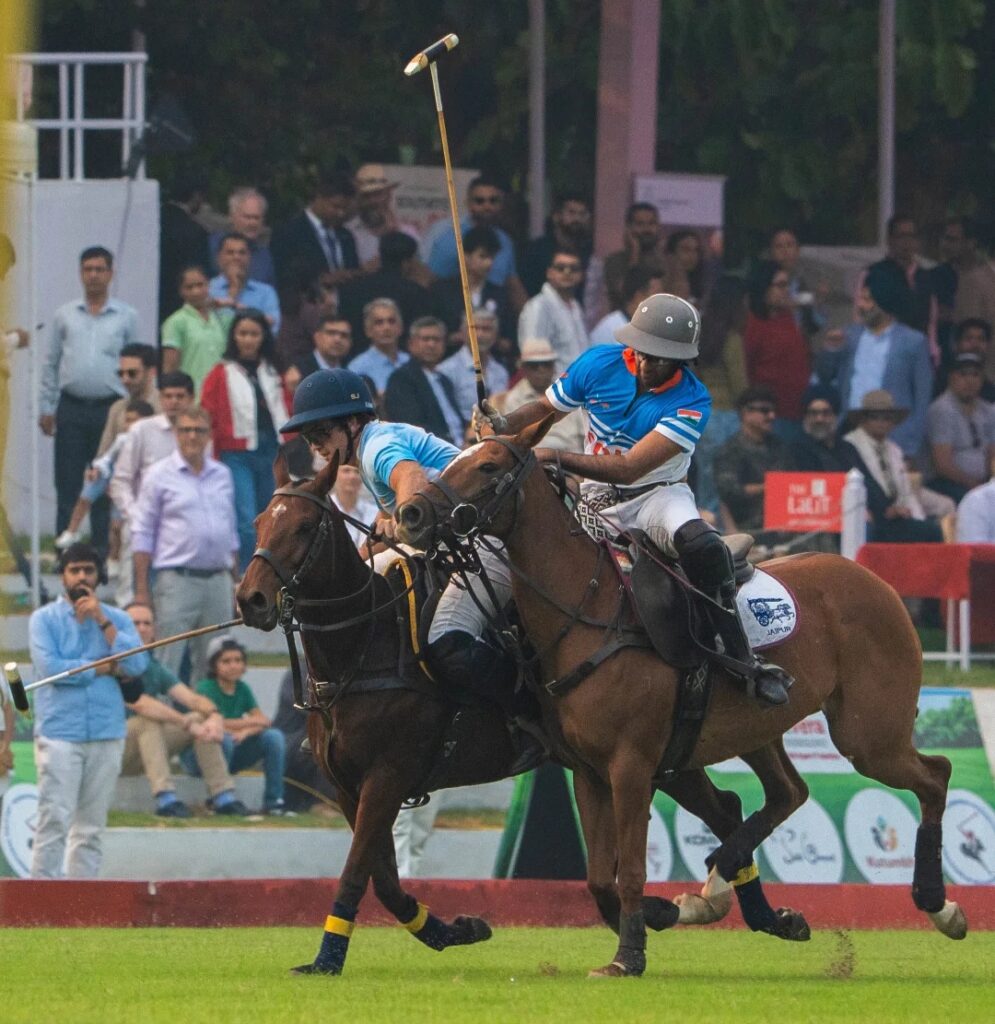
The atmosphere matched the intensity on the turf. Diplomats, ministers, and society patrons filled the stands — among them Union Ministers Gajendra Singh Shekhawat and Kiren Rijiju, MP Naveen Jindal, poet Kumar Vishwas, and Lt. Gen. VMB Krishnan, Quarter Master General of the Indian Army. For a sport often seen as aristocratic, the event felt refreshingly democratic — a celebration of speed, strategy, and horsemanship.
But beyond the numbers, the match carried emotional and historical resonance. “It’s the first time in ten years that we’re playing an international game at home,” said Padmanabh Singh. “We play abroad often, but to wear India’s colours on our own soil — that’s special. And to do it here, on a ground built by my ancestors, makes it deeply personal.”
India: The Cradle of Polo
Long before the world discovered the thrill of polo, India had been playing it for centuries. Known as ‘Sagol Kangjei’ in Manipur — the state regarded as the birthplace of modern polo — the game evolved from ancient cavalry exercises into an elite pastime of kings and soldiers. British officers stationed in India in the 19th century adopted the sport, formalised its rules, and took it to the West, where it flourished as “the Sport of Kings.”

The Calcutta Polo Club, founded in 1862, remains the oldest polo club in the world. From princely teams in Jaipur, Jodhpur, and Patiala to military regiments that kept the sport alive post-Independence, India has long been one of polo’s spiritual homes. Yet over the decades, limited sponsorship and visibility have dimmed its public presence — something players like Padmanabh and Shergill are determined to change.
“Polo is India’s gift to the world,” Padmanabh said. “We need to take ownership of that legacy and bring it to the people again. Once you watch it, you realise it’s one of the most beautiful sports ever played.”
A Modern Push for an Ancient Sport
For India’s polo fraternity, Sunday’s match was more than a contest — it was a statement of revival. With corporate partners like KogniVera IT Solutions backing the event and live broadcast bringing the game to wider audiences, optimism was palpable.
“Polo represents grace, grit, and global friendship,” said Kamlesh Sharma, CEO of KogniVera. “Hosting and witnessing India’s victory has been truly special. It’s heartening to see this sport unite people across cultures.”
Padmanabh echoed that sentiment: “Every sport that has grown — cricket, kabaddi, baseball — has done so with corporate support. That’s how players get better horses, better surfaces, better chances. We need that for polo too.”











Discussion about this post