Curling Cheating Row Sparks Chaos
Accusations of cheating, on-ice swearing and claims of secret filming have plunged Olympic curling into turmoil in Cortina, forcing officials into a rapid rethink of how the sport polices itself.
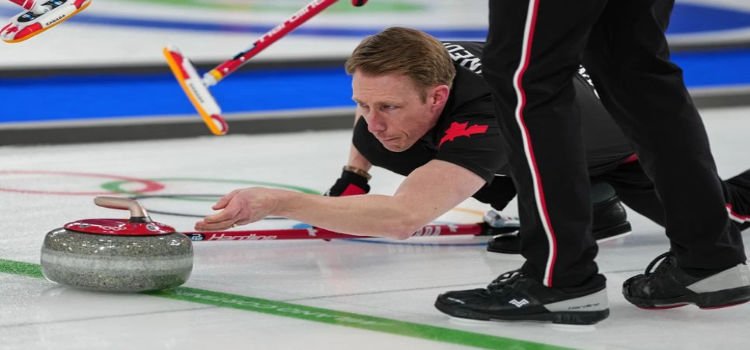
The controversy erupted during Canada’s 8-6 win over Sweden when Marc Kennedy was accused of repeatedly “double-touching” his stones — releasing the handle legally before subtly nudging the granite again with his finger. Swedish rival Oskar Eriksson confronted him in a heated exchange that shattered curling’s image as the ultimate self-governed sport.
Double-Touch Dispute Ignites
Under curling’s long-standing code, players officiate themselves and sign the scorecards at the end of matches, making decisions final. World Curling reiterated that it does not use video replay to “re-umpire” games. Kennedy received a warning for swearing — but no sporting sanction.
Yet footage later emerged appearing to show the alleged infractions. Canada suggested the Swedes had orchestrated a sting operation by arranging illicit filming to catch them out — a serious claim in a sport built on trust and mutual respect.
Officials Forced To Intervene
The row deepened when Switzerland reported Kennedy for the same offence in a subsequent match. Again, no action was taken.
Under mounting pressure, World Curling introduced additional on-ice officials to monitor deliveries for the remainder of the Games. Almost immediately, players began falling foul of the new scrutiny. Canada’s women’s skip Rachel Homan and Team GB’s Bobby Lammie were both penalised for accidental lingering contact after release — incidents viewed as technical rather than deliberate.
Teams protested. Officials relented again. A revised protocol now allows sides to request monitored observation of an opponent’s delivery for a minimum of three ends if suspicions arise.
Is Technology The Answer?
Execution of the new system has been patchy, raising broader questions about whether curling must modernise. The sport already uses precision measuring tools to determine which stone lies closest to the button, and electronic hog-line sensors to detect early releases.
Could video review be next?
Team GB lead Hammy McMillan believes so, suggesting a challenge-based system similar to VAR or Hawk-Eye in other sports, where teams would receive a limited number of reviews per game.
Such a move would represent a philosophical shift for curling — from trust-based self-regulation to technology-driven oversight.
For now, tension lingers on the ice at the Cortina Curling Stadium. What began as a single disputed delivery has evolved into a debate about the future of officiating in one of the Winter Olympics’ most tradition-bound sports.