Indian Ice Hockey: Breaking the Ice Ceiling
Indian Ice Hockey and the Harbin Breakthrough
Indian Ice Hockey Makes History
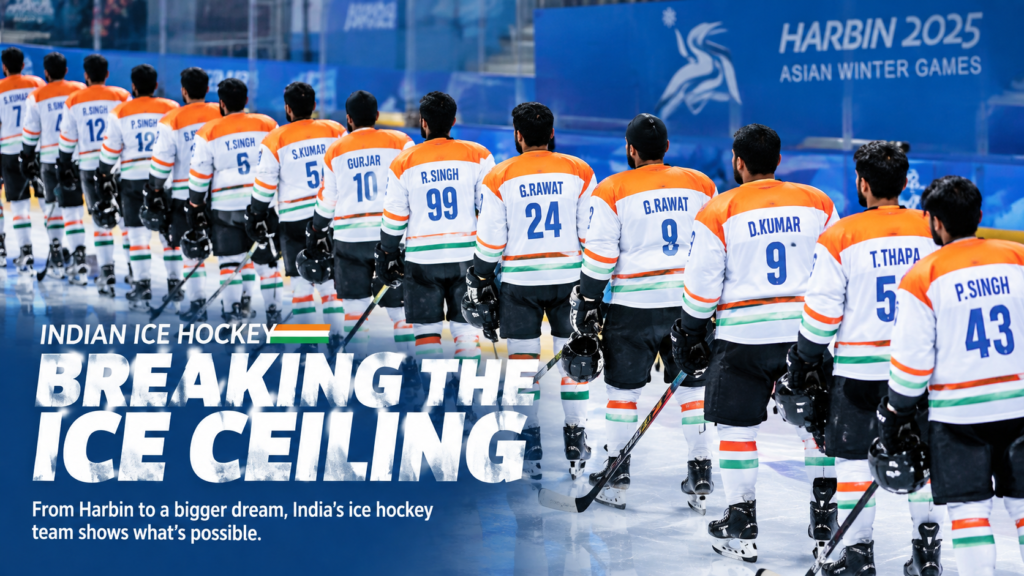
Ice hockey remains a minority sport in India, where tropical weather and limited infrastructure have restricted its growth. However, the Indian men’s team reached an important milestone at the 2025 Asian Winter Games in Harbin, China.
After heavy defeats against Hong Kong and Turkmenistan, India bounced back to defeat Macau 4-2 on February 9, 2025. It was the team’s first-ever win at the Asian Winter Games.
The victory provided a major morale boost to a team that had entered the competition with limited preparation and resources.
Indian Ice Hockey and Dr Sarthak Patnaik
Dr Sarthak Patnaik’s Role With the Team
Sports medicine expert Dr Sarthak Patnaik travelled with the Indian team as its Chief Medical Officer during the Harbin Games. He has been associated with Indian ice hockey for several years and has also supported the team at previous international and domestic competitions.
For Patnaik, the Harbin experience was about more than one result. He saw first-hand the physical demands placed on the players and the challenges faced by a team with limited depth and preparation.
The team’s historic win against Macau came despite several injuries and a thin squad with limited substitutes.
Indian Ice Hockey’s Challenges
Limited Preparation and Resources
The Indian team faced several difficulties during the Asian Winter Games.
Players came from different backgrounds and had varying levels of experience. Limited opportunities to play together, inadequate infrastructure and a shortage of regular competition made preparation difficult.
The team also had to deal with injuries during the tournament. With limited substitutes available, players often had to continue despite physical challenges.
These difficulties made the Macau victory particularly significant for the players and support staff.
Indian Ice Hockey and the Climate Challenge
India’s climate presents a unique challenge for the development of ice hockey.
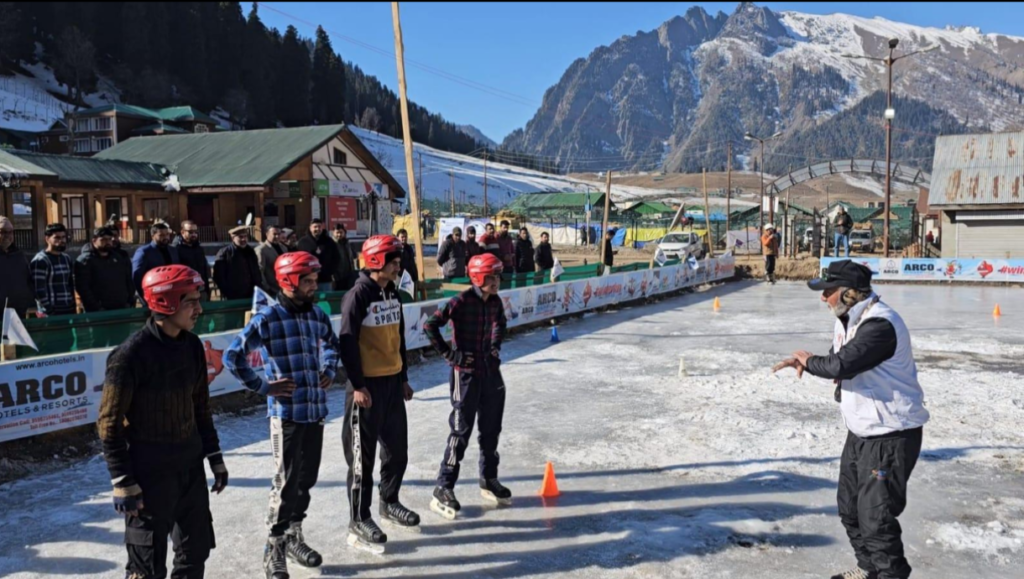
Unlike countries where winter sports can be played naturally for much of the year, India has only a few regions where ice sports can develop more easily. Ladakh, Himachal Pradesh and parts of the Himalayan region have traditionally provided opportunities for the sport.
The lack of year-round ice facilities, however, limits regular training and competition.
For Indian ice hockey to grow, the development of more accessible rinks and better training facilities remains important.
Indian Ice Hockey Infrastructure
The Need for More Ice Rinks
Shimla has a long association with ice sports, while facilities in places such as Ladakh and other northern regions have helped keep ice hockey active.
The sport has also benefited from facilities such as the rink at Gulmarg and the LSRC Indian Army rink.
However, greater infrastructure would allow more players to train regularly and create stronger pathways from grassroots participation to the national team.
Indian Ice Hockey and Grassroots Development
Creating Opportunities for Young Players
The development of ice hockey depends on getting more young players onto the ice.
Regular competitions, coaching, equipment and access to training facilities can help athletes develop from an early age.
Ladakh has played an important role in Indian ice hockey, with the region’s winter conditions and local participation providing a natural base for the sport.
Expanding these opportunities to other parts of the country could help create a wider pool of players.
Indian Ice Hockey’s Road Ahead
From Harbin to a Bigger Future
India finished its Harbin campaign with a 4-2 win over Macau in the group stage but later lost 13-2 to Singapore in the 11th-place game, finishing 12th overall.
The final position was not the only measure of the team’s campaign. The victory over Macau marked an important moment for Indian ice hockey and demonstrated what the team could achieve despite limited preparation and resources.
For the sport to move forward, stronger infrastructure, regular international exposure, better preparation and continued support will be essential.
Indian Ice Hockey Beyond Harbin
The Harbin campaign provided Indian ice hockey with a significant moment on the international stage.
The next challenge is to build on that experience and create a stronger sporting structure at home. With greater access to ice rinks, coaching and competition, the sport can provide more opportunities for players from regions where winter sports already have a strong presence.
For Indian ice hockey, the Harbin victory was not the end of the journey. It was another step towards breaking the ceiling that has kept the sport from reaching its wider potential.