

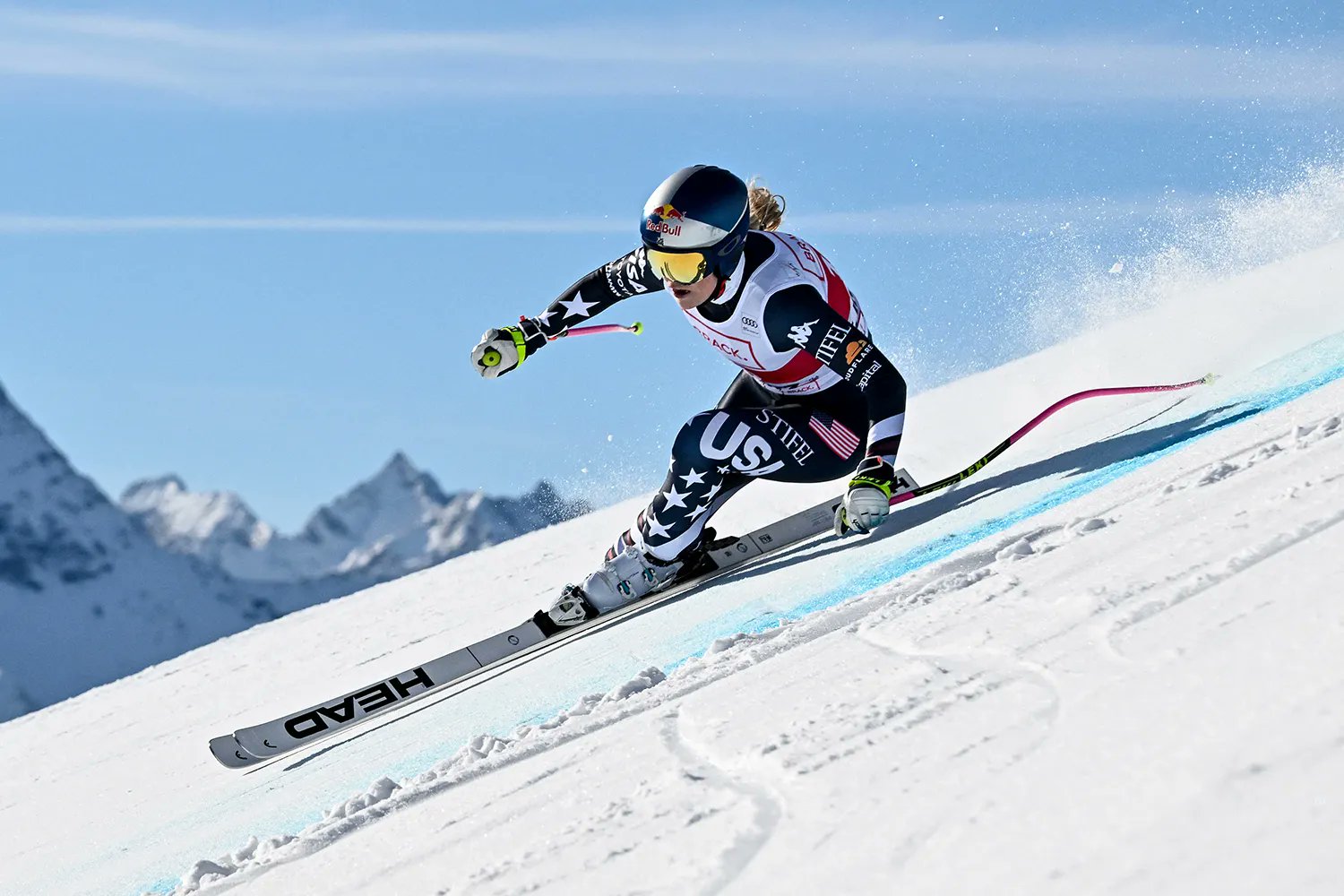
In the unforgiving world of alpine speed skiing—where a single turn can end a career—Lindsey Vonn was already immortal when she walked away in 2019. Her body was battered, her knees broken by years of punishment, but her records stood tall and untouchable. Retirement felt final, not ceremonial.
Then, on a crisp December 12 afternoon in St Moritz, Switzerland, Vonn rewrote her legacy.
At 41, she did more than win the season-opening Downhill World Cup. She delivered a statement that echoed far beyond the Alps. With a fearless run that blended raw power and veteran precision, Vonn claimed her 83rd career World Cup victory and became the oldest skier—man or woman—in the 58-year history of the World Cup circuit to stand on the top step of the podium. It wasn’t nostalgia. It was dominance.
The Impossible Climb Back
Vonn didn’t leave the sport because time caught up with her. She was forced out by it. A relentless cycle of crashes, surgeries and chronic knee injuries robbed her of the one thing an alpine racer cannot lose—trust in the body. When she retired, it wasn’t with a farewell victory lap, but with the painful acceptance that she could no longer compete at the highest level.
The comeback began where most careers would end: with a partial knee replacement.
For elite athletes, such a surgery usually closes doors. For Vonn, it quietly reopened one. Pain gave way to stability. Doubt turned into possibility. And possibility grew into belief.
That belief was backed by work—relentless, methodical, unapologetic.
Rebuilding the Body: Vonn admitted her first season back left her underpowered. This past summer, she committed fully to rebuilding strength, adding 12 pounds of muscle to withstand the violent forces of downhill racing. “Physically, I’m in possibly the best shape I’ve ever been in,” she said. “And my body doesn’t hurt. That’s the best part.”
Sharpening the Mind: She brought in Norwegian speed great and double Olympic champion Aksel Lund Svindal as coach—someone who understood not just speed, but longevity at the top.
The Statement Run: Starting with bib 16 at St Moritz, Vonn was behind in the early sectors. Then the Queen of Speed took over. On the steep, unforgiving lower section, she attacked where others hesitated—faster in the final three sectors than every competitor. She crossed the line 0.98 seconds clear, a massive margin in downhill racing.
It wasn’t survival skiing. It was vintage Vonn. The Cortina Dream. This victory is bigger than a record. It is a signal flare.
Vonn’s return has always had one destination: the 2026 Winter Olympics in Milan-Cortina. And Cortina d’Ampezzo is no ordinary venue in her story. It is her spiritual home—12 World Cup wins, more than anywhere else. “I wouldn’t even try this,” she has said, “if it wasn’t in Cortina.”
What once felt like a sentimental farewell tour has now turned into something far more serious. With this win, Vonn is no longer a feel-good comeback story. She is a legitimate Olympic medal contender—chasing the downhill gold she last won in 2010.
After years defined by injury reports, retirement announcements and whispered doubts, Lindsey Vonn has changed the narrative once more. This is not about defying age alone. It is about redefining limits, refusing to let the body dictate the end of a champion’s story, and chasing one final dream with the hunger of a rookie and the wisdom of a legend.
At 41, the Queen of the Downhill isn’t reliving the past. She’s racing toward Cortina—fast, fearless, and very much unfinished.

















Discussion about this post