

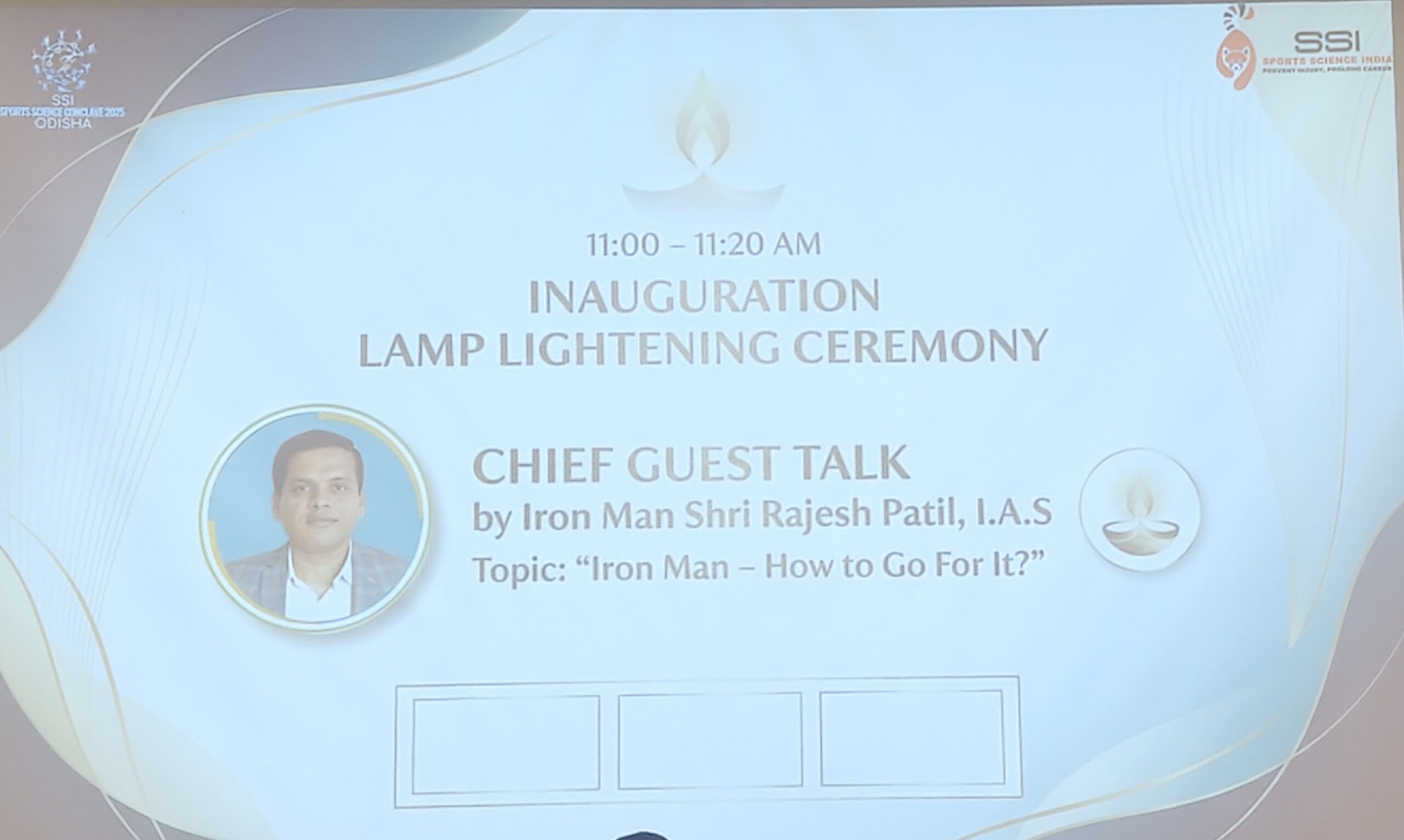
At SSI Sports Science Conclave 2025, Senior IAS Officer and Two-Time Iron Man Rajesh Patil Redefines Endurance, Discipline and Age
At the inspiring session “Iron Man – How to Go for It?” during the SSI Sports Science Conclave 2025, Chief Guest and award-winning IAS officer, author and social reformer Rajesh Patil delivered a deeply motivating address that seamlessly blended sport, life, discipline, and self-belief. Currently serving as Commissioner-cum-Secretary, Cooperation Department, Patil is not only a successful administrator and writer but also one of India’s very few IAS officers to conquer the Iron Man challenge—twice.
What Is an Iron Man? The Ultimate Test of Endurance
Beginning with the fundamentals, Patil explained that Iron Man is not just another race—it is among the toughest endurance sport categories in the world. It demands a 3.8 km open-water swim, followed by 180 km of cycling, and finally a full marathon run. It pushes the human body and mind to their absolute limits, far beyond triathlons or conventional endurance events.
From a Small Village to the World’s Toughest Race
Sharing his inspiring personal journey, Patil spoke about rising from a small village background, supporting his family, and becoming the first IAS officer from his district after 50 years—a story he has documented in his book “Ma, I Have Become a Collector.” Though deeply involved in sports earlier, a renewed awareness about health, nutrition, and purpose drove him to look for a challenge that could transform him from within.
From Struggling to Run 2 Km to Becoming an Iron Man
Patil revealed that when he first began, he couldn’t even run two kilometres. Yet, motivated by the desire to challenge himself, he studied every detail of the Iron Man—training, nutrition, endurance, and recovery. What followed was a journey powered by hard work, discipline, smart strategy, and unwavering self-belief.
His key truth was simple but powerful: Iron Man is 50% physical strength and 50% mental strength. Without strong resolve and determination, even the strongest body will fail.
Only the Third IAS Officer in India to Achieve This Feat
Today, Rajesh Patil stands as the third IAS officer in the country to complete the Iron Man challenge. He credited the journey with transforming not only his physical fitness but also his discipline, focus, time management, and overall personality. From sleep schedules to nutrition planning and daily training, every aspect of life became organised and purposeful.
Fitness Shapes Leadership, Focus and Work-Life Balance
Patil shared that endurance training has made him more focused in real life and far more efficient at work. Running taught him presence, planning taught him execution, and training taught him consistency. Every day is now guided by a clear structure—workouts, nutrition, recovery, and responsibilities—leading to holistic well-being.
Age Is Just a Number
One of the most striking messages of his talk was on age. Patil began triathlon training at 47, and today says he is fitter than he was at 30. He pointed out that many senior citizens are now attempting endurance races, proving that limits are often mental, not physical.
Beyond Personal Glory: Creating a Ripple of Inspiration
Patil stressed that the impact of his Iron Man journey goes far beyond personal milestones. Wherever he goes, people ask about it, become curious, and eventually get inspired. His family, colleagues, and young aspirants all begin to rethink their limits. “When people see you do it, you plant a seed in their mind,” he said.
Next Mission: Full Iron Man and Global Marathons
Looking ahead, Patil revealed his dream of competing in the full Iron Man and participating in major marathons across the world as he continues to grow older—proving that endurance has no expiry date.
The Final Message: Fitness Is a Personal Responsibility
Concluding his talk, Patil issued a powerful reminder: a disease-free, active life is largely a personal choice. Many athletes, he noted, abandon fitness after a certain age, which negatively affects health. His advice was simple and lasting—keep swimming, cycling, running, playing tennis, and staying active well into your 70s and 80s.
















Discussion about this post