Japan Face Denmark Challenge as World Junior Team Championships Introduce 55-Point Relay Format

Japan have been handed an intriguing early test at the VICTOR BWF World Junior Team Championships 2026, with the Asian powerhouse drawn alongside Denmark and New Zealand in Group C1.
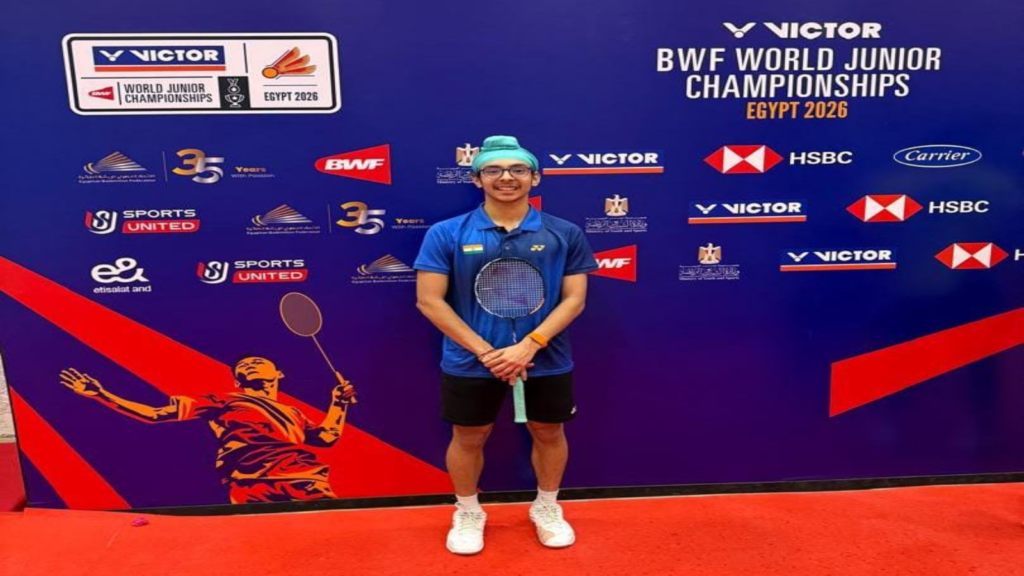
The tournament is scheduled to take place in Egypt from October 5 to 10, bringing the world’s leading junior badminton teams together for an edition that will feature a significant change to the team competition format.
Japan’s Group Offers Little Room for Error
Japan, seeded No. 3/4, will have to negotiate a potentially challenging group if they are to make a deep run in Cairo.
Their Group C1 opponents are:
Japan
Denmark
New Zealand
Denmark’s presence makes the group particularly interesting, given the country’s strong junior badminton structure and history of producing international-level players. New Zealand complete a three-team section that could make every tie important in determining the final standings.
Japan will enter the competition among the teams expected to challenge for the title, but the revised tournament structure means there will be little value in simply looking at the traditional strength of the teams.
China Begin as Defending Champions
Defending champions China have been placed in Group G1 alongside Portugal and Zimbabwe.
China will be aiming to repeat their success from the previous edition, but the new competition format will provide an additional tactical challenge for every team.
Group G2, meanwhile, contains Estonia, Poland, Australia and Hungary, creating another section with a different dynamic because of its four-team composition.
49 Teams, 16 Sub-Groups
A total of 49 teams will compete in Egypt, divided into 16 sub-groups from A to H.
The initial group phase will determine the subsequent match-ups. Once the teams complete their respective sub-group fixtures, sides will meet teams that finish in corresponding positions in the other sub-groups.
The strongest teams from the group stage will progress towards the quarterfinals, while the remaining teams will continue competing to establish their final overall positions.
This structure means that every tie can have significance, even for teams that fall short of the knockout stage.
Major Change: 55 Points Will Decide Each Set
Perhaps the biggest talking point of the 2026 championships is the introduction of a revised relay scoring system.
Under the new format, each team tie will consist of three sets, with each set carrying a maximum of 55 points.
Each 55-point set will be made up of five individual matches:
Men’s singles – 11 points
Women’s singles – 11 points
Men’s doubles – 11 points
Women’s doubles – 11 points
Mixed doubles – 11 points
The team that accumulates the required advantage through these five matches will take the set, creating a format in which depth across all five disciplines could become just as important as individual star power.
Why the New System Could Change the Tournament
The format places a premium on team balance.
A country with an outstanding singles player but weaker doubles combinations may find it difficult to dominate under the relay system. Conversely, teams capable of producing competitive performances across all five disciplines could benefit significantly.
It also introduces an unusual element of momentum: an individual 11-point match may appear short, but its contribution could prove decisive in the race to 55.
Africa Gets Another Opportunity on the World Stage
The 2026 edition also represents a significant moment for African badminton.
It is only the second time that Africa will host the World Junior Championships, with Egypt serving as the host nation.
The continent will be represented by 10 teams:
Algeria
South Africa
Zambia
Senegal
Uganda
Mauritius
Nigeria
Ghana
Egypt
Zimbabwe
Libya had initially been scheduled to participate but withdrew before the draw was conducted.
The Bigger Picture
The Cairo draw has done more than simply determine opponents. It has set the stage for a World Junior Championships unlike previous editions.
Japan’s meeting with Denmark could become one of the early highlights, while China’s title defence will attract attention from the opening day. But the most intriguing storyline may ultimately be the new 55-point relay system.
With five disciplines contributing to every set, team depth, adaptability and tactical planning could prove as important as individual brilliance.
For the next generation of badminton stars, Egypt will provide an unusual test: not simply who has the best player, but which nation can build the strongest team across the entire court.
Key Facts
Tournament: VICTOR BWF World Junior Team Championships 2026
Event: Suhandinata Cup
Dates: October 5–10, 2026
Host: Egypt
Teams: 49
Sub-groups: 16
Japan’s Group: Japan, Denmark, New Zealand
Defending Champions: China
New Scoring Format: Best of three sets, 55 points per set
Matches in Each Set: Five, each played to 11 points
African Teams: 10
Libya: Withdrew before the draw