1968: The Indian Who Became the Canadian Open’s First Open-Era Champion
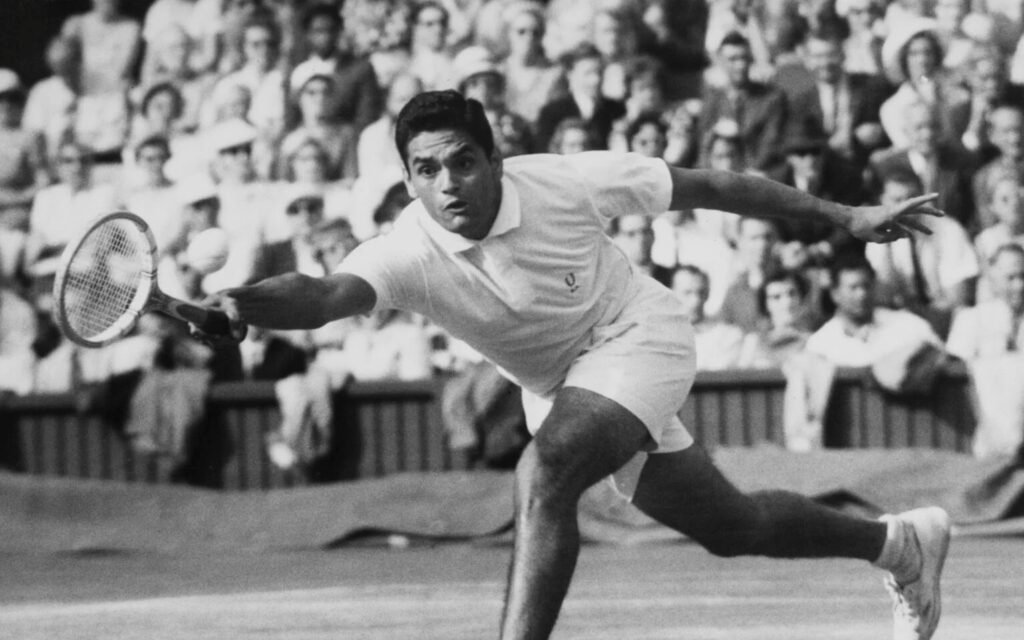
⁷Ramanathan Krishnan’s historic victory over Torben Ulrich came at the dawn of professional tennis — and gave India a place in the first chapter of the Canadian Open’s Open Era history.There are sporting achievements that become famous. Then there are those that quietly become part of history.
Ramanathan Krishnan’s 1968 Canadian Open triumph belongs firmly in the second category.
At a time when Indian tennis was still searching for a permanent place on the global stage, Krishnan travelled to Canada and produced a performance that would give his name a unique place in the tournament’s record books.
The year was 1968. Tennis had just entered the Open Era, bringing professionals and amateurs together in major competitions for the first time. And when the Canadian Open began its own Open Era chapter, it was an Indian standing at the top.
Krishnan defeated Denmark’s Torben Ulrich in the men’s singles final to become the first Canadian Open men’s singles champion of the Open Era.
The final that made history
Krishnan did not need five sets or a dramatic comeback to secure his place in history.
He took control from the opening set and defeated Ulrich in straight sets:
Ramanathan Krishnan defeated Torben Ulrich 6–3, 6–0, 7–5
The scoreline reveals just how authoritative the performance was.
Krishnan won the first set 6–3, before completely overwhelming Ulrich in the second, dropping zero games. Ulrich managed to make the third set more competitive, but Krishnan remained composed and finished the match 7–5.
Final score: 6–3, 6–0, 7–5
Sets: Krishnan won 3–0
Runner-up: Torben Ulrich
Champion: Ramanathan Krishnan, India
More than a trophy
The significance of the victory becomes clearer when the timing is considered.
The 1968 Canadian Open was not simply another tournament on the calendar. It marked the beginning of the event’s Open Era history. The names that followed Krishnan on the champions’ list included American Cliff Richey in 1969 and Australian great Rod Laver in 1970.
That makes Krishnan’s name particularly significant.
He was the first.
Decades later, the tournament would become one of the most prominent events in the tennis calendar, attracting the biggest names in the sport. But when the Open Era chapter began, it was an Indian player who wrote the first line.
Krishnan was no one-hit wonder
The Canadian Open title was not an isolated moment in Krishnan’s career.
By 1968, he had already spent years establishing himself as one of India’s greatest tennis players. His résumé included the 1954 Wimbledon junior title, two Wimbledon men’s singles semi-final appearances in 1960 and 1961, and victories at major international events including the Queen’s Club Championships and U.S. Hard Court Championships.
He was also part of the Indian team that reached the 1966 Davis Cup final, a landmark achievement for Indian tennis.
So when Krishnan arrived at the Canadian Open in 1968, he was not an unknown challenger hoping for a breakthrough. He was an experienced international player finally adding another major chapter to an already remarkable career.
The 1968 milestone in numbers
Champion: Ramanathan Krishnan
Country: India
Year: 1968
Tournament: Canadian Open
Final opponent: Torben Ulrich, Denmark
Final score: 6–3, 6–0, 7–5
Sets won: 3–0
Open Era milestone: First men’s singles champion of the Canadian Open’s Open Era
Historical distance: 58 years as of 2026
Why this story still matters
Indian tennis has produced several celebrated names over the decades. But long before the global recognition that later generations would enjoy, Ramanathan Krishnan was already defeating international opposition and winning major titles abroad.
His 1968 Canadian Open victory is therefore more than an old result in a tournament archive.
It captures a moment when tennis itself was changing — and India was right there at the beginning.
The Open Era had just started. The Canadian Open was entering a new chapter. And the first name written into that chapter was Ramanathan Krishnan.
Fifty-eight years later, the scoreline remains simple: 6–3, 6–0, 7–5. But its place in Indian sporting history is anything but ordinary.