From Sindhu’s Olympic Bronze to India’s Next Wave: Park Tae-sang Builds Again
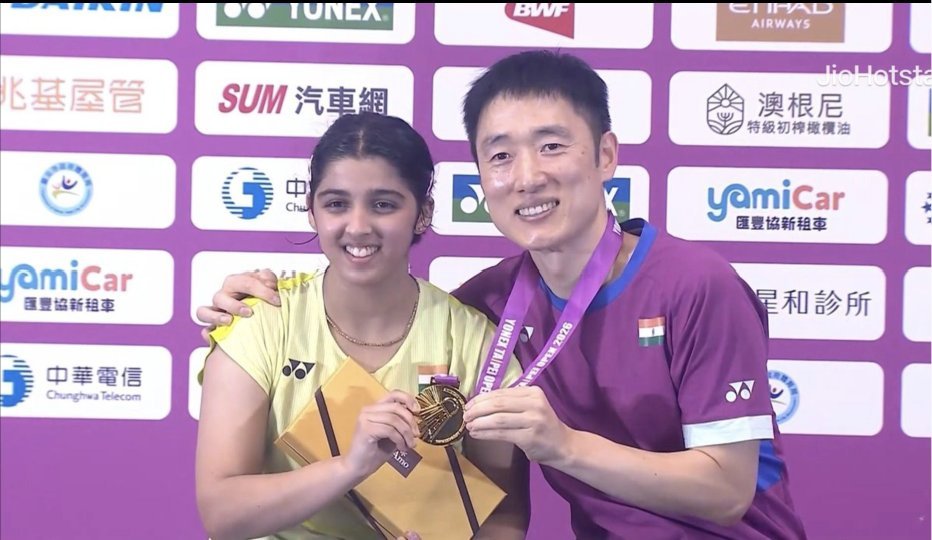
The Korean coach who helped PV Sindhu reach the Tokyo podium is now shaping a new generation of Indian badminton stars, with Tanvi Sharma and Rounak Chouhan emerging as two of his most promising projects.
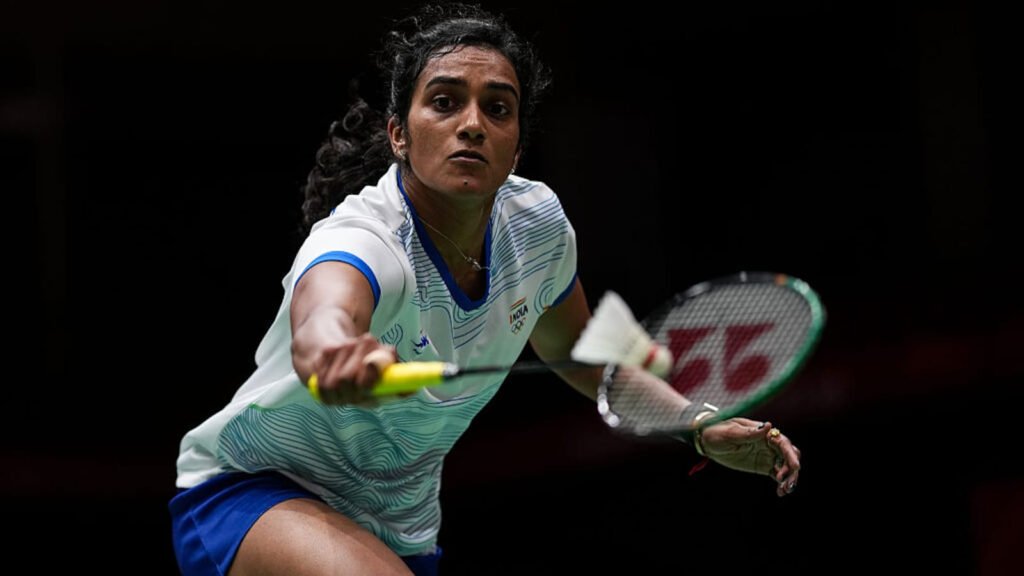
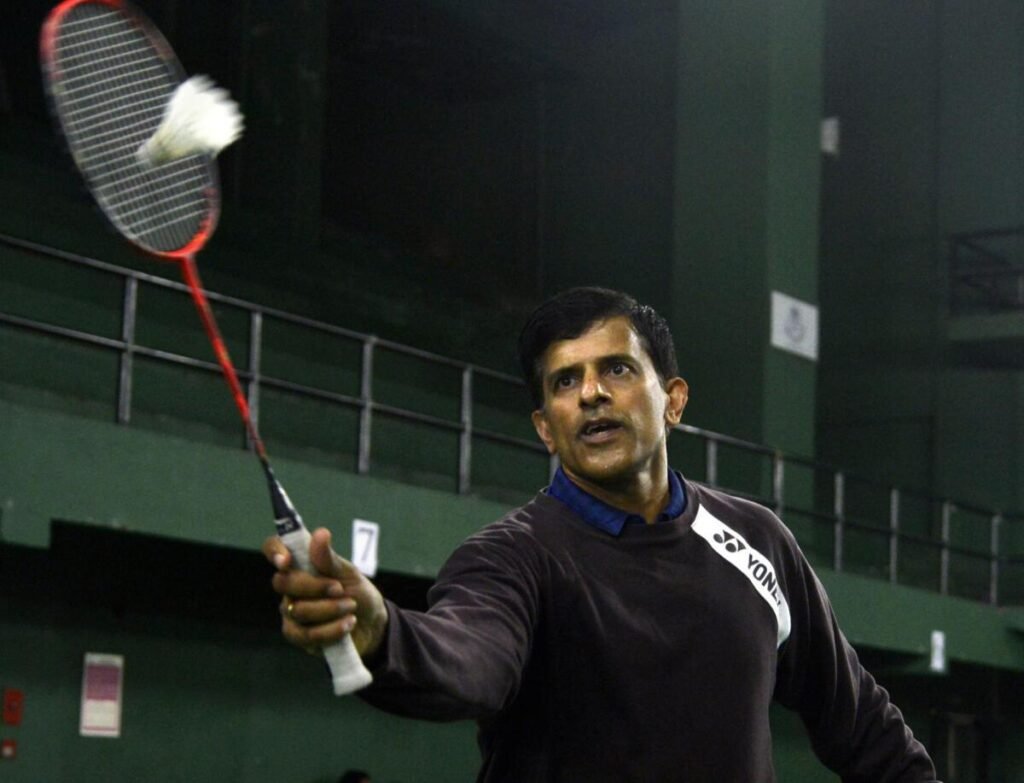
New Delhi: Park Tae-sang’s name is already closely linked with one of the defining chapters of Indian badminton. As PV Sindhu’s coach, the South Korean played a key role in her Tokyo 2020 Olympic bronze-medal campaign and later helped her add Commonwealth Games gold and major BWF World Tour titles.
But Park’s Indian story did not end when his partnership with Sindhu came to a close.
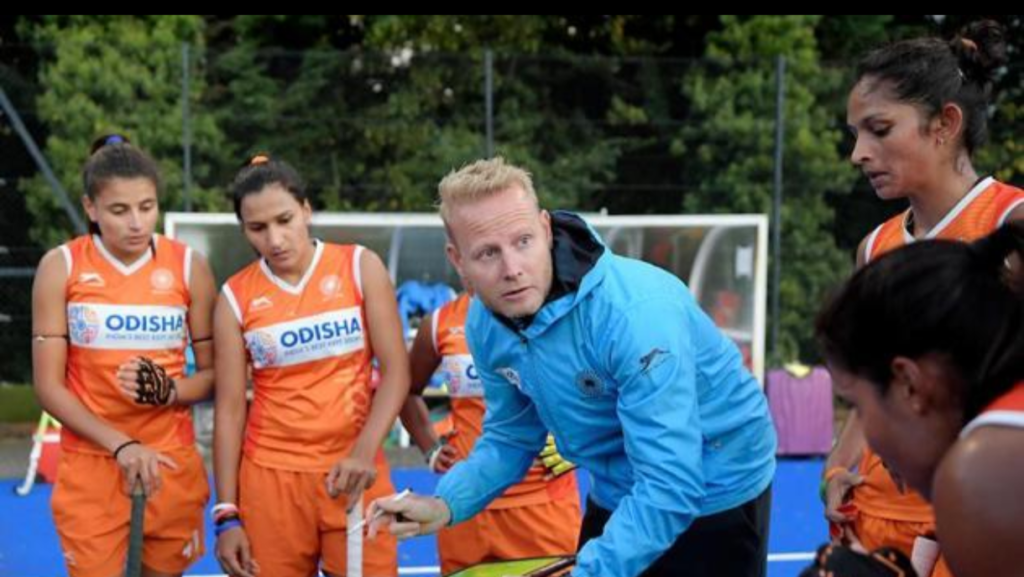
At the National Centre of Excellence in Guwahati, the coach is now working on a different challenge: developing young players who can eventually carry Indian badminton into its next era.
And the early signs are increasingly encouraging.
From Sindhu to the next generation
Park worked with Sindhu from 2019 until early 2023. Their partnership produced some of the most memorable moments of her career, including the Tokyo Olympic bronze and the Commonwealth Games gold.
His next assignment is less about managing an established superstar and more about building players from the ground up.
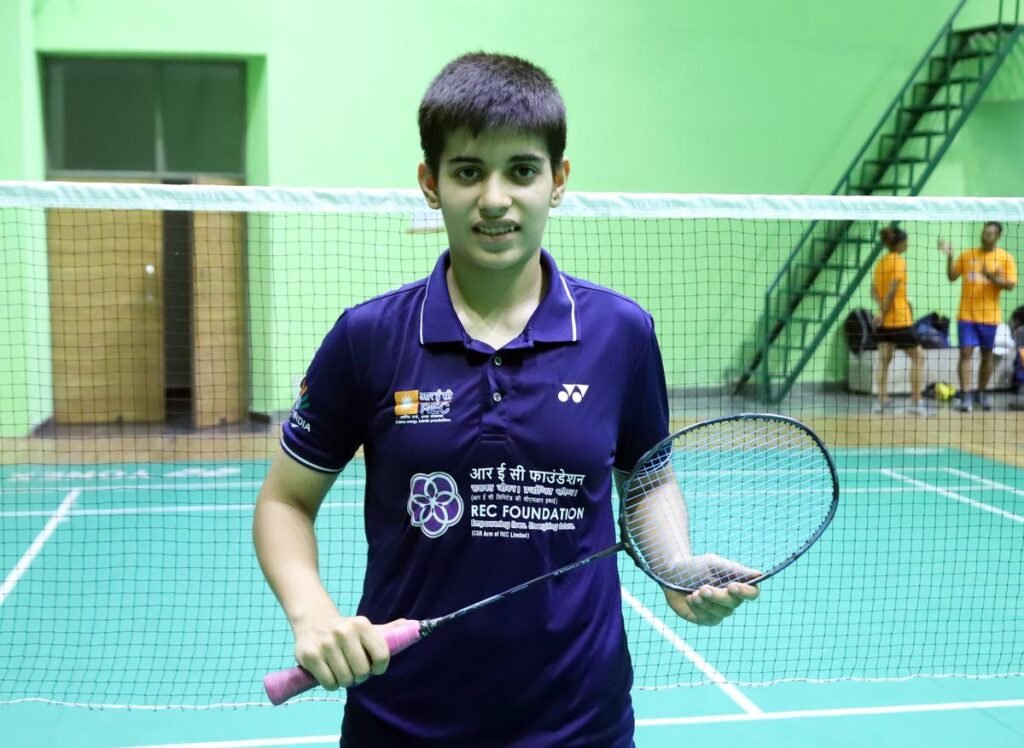
Among the youngsters attracting attention is Tanvi Sharma, a 17-year-old from Hoshiarpur whose aggressive game has frequently drawn comparisons with Sindhu and Saina Nehwal.
Park has particularly admired Tanvi’s attacking instincts and believes she possesses qualities reminiscent of Sindhu. Yet the youngster is not simply being moulded into another Sindhu. Her game is developing its own identity, with elements of Saina’s court movement and early attacking strokes becoming increasingly visible.
Tanvi’s rapid rise
Tanvi’s progress over the last year has been significant.
2025 US Open Super 300: Runner-up
2025 World Junior Championships: Silver medal in women’s singles
2025 World Junior Championships: Bronze in the mixed team event
2025 Asian Junior Championships: Bronze
2026 Orleans Masters Super 300: Semi-finalist
2026 Australian Open Super 500: Quarter-finalist
2026 US Open Super 300: Quarter-finalist
Her US Open run in 2025 was particularly important. At 16, she became the youngest Indian to reach a BWF World Tour final, eventually losing to American veteran Beiwen Zhang in three games. The experience, however, showed that Tanvi could already compete against senior-level opposition.
Her 2026 campaign has also shown that the US Open breakthrough was not a one-off. She reached the Orleans Masters semifinals and then progressed to the quarterfinals of the Australian Open Super 500. At the US Open this year, she again reached the last eight before going down to Denmark’s Line Christophersen, 21-16, 11-21, 21-11.
Park’s second project: Rounak Chouhan
Tanvi is not the only young player benefiting from Park’s methods.
Rounak Chouhan, an 18-year-old from Chhattisgarh, produced one of the biggest shocks of the 2026 US Open Super 300.
Entering the tournament as a qualifier and ranked around No. 80 in the world, Chouhan stunned top seed and world No. 6 Chou Tien Chen 21-17, 26-24 in the second round.
The result was more than a surprise victory. It was Chouhan’s first win over a top-10 player and helped him advance to his maiden Super 300 semifinal. He later defeated Israel’s Misha Zilberman 23-21, 21-11 in the quarterfinals.
The image of Chouhan celebrating with Park after the upset victory against Chou Tien Chen offered a glimpse of what the coach’s next chapter could look like.
The numbers behind Park’s new generation
Park Tae-sang’s coaching legacy in India
Tokyo Olympics: PV Sindhu – Bronze
Birmingham Commonwealth Games: Sindhu – Gold
Sindhu’s BWF World Tour titles during their partnership included Super 300 and Super 500 success
Current base: National Centre of Excellence, Guwahati
Tanvi Sharma
Age: 17
2025 US Open: Runner-up
2025 World Junior Championships: Silver
2026 Orleans Masters: Semifinal
2026 Australian Open: Quarterfinal
2026 US Open: Quarterfinal
Rounak Chouhan
Age: 18
2026 US Open: Semifinal
Beat world No. 6 Chou Tien Chen: 21-17, 26-24
First career Top-10 victory
More than a Sindhu successor
The most interesting part of Park’s current project is that it is not about finding another PV Sindhu.
Tanvi has the attacking confidence and power that remind Park of Sindhu, but her comparatively shorter frame and developing movement have pushed her towards a slightly different style. Recent performances have also highlighted similarities with Saina Nehwal in the way she attacks from the back court.
That distinction matters.
Indian women’s badminton has spent years searching for the successor to the Saina-Sindhu era. Instead of producing a carbon copy of either champion, the next generation may emerge with a combination of traits borrowed from both — and then evolve into something entirely different.
Park appears to understand that process.
He has repeatedly stressed patience with Tanvi, pointing out that she is still young and needs time to develop consistency, endurance and tactical maturity rather than being rushed by early success.
The bigger picture
India’s women’s singles pipeline is entering a transition period. Sindhu remains a major name, but the sport cannot depend indefinitely on one generation.
That is why Park’s work in Guwahati carries significance beyond individual tournament results.
Tanvi’s repeated deep runs at senior events and Chouhan’s stunning breakthrough against a world-class opponent suggest that India’s next wave is beginning to understand what it takes to survive on the BWF World Tour.
The medals may take time. The consistency will take even longer.
But from Sindhu’s Olympic bronze to Tanvi’s Super 300 breakthroughs and Chouhan’s giant-killing run, Park Tae-sang’s Indian journey appears to be entering its second act — and this time, the objective is not to polish one superstar, but to build a generation.