Georgia Godwin’s Comeback: Mind Over Injury
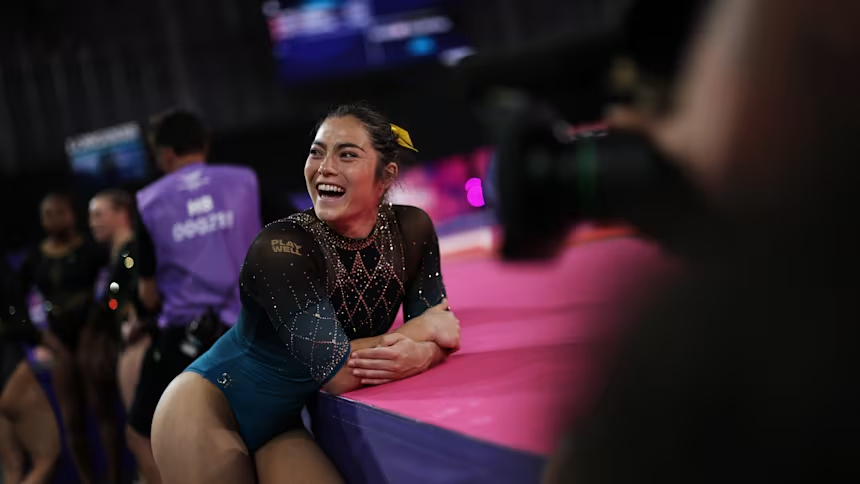
Georgia Godwin’s Comeback: A Ruptured Achilles, Mental Battles and a Plant That Brought Comfort
After an Achilles tendon rupture ended her Paris 2024 Olympic dream, Australian gymnast Georgia Godwin rebuilt her confidence with support from her loved ones, her dog Remy and small reminders of home before returning to the Commonwealth Games podium.
Georgia Godwin’s Comeback Was About More Than Physical Recovery
For Australian gymnast Georgia Godwin, returning to elite competition after a serious injury meant overcoming much more than the physical demands of rehabilitation. In May 2024, while preparing for the Paris Olympics, Godwin ruptured her Achilles tendon during a floor exercise tumbling pass. The injury ended her Olympic campaign just months before the Games and left her facing an uncertain future in gymnastics.
The 28-year-old had been performing the skill since she was 12. Losing the opportunity to compete in Paris was therefore a devastating setback for an athlete who had spent years working towards that goal. Although her recovery involved rebuilding strength and movement, the psychological impact proved equally difficult. Fear, painful memories and the challenge of trusting her body again became major obstacles on her path back.
Mental Health in Sport Became a Major Part of Godwin’s Recovery
Godwin’s experience highlighted how an injury can continue affecting an athlete long after the physical healing process begins. The memory of the accident made returning to floor routines particularly challenging, forcing her to reconsider how she trained and what she was willing to attempt.
Rather than simply trying to return to her previous level as quickly as possible, Godwin adapted her approach. She removed the specific tumbling skill associated with the Achilles injury from her floor routine and allowed herself to work within a plan that prioritised confidence as well as physical readiness.
Her recovery also required patience with difficult days. In an interview with International Gymnast Magazine, Godwin explained that she continued to experience flashbacks and phantom pain even two years after the injury. She described the mental side of rehabilitation as its most challenging aspect, underlining that an athlete’s comeback cannot always be measured by physical milestones alone.
How Remy and a Small Plant Helped Georgia Godwin Stay Grounded
Outside the gym, everyday routines became an important part of Godwin’s recovery. After the injury, she brought home Remy, a Border Collie puppy who gave her a reason to get up, move around and care for something beyond her own rehabilitation. Feeding, walking and looking after the energetic dog created structure during a period when she was struggling emotionally.
Remy also helped Godwin appreciate the present instead of constantly focusing on how far she was from her former level. The simple act of taking walks and allowing the puppy time to explore became a reminder that progress did not always have to be rushed.
Another small source of comfort was a plant kept in a koala-shaped pot. Godwin picked it up during Australia’s staging camp before the Glasgow Commonwealth Games. Away from her home in Canberra, the plant offered a familiar reminder of home and helped her feel grounded as she prepared for competition.
These details did not replace the work of her coaches, physiotherapists and other support staff. Instead, they formed part of the wider support system that helped her manage the emotional demands of her return.
Glasgow 2026 Turns Godwin’s Gymnastics Comeback Into Gold
Godwin’s return reached a defining moment at the Glasgow 2026 Commonwealth Games. Competing in her first major international event since the Achilles rupture, she joined Kate McDonald, Emily Whitehead, Breanna Scott and Ruby Pass in Australia’s women’s artistic gymnastics team final.
Australia scored 158.400 points to win team gold, ahead of Canada on 157.300 and England on 154.300. The victory was Australia’s first women’s artistic gymnastics team title at the Commonwealth Games since Delhi 2010.
Godwin also earned her ninth Commonwealth Games medal, moving ahead of Allana Slater to become Australia’s most decorated female gymnast at the Games. The achievement was especially meaningful after an injury that had threatened both her Olympic ambitions and her career.
Her own floor routine carried emotional significance. After performing, Godwin became tearful as the pressure of the previous two years gave way to relief and pride. She acknowledged that the mental challenges had been among the hardest she had ever faced, while crediting the people who had supported her throughout the process.
Georgia Godwin’s Story Shows Why Athlete Resilience Matters
Godwin’s journey is a reminder that an elite athlete’s return from injury is rarely a straightforward progression from surgery to training and competition. Physical recovery, confidence, fear and emotional wellbeing can all influence how and when an athlete is ready to compete again.
Her experience also shows that support can come from several places: specialist care and coaching, the encouragement of teammates and family, and small routines that make everyday life feel manageable. For Godwin, Remy and the plant in the koala pot became part of that personal support system.
At Glasgow 2026, her comeback delivered a team gold medal and a place in Australian gymnastics history. Yet the achievement meant more than the result on the scoreboard. After losing the chance to compete at Paris 2024, Godwin returned to a major international stage and helped Australia win a title while reclaiming the opportunity to compete on her own terms.