Sports Vision Training: How Elite Athletes Sharpen Reaction Time To Win In Milliseconds
The Game Within the Game: Where Matches Are Won in Milliseconds
Bhubaneswar: What if the difference between winning and losing wasn’t strength or stamina—but what an athlete sees and how fast the brain reacts to it?
In modern elite sports, the margins are razor-thin. A split-second delay in picking a delivery in cricket, reacting to a serve in tennis, or spotting a passing lane in football can decide outcomes. This is where sports vision training is emerging as a game-changing science—helping athletes process visual information faster and react with precision.
The Science Behind Faster Reactions
More than 80% of the information athletes rely on during competition is visual. But vision is not just about eyesight—it’s about how the brain interprets and responds to what the eyes capture.
Sports vision training enhances:
- Reaction time
- Peripheral awareness
- Depth perception
- Hand-eye coordination
- Decision-making speed
Elite athletes are trained to process visual cues up to 200–300 milliseconds faster than average individuals—giving them a critical edge in high-pressure situations.
Training the Eyes Like Muscles
Just like strength or endurance, vision can be trained and improved. Today’s athletes use advanced tools and drills to sharpen their visual skills:
Strobe Glasses Training
These glasses intermittently block vision, forcing the brain to “fill in the gaps” and process information more efficiently.
Reaction Light Systems
Athletes respond to rapidly changing lights, improving reflexes and coordination under pressure.
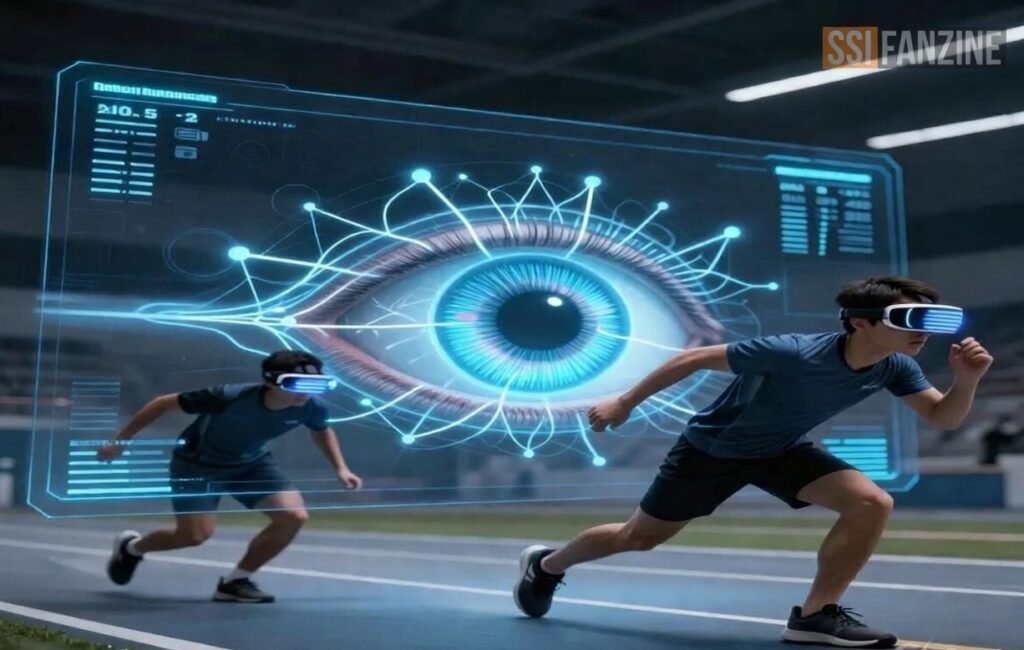
Virtual Reality (VR) Simulation
VR recreates match scenarios, allowing athletes to practice decision-making in real-time without physical strain.
Tracking & Focus Drills
Simple yet effective exercises that improve eye tracking, focus shifts, and anticipation skills.
Why It Matters Across Sports
Cricket
Batsmen use vision training to pick swing, seam, and spin earlier—crucial against high-speed bowling.
Football
Players improve spatial awareness, enabling quicker passing decisions and better positioning.
Tennis
Returning serves traveling over 200 km/h demands exceptional visual tracking and reaction speed.
Motorsport & Esports
Where reactions are measured in milliseconds, visual processing becomes the ultimate differentiator.
The Competitive Edge
Athletes who invest in vision training gain:
- Faster decision-making under pressure
- Improved anticipation of opponent moves
- Reduced risk of injury due to better awareness
- Enhanced overall performance consistency
In an era where physical fitness levels are nearly identical at the top, neural and visual efficiency is becoming the real separator.
The Future of Sports Performance
With advancements in sports science, vision training is now being integrated with:
- AI-based performance analytics
- Neurotraining programs
- Wearable eye-tracking devices
Teams and athletes are no longer just training harder—they are training smarter and faster at the neurological level.
The Invisible Edge That Changes Everything
In the high-speed world of modern sports, success is no longer just about how fast you run or how strong you are—it’s about how quickly you see, think, and act.
Sports vision training is redefining performance by unlocking the brain’s true potential. It is subtle, often invisible, but incredibly powerful—turning milliseconds into match-winning moments.