Nicola Pietrangeli, Italian Tennis Legend, Dies at 92
A Champion’s Final Bow
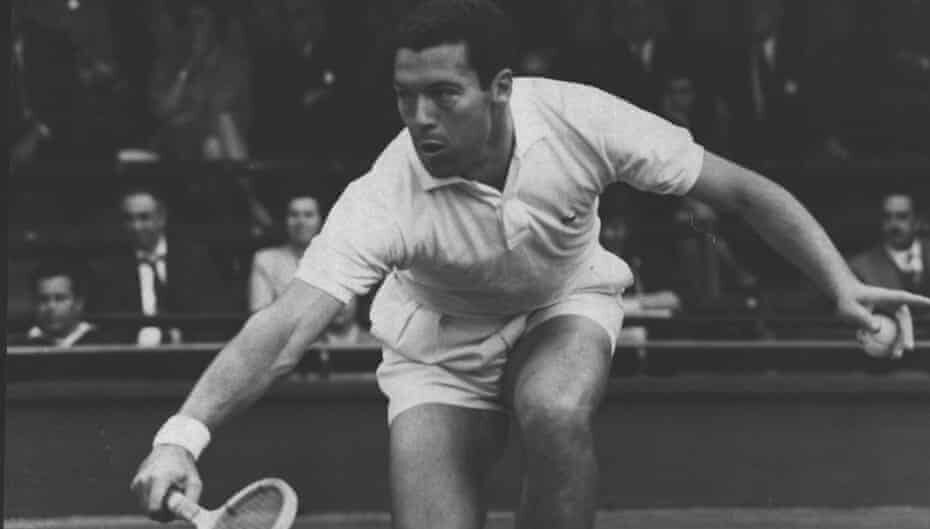
Nicola Pietrangeli — widely regarded as the greatest Italian tennis player of the amateur era — passed away on 1 December 2025 at the age of 92, the Italian Tennis and Padel Federation announced.
Though the Federation did not immediately disclose a cause of death, reports indicate that Pietrangeli had been in declining health following a hip fracture sustained in December 2024.
From Tunis Roots to Rome’s Clay Courts: Early Life & Rise
Born in 1933 in Tunis — then a French protectorate — to an Italian father and Russian mother, Pietrangeli’s childhood was marked by war and displacement.
After relocating to Rome with his family, he immersed himself in sport — initially football, but eventually switching to tennis. His natural talent and flair for the game soon made him stand out.
By the mid-1950s he was competing among the best, and his breakthrough came in 1959 when he became the first Italian to win a Grand Slam singles title.
Grand Slam Glory & Career Highlights
Back-to-back French Open champion: Pietrangeli won the clay-court major in 1959 and 1960, defeating Ian Vermaak and Luis Ayala respectively in those finals.
He added more laurels: a men’s doubles title at Roland Garros (1959) with Orlando Sirola, and a mixed doubles title in 1958.
On grass — a surface less suited to his strengths — he still mounted an impressive challenge, reaching the semifinals at Wimbledon Championships in 1960.
Over his career, he amassed dozens of titles beyond Grand Slams, marking him as one of the dominant forces of his era.
In an age before tennis turned professional, Pietrangeli’s victories carried modest financial reward — he reportedly earned just US $150 for his 1960 French Open win, barely covering two months’ rent in Rome.
National Hero: Davis Cup, Leadership & Legacy
Pietrangeli was not just a solo star — he carried his nation’s hopes in team tennis. Between 1954 and 1972, he played 164 matches for Italy in 66 Davis Cup ties, compiling a record of 120 wins — still a national benchmark.
Though Italy failed to clinch the Cup during his playing years, Pietrangeli’s leadership as team captain eventually bore fruit. In 1976, he guided the Italian squad to their first ever Davis Cup triumph — a crowning moment that cemented his role in his country’s tennis history.
In recognition of his extraordinary contributions, in 2006 one of the main courts at Rome’s Foro Italico was renamed Stadio Nicola Pietrangeli — a rare honor for a living athlete.
Style, Personality — and A Life Lived on His Own Terms
Pietrangeli was famous not only for what he achieved — but how he carried himself. Known for an elegant one-handed backhand, graceful footwork and a flair that made tennis look like art, he helped transform the sport in Italy from an elite pastime into a national passion.
He was often described as a ‘bon vivant’ — drawing attention off the court as much as on it. Even as the tennis world became more professional and regimented, Pietrangeli remained proudly true to the era when the sport was driven more by passion and style than by money and sponsorship.
But beyond the glamour and the titles, many remember him for his spirit — a man who played “because he loved it.”
Global Tributes & Enduring Impact
News of Pietrangeli’s passing triggered a wave of condolences and tributes across the tennis world. Authorities in Italy and abroad hailed him as a “symbol of Italian tennis,” a pioneer whose success paved the way for future generations.
His legacy lives on not only in records and titles, but in the resurgence and global respect of Italian tennis — a path that players like Jannik Sinner and others walk today.
As one of the most decorated and charismatic athletes of his generation, Nicola Pietrangeli’s life stands as a testament to the beauty of sport — its power to transcend boundaries, unite nations, and leave a legacy that endures long after the final match.