


India’s love for football is unquestionable. The hysteria that followed Lionel Messi’s arrival in Kolkata on Saturday was proof of that. Tens of thousands packed the Salt Lake Stadium, tickets were sold at astronomical prices, and emotions spilled over — literally — as fans invaded the pitch and tore up seats in frustration.
Yet beneath the spectacle lies a brutal truth: Indian football is in crisis, and Messi’s visit does nothing to fix it.
A Stadium Full — But for the Wrong Reason
On a December Saturday, a full Salt Lake Stadium should have been routine. Mohun Bagan, East Bengal or Mohammedan Sporting would usually command such crowds. Instead, the Indian Super League hasn’t even begun this season — and no one knows if it will.
The fans weren’t there for football.
They were there to see Messi walk, wave, and possibly speak a few words.
That is the great irony of Indian football. Crazy Money, Zero Development
More than 50,000 people paid between ₹4,300 and ₹50,000 just to catch a glimpse of Messi. In Delhi and Mumbai, 200 fans booked meet-and-greet slots costing ₹11.74 lakh per person for a photo and handshake.
That’s ₹23.4 crore spent on two photo sessions alone.
For context, a recent AIFF Request For Proposal to run the ISL — requiring an annual payment of ₹37.5 crore — received zero bidders.
The money exists., The willingness to spend exists. But not for Indian football.
Sponsors Love Messi, Ignore the League
Sponsorship estimates for the three-day “GOAT India Tour” range between ₹120–180 crore. No match was played. No grassroots programme launched. No academy funded.
Meanwhile, ISL clubs reportedly spend around ₹60 crore per season and still suffer losses of ₹25 crore, despite affordable ticket prices. Attendance is falling, investors are backing away, and the league’s future remains uncertain. The contrast is staggering.
A PR Circus Masquerading as Sport
The Kolkata event descended into chaos within minutes. Messi was rushed off the pitch after VIPs crowded him for selfies and autographs. Fans, feeling cheated, reacted angrily — storming the field and vandalising the stadium.
It was a familiar story.
Just months ago, 11 people lost their lives at Bengaluru’s Chinnaswamy Stadium during a chaotic IPL victory parade. No match. Just idol worship gone wrong.
India seems increasingly good at organising spectacles — and dangerously bad at managing crowds.
Global Attention, Domestic Embarrassment
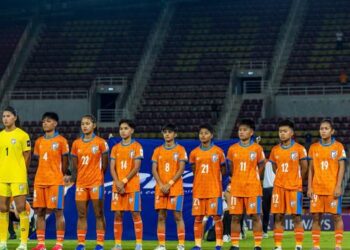
The images from Kolkata went viral worldwide. Not because India is seen as a footballing nation, but because the frenzy seemed shocking for a country ranked 142nd in men’s football and 67th in women’s football.
Why would anyone associate India with football excellence when none of its leagues — ISL, I-League, I-League 2, or the Indian Women’s League — have even started by mid-December?
After Messi Leaves, What Remains?
Messi will wave. Politicians will get selfies.
Celebrities will trend on social media.
Sponsors will count impressions. And then everyone will move on.
Everyone except Indian football — left asking the same unanswered questions:
When will the ISL start?, Will it start at all?What about the I-League and women’s football? How are Indian footballers surviving this uncertainty? But perhaps none of that matters.
After all, we now have a 70-foot Messi statue — and that, apparently, is development enough.
Messi’s visit exposed a truth Indian football can no longer ignore. The passion is real, the money is available, and the crowds are ready — but the system beneath is broken. Idol worship without investment, spectacle without structure, and hype without leagues will only deepen the crisis. Until attention shifts from fleeting star appearances to building leagues, protecting players, and strengthening grassroots football, Indian football will remain a nation of fans without a future for the game itself.

















Discussion about this post